


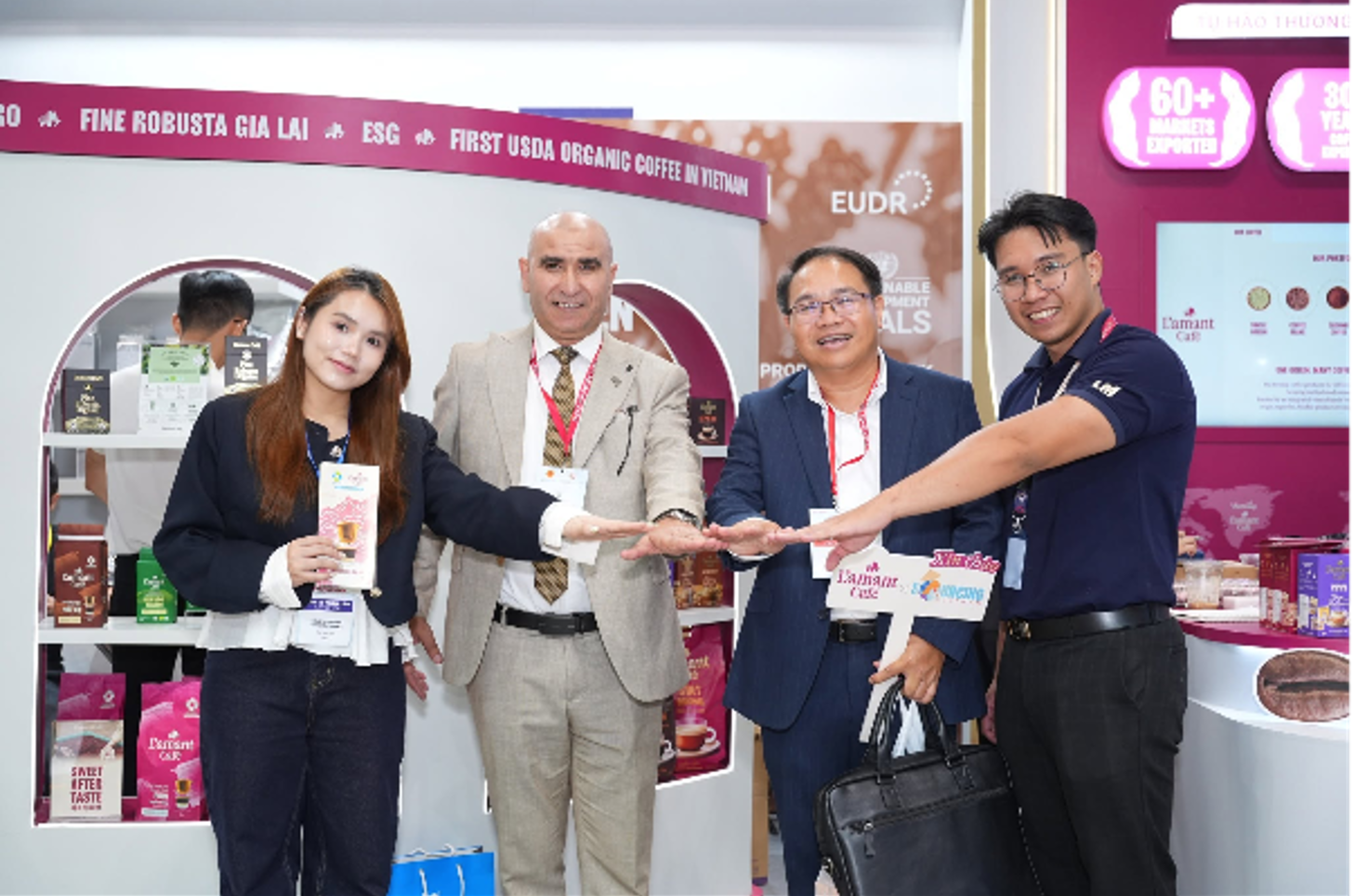
A good tasting sample can start a conversation, but it cannot close a purchasing decision. Coffee buyers must answer a host of questions: Will the next shipment taste the same? Can the supplier maintain volume when demand grows? Is the origin traceable? Can the product, formulation, and packaging meet the needs of a certain market?
These concerns shaped discussions at L’amant Café’s booth during the Vietnam International Sourcing Expo 2026 (VIS 2026), where the Gia Lai province-based company introduced a supply solution built around consistency, origin visibility, manufacturing capacity, and product development.
What coffee buyers are really looking for
For importers, distributors, retailers, HoReCa (hotels, restaurants, and cafés/catering) operators, and private-label brands, supplier selection is an exercise in risk management. An attractive price means little if quality changes between batches. A compelling origin story is insufficient without traceability. Customization has limited value if a manufacturer cannot reproduce an approved sample at commercial scale.
Buyers need a supplier that understands how coffee is consumed in the destination market. A blend developed for Vietnamese “phin” preparation may not perform the same way in an espresso system, while an instant coffee for a convenience channel requires decisions on taste, formulation, serving size, and packaging. The right solution begins with the buyer’s consumer, channel, and commercial objective - not with an existing catalogue.
This is the idea behind what L’amant describes as Vietnam’s new-generation coffee: Vietnamese origin combined with deeper processing, verified standards, and market-specific product development.
Supply solution from origin to finished product
L’amant’s model begins with Fine Robusta from Gia Lai province in the central highlands. The region’s basalt soil and Robusta-growing expertise provide a product foundation, while the connection between growers, raw materials, processing, and finished coffee supports visibility across the farm-to-cup journey.
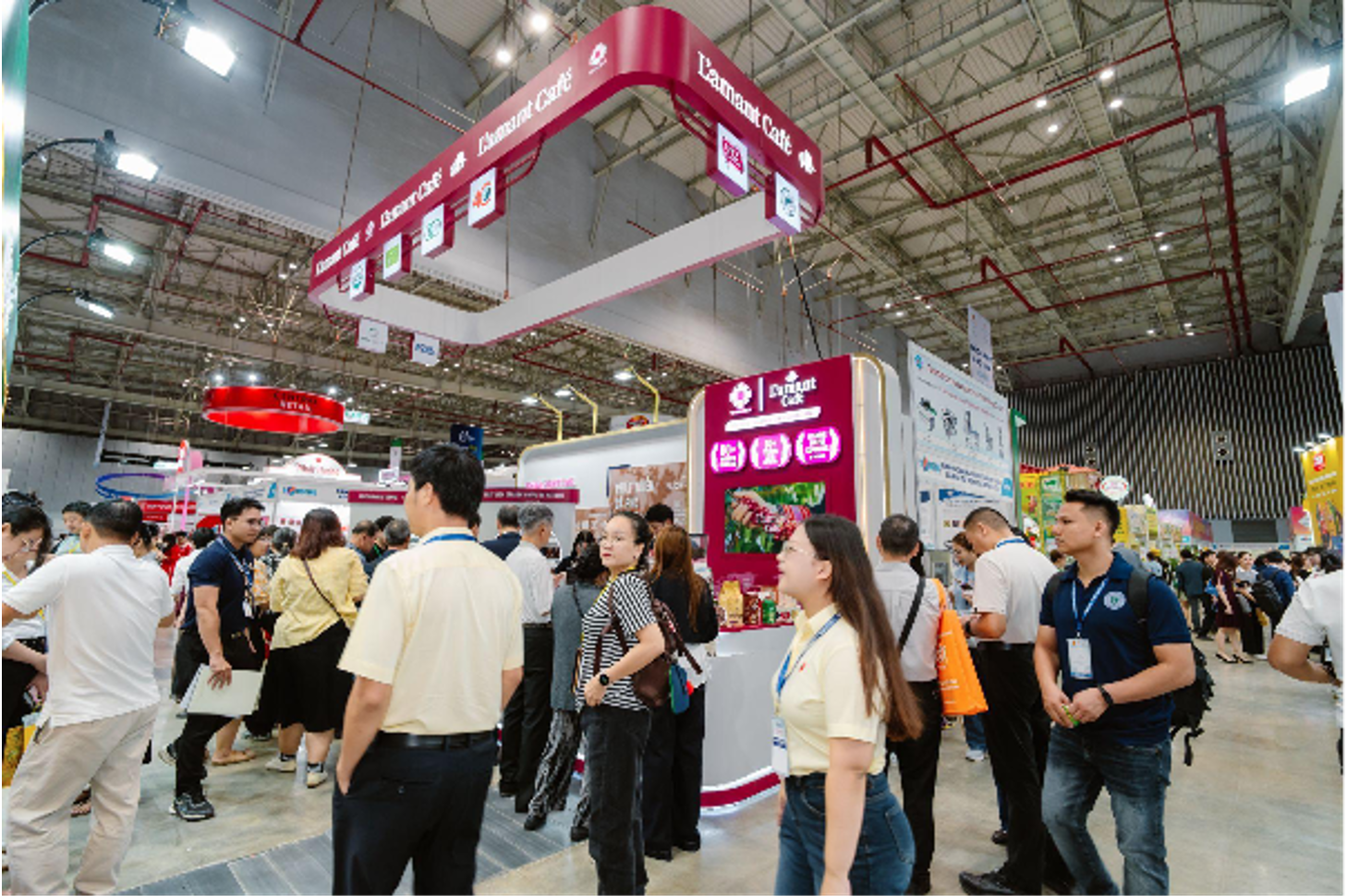
From that foundation, L’amant can meet purchasing needs. Distributors select branded products for their portfolios. Hotels, restaurants, and cafés require coffee profiles and formats suited to their service models. Retailers and brand owners seek OEM (original equipment manufacturer) or private-label development, covering roast profile, blend, instant formulation, packaging format, and positioning.
This approach addresses the buyer’s central concern: whether a Vietnamese coffee supplier can move from a successful tasting to repeatable commercial production. L’amant Café reports capacity of 4,000 tons of roasted coffee and 2,400 tons of instant coffee. Products connected to the Vinh Hiep ecosystem reach more than 60 countries and territories.
The brand was recognized under Vietnam Value 2024, was served as an official coffee brand at the APEC 2017 Economic Leaders’ Week, and holds organic credentials including USDA Organic certification. For buyers, these credentials are relevant not as promotional badges but as reference points when assessing standards, market access, and supplier reliability.
From the first meeting to long-term supply
Held in Ho Chi Minh City from September 3-5, VIS 2026 brought together 580 purchasing and distribution delegations from 60 countries and territories and more than 600 Vietnamese manufacturers and exporters. Its 3,000 curated B2B meetings reflected a shift from product promotion toward practical supply chain connections.
That shift is important for Vietnamese coffee. International buyers recognize Vietnam as a major coffee origin source. The next opportunity is to make the country recognizable for consistent finished products, transparent sourcing, and adaptable coffee manufacturing solutions.
After VIS 2026, a meaningful result for L’amant Café will not be the number of cups served but how many conversations develop into qualified projects and sustained partnerships.
For buyers considering coffee sourcing from Vietnam, L’amant’s proposition is direct: begin with the required taste, consumer, channel, volume, and format, then build the supply solution backward to origin. In a market where reliability matters as much as flavor, the supplier that understands the buyer’s risk is better positioned to become the partner behind long-term growth.



 Google translate