


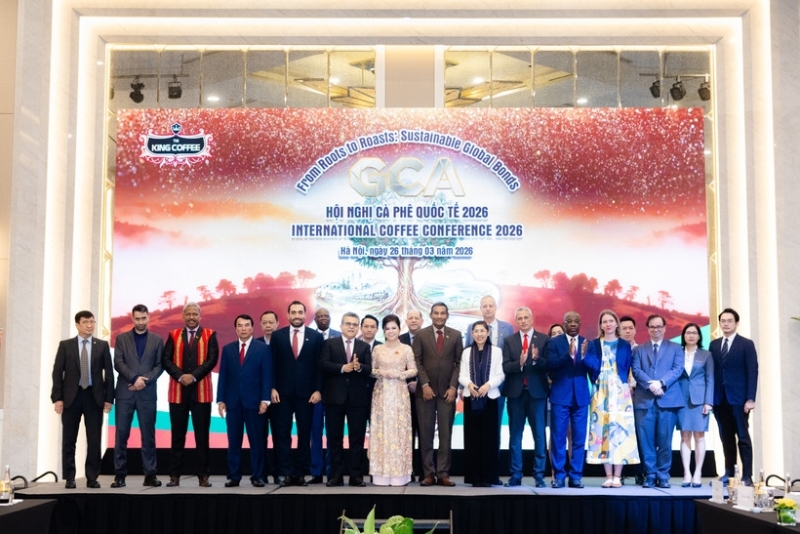
The International Coffee Conference 2026 in Hanoi on March 26 launched the Global Coffee Alliance (GCA), as the industry grapples with the dual challenges of climate change and market volatility.
Against this backdrop, the GCA was established as a Public-Private Partnership (PPP) model, blending diplomacy with the corporate sector. The GCA 2026 Declaration sets a long-term goal of building a "Net Zero" global coffee ecosystem, with carbon neutrality standards serving as the core guiding principle.
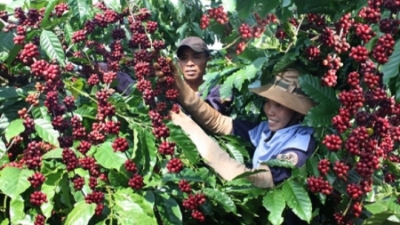
Ms. Le Hoang Diep Thao, Founder and CEO of TNI King Coffee, stated that by 2040, the alliance aims for 100% of its members' cultivation areas to meet regenerative agriculture standards. The initiative also includes the establishment of a Sustainable Development Fund to invest in green production models, reforestation, and water resource protection in growing regions. Central to this ecosystem is the protection of the livelihoods of 125 million "coffee citizens" worldwide, with a firm commitment that "no farmer is left behind."
Commenting on the initiative, Palestinian Ambassador to Vietnam, H.E. Saadi Salama, described the GCA as a "timely and strategic" move. He noted that it effectively combines diplomatic influence with the dynamism of the private sector to simultaneously address environmental challenges and human development.
H.E. João Pereira, Ambassador of Timor-Leste to Vietnam, shared that although his country is a newcomer to the coffee sector, it has successfully developed Arabica varieties grown at altitudes of 800 meters with distinctive flavors. Expressing a desire to bring these products to the international market, the Ambassador praised the GCA as an opportunity for Timor-Leste to both contribute and learn. He also recognized Vietnam as a model of rapid development that offers valuable lessons in building a sustainable and efficient coffee industry.
Meanwhile, a representative from the Angolan Embassy in Vietnam highlighted Angola's long-standing tradition in coffee production as a significant exporter of both Arabica and Robusta. The representative lauded the GCA as a vital initiative for coffee-producing nations and expressed strong support for the message of inclusivity for farmers, noting that Angola is also implementing programs focused on sustainability and equity within the industry.
The International Coffee Conference 2026 attracted representatives from 19 diplomatic missions in Vietnam, alongside experts, business leaders, and top industry managers. The event serves not only as a forum for exchange but as the starting point for a new journey of global cooperation, aimed at creating a more sustainable, transparent, and equitable coffee industry.



 Google translate