


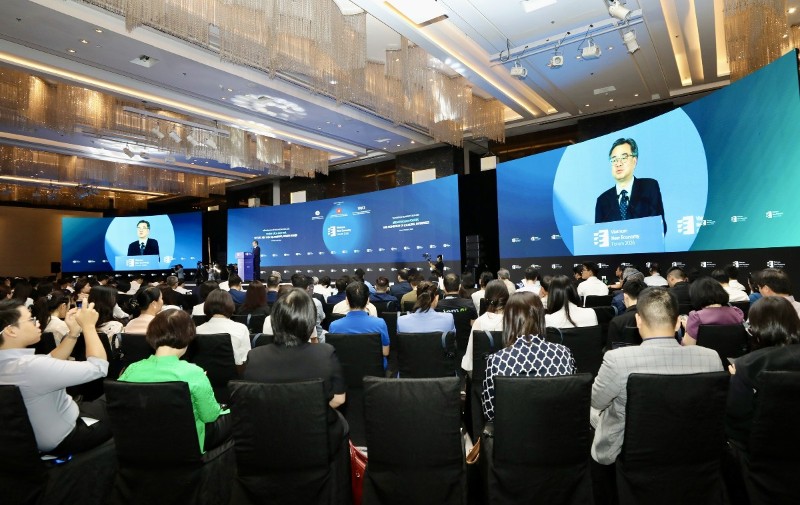
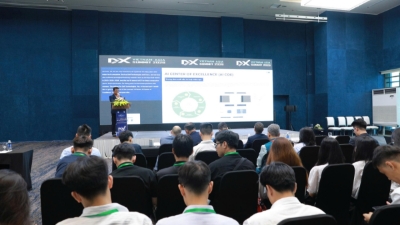
Delivering the opening and keynote address at the 4th Vietnam New Economy Forum 2026, held in Hanoi on October 3, Politburo member and Chairman of the Central Commission for Policy and Strategy Nguyen Thanh Nghi stressed the imperative to pivot decisively from sound policy guidelines to execution breakthroughs, while urging concerted efforts to untangle bottlenecks, unlock development capital, and unleash fresh momentum for localities and businesses.
The 4th Vietnam New Economy Forum 2026, themed "Breakthrough Policies and Momentum of Localities and Enterprises," was co-hosted by the Central Commission for Policy and Strategy, the Vietnam Economic Association, and the Vietnam Chamber of Commerce and Industry (VCCI), with Tap chi Kinh te Viet Nam / Vietnam Economic Times/ VnEconomy, in coordination with the Vietnam Association of Small and Medium Enterprises, acting as co-organizers.
This year's forum was organized into three thematic sessions: proposed changes in the implementation of governance to power growth momentum; policy breakthroughs for trade and tourism development; and financial resources for Vietnam's new growth cycle.
Mr. Nghi noted that official data presented at the regular September 2026 Government meeting and the Government’s nationwide teleconference earlier on October 3 revealed robust economic expansion: GDP grew 7.83% in the first quarter, 8.39% in the second quarter, and an estimated 9.95% in the third quarter—bringing total nine-month GDP growth to 9.01%. Macroeconomic fundamentals remained broadly stable with controlled inflation.
Merchandise export turnover in the first nine months reached approximately $434.3 billion, up 24.5% year-on-year; realized foreign direct investment (FDI) over the first eight months hit $21.07 billion, up 12.1% and the highest level in five years; while public investment disbursement reached VND643 trillion ($24.7 billion), fulfilling 62.9% of the annual target and surpassing the same period last year by more than VND200 trillion ($7.4 billion).
Performance across enterprises and localities also reflected notable gains, showcasing breakthroughs in many regions. Over the nine-month period, 12 of 34 evaluated provinces and centrally run cities recorded double-digit GRDP growth, while 27 of 34 localities posted higher expansion rates in the third quarter compared to the second quarter.
Meanwhile, the business community—particularly the private sector—continued to exhibit dynamism and resilience. Many Vietnamese enterprises have boldly taken the lead in emerging and high-barrier industries, including electric vehicles, aviation, strategic infrastructure, renewable and advanced energy, semiconductors, artificial intelligence, and digital services.
However, Mr. Nghi stressed the need for a frank assessment that these initial achievements represent only early progress. Resilience and momentum across localities and the business community remain uneven, with numerous systemic bottlenecks that demand continued, focused resolution.
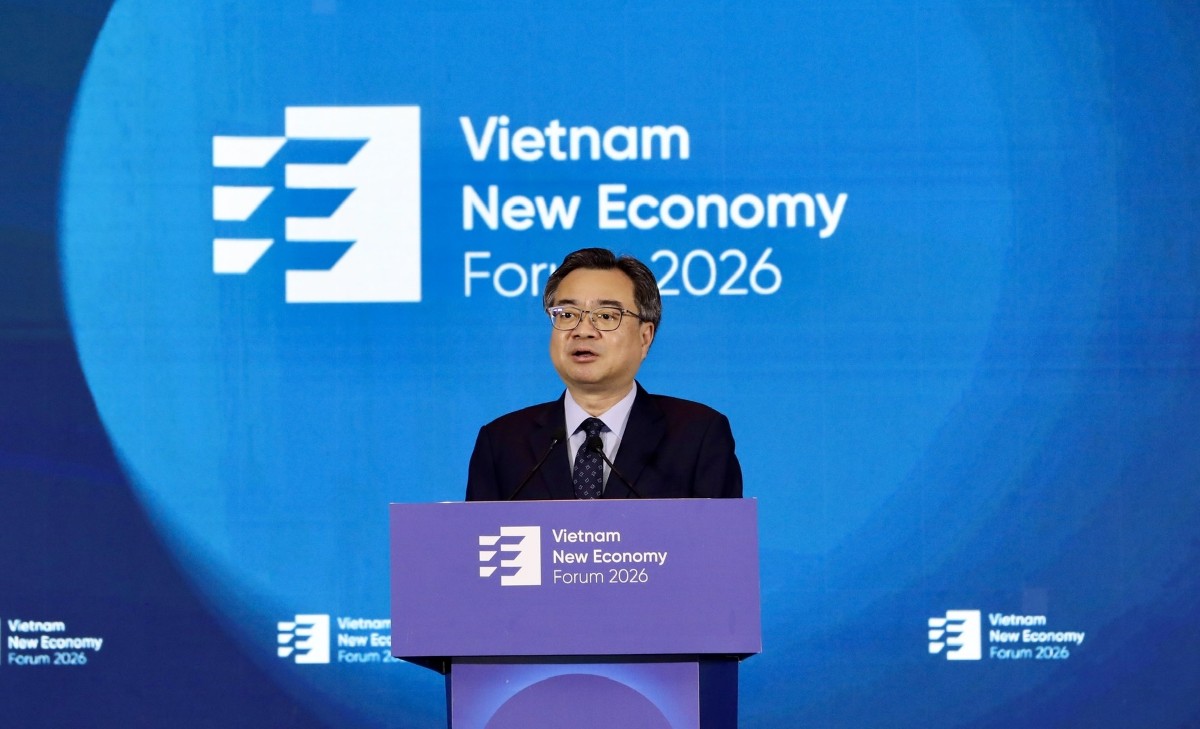
In that spirit, he proposed six core focus areas for the forum’s deliberations:
First, pivoting decisively from sound policy guidelines to execution breakthroughs. Party resolutions have explicitly affirmed the imperative to transform state administration methods: resolutely abandoning the mindset of "banning what cannot be managed," shifting focus from pre-approval controls to post-audit supervision, and managing by outputs and outcomes.
Delegates were therefore urged to address real-world obstacles directly and put forward concrete remedies. The implementation of Party resolutions must be measured by tangible outcomes—such as the exact number of days saved in administrative wait times and the actual compliance costs reduced for businesses.
Furthermore, clear mechanisms must link these metrics directly to the accountability of responsible officials across every agency, particularly the personal responsibility of agency heads in resolving administrative procedures and clearing roadblocks for enterprises.
Second, upgrading local administrative governance capacity, especially at the grassroots level, following the transition to a two-tier governance model. Post-merger provinces and cities command expanded developmental space. While this presents opportunities to restructure growth around regional competitive advantages and linkages, it also involves extensive administrative burdens regarding master planning, land administration, investment licensing, and public personnel management.
Localities need to share candidly about their obstacles—identifying precisely which stages and operational procedures require deregulation to unlock new growth spaces and improve local government performance.
Third, unlocking capital resources while maximizing deployment efficiency. Substantial resources remain locked up and underutilized—most notably in frozen real estate, protracted stalled projects, and underleveraged public assets. Unlocking these represents immense growth headroom in both the near and long term. Concurrently, public investment must function as genuine seed capital to crowd in private and social financing, while the financial system must expand its capacity to support the new growth cycle. However, long-term capital will flow into the real economy only when supported by bankable, high-quality projects.
Fourth, embedding science, technology, innovation, and digital transformation directly into production and commercial operations. While serving as the primary engines of the new development model under Politburo’s Resolution 19, these drivers have not yet achieved widespread diffusion or sufficient structural depth across the broader economy.
Fifth, elevating the competitiveness of Vietnamese enterprises and expanding market access. Focus must center on scaling up domestic businesses, nurturing anchor enterprises capable of orchestrating value chains, fostering vendor linkups where large corporations mentor small and medium-sized enterprises, and effectively integrating domestic suppliers with the foreign direct investment (FDI) sector. Alongside domestic integration, enterprises must aggressively cultivate both external export markets and domestic consumption.
Sixth, balancing rapid growth with long-term sustainability. The drive toward high growth targets must be accompanied by macroeconomic stability, social welfare safeguards, environmental protection, and enhanced economic self-reliance.
Against this backdrop, Mr. Nghi urged forum participants to contribute actionable input to the growth scenarios for 2027 and the overarching 2026–2030 trajectory amid a volatile and unpredictable global environment.





 Google translate