


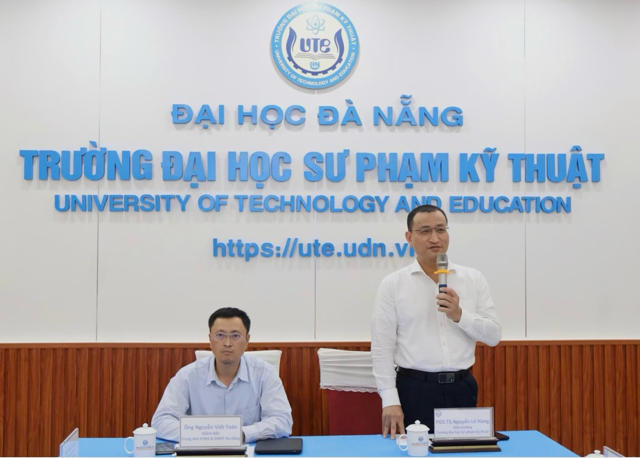
Speaking at a triple-helix workshop in the central city of Da Nang on September 16, Assoc. Prof. Dr. Nguyen Le Hung, Rector of the University of Technology and Education (UTE) under the University of Da Nang, announced plans to deepen the university-government-industry partnership through close collaboration with the Da Nang Innovative Startup Support Center.
“This center will serve as a vital hub connecting startup projects with experts, specialized training programs, mentorship networks, and the wider business ecosystem,” Dr. Hung stated.
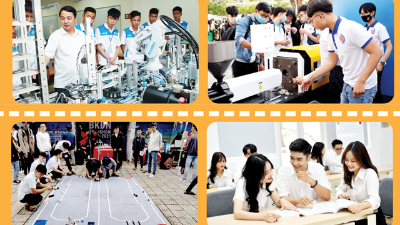
Over the past period, UTE has actively fostered innovation and entrepreneurship by embedding the triple-helix model into its operational strategy, establishing research and development (R&D) labs, integrating entrepreneurial knowledge into curricula, and recognizing outstanding student innovations.
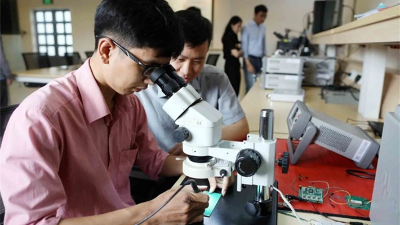
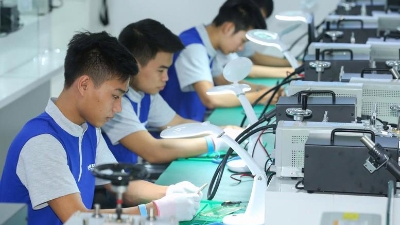
To bridge academic training with practical application, the university recently signed cooperation agreements with artificial intelligence (AI) enterprises to build on-campus R&D labs. The initiative aims to enhance practical training, accelerate scientific research, and drive technology transfer.
Addressing the forum, Mr. Nguyen Viet Toan, Director of the Da Nang Innovative Startup Support Center, highlighted the local government's strong policy backing for the innovation ecosystem.
The People’s Council of Da Nang has enacted 17 targeted support policies, notably Resolution No. 19/2026/NQ-HDND, which provides non-refundable funding of up to VND2 billion ($77,000) per startup development project.
The city’s policy framework also covers participation fees for domestic and international startup competitions, intellectual property registration costs, free working space at innovation hubs for up to three years, and subsidies for infrastructure rental and R&D activities.
Mr. Toan affirmed the center’s commitment to delivering these preferential policies directly to faculty, students, and researchers at UTE, helping promising research topics secure funding, refine technology, and successfully hit the market.
The workshop featured diverse research projects seeking commercialization, including an AI-integrated digital twin platform for carbon management aligned with Da Nang’s net-zero targets, as well as AI application designs for manufacturing and education.
The platform provided researchers with valuable industry feedback and peer reviews to align their solutions with market needs, foster technology transfer, and attract startup investment.



 Google translate