


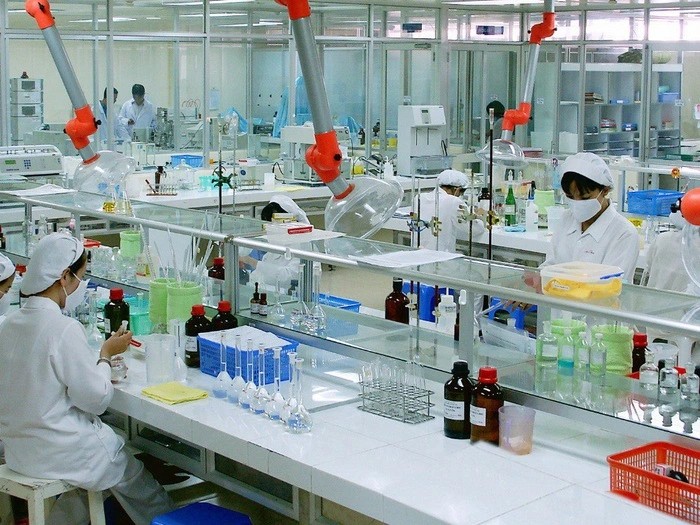
A national development program for Vietnam's pharmaceutical chemistry industry through 2030, with a long-term vision to 2045, has been approved under Prime Ministerial Decision No. 1954/QD-TTg, signed by Deputy Prime Minister Pham Thi Thanh Tra on October 8, according to a report by the Government News.
The strategy aims to master advanced synthesis technologies and establish domestic production of essential, strategic pharmaceutical raw materials. Development priority will center on active pharmaceutical ingredients (APIs), starting materials, chemical intermediates, and excipients to build industrial scale and commercialize homegrown products.
Under the plan's 2030 benchmarks, Vietnam targets meeting roughly 20% of domestic demand for drug-manufacturing raw materials, emphasizing self-reliance in essential active ingredients to reduce import dependency.
The initiative also mandates the establishment of at least two internationally certified pharmaceutical chemistry R&D centers equipped to handle process testing, pilot scaling, technology transfer, and commercialization.
By 2030, all domestic facilities producing APIs, excipients, and other raw medicinal inputs must comply with quality standards, Good Manufacturing Practice (GMP) rules, and chemical safety regulations. Additionally, at least 50% of these plants must implement digital platforms for production tracking, quality assurance, and product traceability.
On the commercial front, the program prioritizes high-value technologies and import-substituting formulations, targeting an annual export growth rate of at least 10% for high-value pharma-chemical goods.
Looking toward 2045, the government envisions transforming the domestic sector into a high-tech, competitive industry anchored by an integrated ecosystem spanning research, synthesis, manufacturing, and commercial trade.
To support implementation, the government will assist domestic enterprises in absorbing and scaling up technology, prioritizing production processes for high-demand APIs, essential drug compounds, next-generation excipients, and proprietary chemical technologies.
The program also emphasizes targeted international cooperation. Vietnam will actively partner with foreign research bodies, universities, and multinational pharmaceutical conglomerates that hold strengths in chemical intermediates, biotechnology, and advanced chemical synthesis.
Collaborative efforts will focus on aligning quality standards, laboratory testing, and GMP conformity to elevate Vietnam’s standing in global pharmaceutical supply chains.







 Google translate