


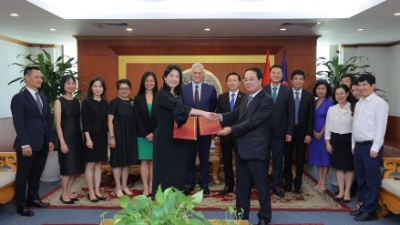
Vietnam has taken a key step to scale up ocean and coastal climate action, with the Ministry of Agriculture and Environment (MAE), in collaboration with the United Nations Development Programme (UNDP), recently holding a meeting to propose a plan for implementing the National Blue Carbon Action Partnership Program (NBCAP) and officially introducing the Program’s Secretariat, which will be hosted by the UNDP.
The event marks a critical milestone in implementing a Letter of Intent (LoI) on cooperation to support marine and coastal health signed between MAE and the World Economic Forum (WEF) in October. It is also an important first step towards the substantive implementation of the NBCAP in Vietnam, laying the foundation for building an inter-sectoral coordination mechanism, promoting public-private partnerships (PPPs), and mobilizing international resources.
Foundation for green systems
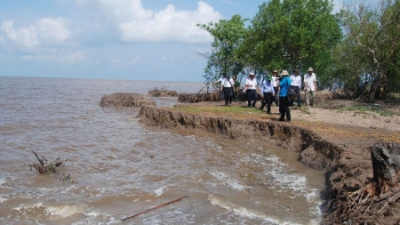
According to the Department of Climate Change at MAE, Vietnam currently has some 200,000 ha of mangrove forests, offering significant potential for green carbon. Beyond their carbon storage capacity, these coastal ecosystems also boast high biodiversity and provide crucial protection against storms, reducing property damage and preventing coastal erosion. Initial estimates suggest that green carbon will contribute approximately 3 million tons of CO2 towards Vietnam’s upcoming Nationally Determined Contribution (NDC) emission reduction targets by 2035.
With the establishment of the NBCAP, Vietnam is now the third country in the world - after Indonesia and the Philippines - to establish such a program at the national level, demonstrating global leadership in the conservation and restoration of blue carbon ecosystems. “This is a climate finance initiative that provides timely support to several tropical countries in Southeast Asia such as Indonesia, Malaysia, and Vietnam,” said Mr. Nguyen Phuong Nam, Climate Advisor, UNFCCC Reviewer, and CEO of Klinova. “These countries have long coastlines, potential reserves of blue carbon, and specific policies to promote their burgeoning domestic carbon markets.”
During the meeting, participants underscored the crucial role of blue carbon ecosystems such as mangrove forests, seagrass beds, and coastal wetlands in enhancing climate change resilience, conserving biodiversity, and maintaining sustainable livelihoods for local communities. There was strong consensus on the need for a country-led, multi-stakeholder platform to mobilize international expertise, financial resources, and innovation for the conservation and restoration of these ecosystems in Vietnam.
The outcomes of the meeting will serve as the basis for stakeholders to further refine the institutional framework, identify strategic priorities, and implement initiatives and pilot projects in the future, thereby contributing to the fulfillment of Vietnam’s international commitments on climate, biodiversity, and sustainable development.
Promoting cooperation
The International Cooperation Department at MAE was assigned by the Ministry to lead the implementation of an MoU on enhancing green carbon action and present a plan and roadmap for implementing the NBCAP in Vietnam. The Program aims to establish a multi-stakeholder cooperation platform with the participation of relevant parties, strengthening public-private cooperation to advance the objectives of the MoU.
Mr. Vu Duc Dam Quang, Deputy Director of the International Cooperation Department at the MAE, emphasized that Vietnam greatly appreciates the close cooperation and technical and financial support from international partners in this new and complex field. “Building and promoting inter-sectoral, multilateral coordination mechanisms within the NBCAP framework will contribute to realizing Vietnam’s sustainable development goals, especially in the areas of nature conservation, protection and restoration of marine ecosystem health, and greenhouse gas emission reduction,” he added.
According to Mr. Nam, with technical and financial support from international partners, the NBCAP hopes to help countries not only rapidly develop a sustainable ocean economy and ensure biodiversity conservation but also improve the financial well-being and livelihoods of local communities.
However, he also pointed out that this is a new concept that has not yet been specifically defined in Vietnamese legal regulations, particularly regarding the assessment of blue carbon reserves that could be generated and become commercially tradable based on natural potential.
Notably, the NBCAP aims to strengthen PPPs. “PPPs are crucial for attracting private sector interest and investment in this promising yet challenging new sector,” Mr. Nam said. “Developing blue carbon projects is important for environmental and social development, but it would be impractical without economic viability, given the inherent risks associated with policies governing the exploitation and ownership of this novel and unique asset.”
To develop concrete solutions to promote PPPs in the field, Mr. Nam emphasized that State management agencies need to clarify how much of the potential blue carbon credit generation areas contribute to the NDC, how much private ownership is allowed, and which areas are permitted to develop blue carbon credit projects. In addition, MRV (Monitoring, Reporting, and Verification) activities for carbon credit generation results in general, and for blue carbon credit generation areas in particular, need to be regulated and implemented soon. This will make it easier for private investors to assess risks in PPP investments.
The government officially issued Decree No. 29/2026/ND-CP on January 19, establishing the legal framework for the domestic carbon market. The decree details the organization and operation of the carbon credit and greenhouse gas (GHG) emissions quota trading platform, opening a new era for the green finance market in Vietnam. Decree No. 29 is an important tool for Vietnam to gradually implement its commitment to net-zero emissions by 2050.
The Letter of Intent (LoI) signed in October between the Ministry of Agriculture and Environment and the World Economic Forum aims to establish a framework for cooperation to promote the protection and restoration of marine and coastal ecosystems in Vietnam.
Its focus is the establishment and implementation of the National Blue Carbon Action Partnership Program (NBCAP) in Vietnam, thereby building a multi-stakeholder cooperation platform, strengthening inter-sectoral coordination, and promoting public-private partnerships in the field of green carbon.
The LoI also aims to support the development of a national green carbon development and financing roadmap, while mobilizing international technical, financial, and knowledge resources to conserve and restore green carbon ecosystems such as mangrove forests, seagrass beds, and coastal wetlands, contributing to Vietnam’s commitments on climate, biodiversity, and sustainable development.
Mr. Fergus McBean, First Secretary for Climate and Nature at the Embassy of the UK in Vietnam, expressed confidence in the role of international cooperation platforms such as the NBCAP, expecting it will become an effective forum for connecting and mobilizing expertise and financial resources and promoting the conservation and restoration of blue carbon ecosystems in Vietnam.
Meanwhile, Ms. Emily Kelly, Lead of the Blue Carbon Action Partnership (BCAP) at the WEF, said the organization is honored to support Vietnam in becoming the third country in the world to establish the NBCAP, demonstrating its global leadership in the conservation and restoration of blue carbon ecosystems. “Building on our strong partnership, we look forward to working with MAE and national stakeholders to deliver a comprehensive blue carbon action and finance roadmap aligned with Vietnam’s climate and biodiversity commitments and national development priorities,” she added.
Ms. Francesca Nardini, UNDP Deputy Resident Representative in Vietnam, also reaffirmed that, as host of the NBCAP Secretariat, the UNDP is committed to leveraging its global and national networks to help Vietnam unlock its blue carbon potential and deliver on international climate commitments.



 Google translate