


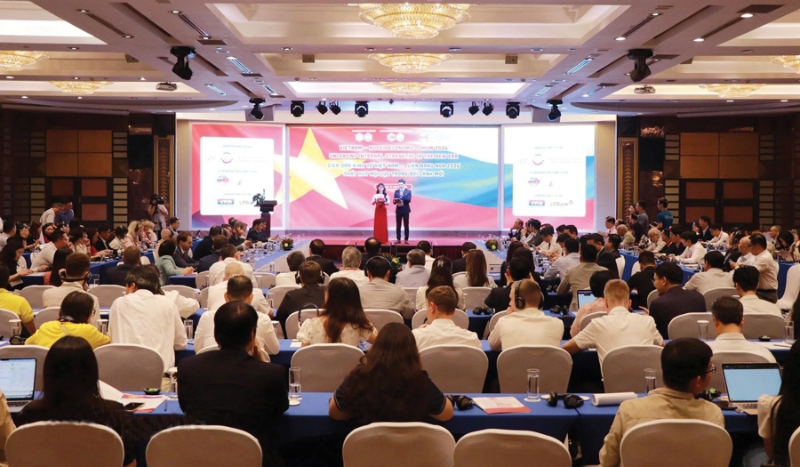
Energy cooperation is emerging as one of the key pillars of the Vietnam - Russia relationship, carrying a long-term vision and profound strategic significance for both countries. With Vietnam’s energy demand continuing to rise and Russia holding strong advantages in natural resources and technology, this complementarity provides a solid foundation for the two sides to expand collaboration across multiple fields, including oil and gas, liquefied natural gas (LNG), and renewable energy.
According to experts attending the Vietnam-Russia Economic Forum 2026, held on April 8 with the theme “Unleashing Internal Strengths in the New Era”, the scope for cooperation between the two countries remains substantial. Beyond traditional projects, both sides have opportunities to promote technology transfer, develop modern energy infrastructure, and cooperate in emerging areas such as hydrogen and nuclear power.
Energy cooperation demand
Global energy consumption has shifted markedly toward Asia in recent years, a region characterized by fast-growing economies and rapidly-increasing energy demand. This trend is driven by rapid industrialization, urbanization, and the expansion of manufacturing hubs across countries such as China, India, and Southeast Asian nations, all of which are placing mounting pressure on energy systems. The shift not only reflects the region’s strong development momentum but also raises new requirements for ensuring stable and sustainable energy supplies, including the need to diversify energy sources, invest in resilient infrastructure, and accelerate the transition toward cleaner and more efficient energy solutions.
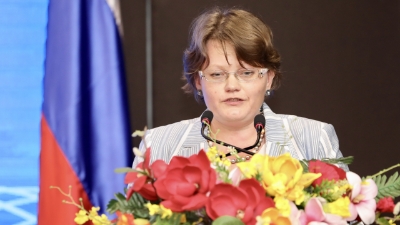
According to Associate Professor Konstantin Simonov from the Financial University in Russia, global energy demand is increasingly concentrated in Asia. Within the current energy mix, oil, coal, and gas continue to play dominant roles. In particular, the high economic growth of countries in the region requires a stable, continuous, and reliable supply of oil and gas to sustain development.
Against this backdrop, energy cooperation between Vietnam and Russia is undergoing significant transformation, moving beyond the traditional framework of oil and gas exploration and production toward new areas with higher technological content and greater added value. This shift is consistent with global energy transition trends as well as the long-term development needs of both countries.
For Vietnam, rapid economic growth has led to a significant increase in energy demand, particularly for inputs serving production and industrial activities. Oil imports have steadily risen in recent years to meet domestic demand, and this trend is expected to extend to natural gas in the near future as electricity demand and industrial production continue to expand.
Beyond demand-driven factors, Associate Professor Simonov also noted that complex global economic fluctuations are posing increasing challenges to energy security. Geopolitical tensions in the Middle East - one of the world’s major oil and gas supply hubs - remain unpredictable, heightening the risk of supply disruptions. This makes the search for stable, long-term energy partners more urgent than ever to ensure a solid foundation for Vietnam’s development.
Russia is regarded as one of the most reliable energy suppliers in Asia. Citing data, Associate Professor Simonov noted that, in 2025, Russia accounted for 18 per cent of total oil exports to China and 32 per cent to India, underscoring its capacity to provide stable supplies to major economies in the region.
For Vietnam, data from Vietnam Customs shows that, in 2025, fuels such as coal, gasoline, and refined petroleum products accounted for the largest share of imports from the Russian Federation, with a total value exceeding $889.7 million, equivalent to more than 35 per cent of Vietnam’s total imports from this market.
From these realities, Associate Professor Simonov emphasized that the potential for energy cooperation between Vietnam and Russia remains vast and underexploited relative to the capabilities of both sides. “Though there have been energy cooperation projects between Vietnam and Russia, they are not yet sufficient,” he said. “Both sides need to promote more projects in the coming period, both in scale and in depth.”
Importantly, such cooperation offers substantial long-term benefits for both countries - not only economically but also in terms of energy security, technology transfer, and the strengthening of their Comprehensive Strategic Partnership.
According to Dr. Nguyen Thi Anh Tuyet from the University of Economics and Business under Vietnam National University, energy cooperation between Vietnam and Russia brings clear strategic benefits from several perspectives.
First, strengthening cooperation with Russia helps diversify strategic partners, enabling Vietnam to reduce dependence on a single source of supply, which is particularly important amid rising geopolitical risks and supply chain disruptions. Second, Russia holds advantages in large-scale energy infrastructure and extensive experience, while Vietnam is a rapidly-developing market with a strategic geographic position and significant energy transition needs, creating favorable conditions for larger and more effective joint projects.
Moreover, cooperation with Russia allows Vietnam to access advanced energy technologies such as nuclear energy and hydrogen, fields considered foundational within Russia’s energy system. This not only enhances Vietnam’s long-term capacity but also strengthens its position in the global energy value chain. “Finally, energy cooperation and technology transfer with Russia contribute to enhancing Vietnam’s domestic technological self-reliance, improving resilience to external shocks, and reducing vulnerability to global energy fluctuations,” Dr. Tuyet said.
Shaping cooperation strategies
Though there have been energy cooperation projects between Vietnam and Russia, they are not yet sufficient. Both sides need to promote more projects in the coming period, both in scale and in depth.
Building on growing demand, Vietnam and Russia are well positioned to open up more concrete and substantive avenues of cooperation.
The two countries can step up collaboration in key areas such as nuclear energy, power system stability through grid interconnection and coordinated operation, and joint R&D of emerging technologies such as energy storage and carbon capture and storage (CCS). These fields offer high economic value and play a critical role in the global energy transition.
At the same time, cooperation can expand to training and developing a high-quality technical workforce. Building a strong pool of engineers and energy experts, alongside promoting technology transfer, will lay a solid foundation for long-term cooperation while strengthening Vietnam’s self-reliance in the energy sector.
In addition, effectively leveraging the Vietnam - Eurasian Economic Union Free Trade Agreement (VN-EAEU FTA) is expected to create further momentum by expanding trade in related products and improving access to regional markets. However, to ensure effectiveness and sustainability, Dr. Tuyet emphasized that all projects must comply with international environmental standards, ensure transparency, and align with sustainable development goals, particularly Vietnam’s net-zero emissions commitment.
The process of energy cooperation and technology transfer with Russia contributes to enhancing Vietnam’s domestic technological self-reliance, thereby improving resilience to external shocks and reducing vulnerability to international energy fluctuations.
Avoiding long-term dependency is also critical, requiring clear localization roadmaps for each project alongside concrete mechanisms for technology and knowledge transfer. This will enable Vietnam to gradually master technologies and strengthen internal capabilities.
Dr. Tuyet added that the energy transition is not only about reducing carbon emissions but also about reshaping future power dynamics. “Each country needs to proactively position itself in this process,” she explained. “Cooperation between Vietnam and Russia can become a mutually-beneficial solution, allowing both sides to leverage their strengths and complement each other toward sustainable, long-term development.”




 Google translate