


The National Assembly (NA) has passed a Resolution approving the investment policy for the Vinh – Thanh Thuy Expressway project, with the preliminary total investment over VND23.9 trillion (nearly 913 million), funded by the State budget.
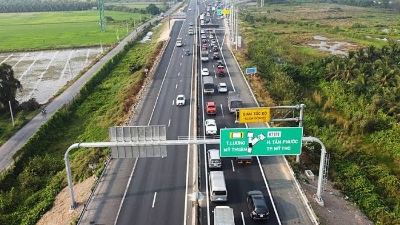
The Vinh – Thanh Thuy Expressway is a key infrastructure project of strategic importance for socio-economic development, national defense and security, and the completion of the national transportation network.
Upon completion, the route will facilitate a direct connection from Hanoi to Vientiane (Laos), while simultaneously linking with the Eastern North-South Expressway and the Ho Chi Minh Road. Consequently, the competitiveness of the North Central region and related localities will be enhanced, creating favorable conditions to boost trade, services, logistics, and international exchange.
According to the Resolution, the project aims to establish a modern, synchronized East-West transport route to meet growing transport demands and unlock new development opportunities. The NA has agreed to invest in approximately 60 km of the expressway within Nghe An province under the public investment model, divided into 10 component projects.
The entire project will apply advanced construction and management technologies to ensure safety, quality, and efficiency, while encouraging solutions adapted to climate change. Upon entering operation, the expressway will implement non-stop electronic toll collection (ETC).
The project requires a large land area, so land acquisition, compensation, support, and resettlement will be conducted once for the entire route, shortening the time for site clearance and minimizing prolonged impacts on residents. To expedite progress, the NA has allowed the application of special mechanisms.
Furthermore, local People's Committees are authorized to carry out land recovery, compensation, support, and resettlement for construction waste disposal areas; manage waste disposal sites according to land and environmental laws; and develop plans for using the topsoil of reclaimed rice land as per agricultural law. These flexible mechanisms aim to reduce procedures, decentralize power to the grassroots level, and ensure project progress.

 Google translate