



A climate of significant investment caution prevails among Asia Pacific CEOs, according to PwC’s 29th Global CEO Survey launched on March 5.
This is evidenced by a sharp decline in M&A intentions and the fact that 60 per cent of CEOs plan no new international investments in the next 12 months, a marked increase from 44 per cent the previous year.
However, the survey also noted that this is not a retreat, but a strategic reallocation of capital. When investments are made, they are increasingly concentrated in key territories perceived to enhance organisational resilience against geopolitical and supply-chain risks. The data clearly shows this focus, with the US (42 per cent), Vietnam (15 per cent), and the Chinese Mainland (14 per cent) emerging as the top three destinations.
Bright spots
According to the survey, Vietnam's performance is particularly notable, having almost doubled its share of investor interest from 8 per cent to 15 per cent in one year. This rapid ascent is directly underpinned by its central role in supply-chain diversification strategies (China+1), strong government policy support, and growing intra-regional trade (e.g. ASEAN+). Vietnam stands out as a primary beneficiary of the strategic shift from broad expansion to targeted, resilient investment.
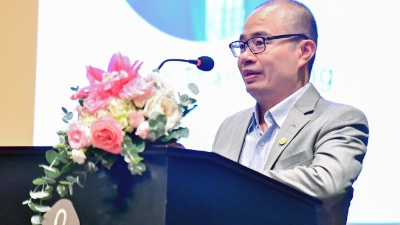
Mr. Mai Viet Hung Tran, General Director of PwC Vietnam said that Vietnam’s strongest competitive advantage lies in the unique combination of three factors that global investors value most today: robust economic momentum, a strategic position in regional supply chains, and a policy environment that is becoming increasingly transparent and stable.
In addition, several reports show that Vietnam also benefits significantly from the global supply chain shift. International companies are actively seeking destinations that offer competitive costs, a young and fast-learning workforce, and the ability to absorb new technologies quickly.
At the same time, amidst global caution, Vietnam stands out with impressive growth, achieving a GDP growth rate of 8.02 per cent in 2025 and setting a national GDP growth target of 10 per cent for the period 2026-2030. This growth momentum is driven by solid internal drivers: stable consumption thanks to fiscal stimulus policies, projected 20-30 per cent increase in public spending on infrastructure, and sustainable export competitiveness with an expected 8 per cent increase in 2026.
The top strategic challenge for Vietnam is maintaining a balance between rapid growth and macroeconomic stability. Controlling inflation at 3.5 per cent and maintaining exchange rate stability in the context of global volatility are key factors in ensuring the sustainable development of the national economy.
"Taken together, Vietnam is no longer viewed simply as a cost‑competitive manufacturing base, it is emerging as a strategic investment hub for global companies seeking speed, resilience and sustainable growth in Asia," Mr. Tran said.
Businesses need to adapt
Realising this opportunity will require decisive action. The survey pointed out three next steps for Vietnamese business leaders.
First is to turn uncertainty into options. Despite facing a 20 per cent tariff from the US, the Vietnamese economy showed remarkable resilience in 2025, with total exports increasing by 17 per cent and exports to the US increasing by nearly 28 per cent, according to data from Vietnam Customs. However, this positive effect is mainly due to temporary measures such as increased exports before the tariff imposition and significant exemptions in some sectors, somewhat masking the initial impact of the tariffs.
This data may not fully reflect the deep-seated concerns. The PwC's survey shows that up to 86 per cent of manufacturing businesses in Vietnam are preparing to face negative impacts in the future.
This concern is concentrated in 2026, when the full impact of the tariffs is expected to become apparent without temporary support measures. This poses a serious risk to key industries such as textiles, wood products, and agriculture – a risk further complicated by increased US scrutiny of transit goods and potentially leading to harsher sanctions.
Accordingly, it is necessary to pressure-test organisation against a wider set of scenarios, such as cyber disruption, tariff shifts, supply-chain shocks and policy change, and treat this as an ongoing discipline, not a one-off exercise. Diversification, both inbound and outbound, becomes critical to keeping your growth options open. It reduces reliance on any single supplier, market or trade route, and gives you more flexibility as conditions shift.
Second, it's about transforming AI potential into effectiveness. While Asia Pacific CEOs report tangible revenue (39 per cent) and cost (26 per cent) benefits from AI, the impact is far from uniform. A significant performance gap is emerging between a select group of high- achievers and the majority of organisations where financial returns remain limited.
Therefore, omentum builds when AI is tied to growth, embedded into how the business runs, and backed by strong foundations in data, talent, investment, and Responsible AI. That calls for visible leadership—leading the cultural shift personally, not delegating it.
Third is reinvention to outperform. Encouragingly, there is a clear shift in future intent. Over a third (37 per cent) of Asia Pacific CEOs now plan to expand beyond their traditional industry boundaries in the next three years. They are targeting high-growth adjacent sectors, primarily technology (20 per cent), health services (16 per cent), assets and wealth management (14 per cent), transportation and logistics (12 per cent), retail (12 per cent).
A unique moment is emerging for Vietnamese businesses. New regional 'Corridors of Value' are opening up, while domestic policies are accelerating growth across both the state and private sectors. Seizing this opportunity requires a dual focus: strategic expansion and fundamental reinvention.
Mr. Tran concludes businesses need stronger foundations in data, talent and governance to convert AI from promise into performance. Cybersecurity must move from a technical concern to a central boardroom focus. Above all, leaders must master a dual agenda by strengthening near-term resilience while simultaneously reinventing their organisations for the future.
"While challenges are intensifying, the potential for Vietnamese businesses that act with foresight is vast," he adaded. "Those that invest early, adapt boldly and lead with intent can turn uncertainty into a source of long-term advantage."




 Google translate