


After doing business in Vietnam for nearly three decades, where did you position the market in ofi’s investment strategy?
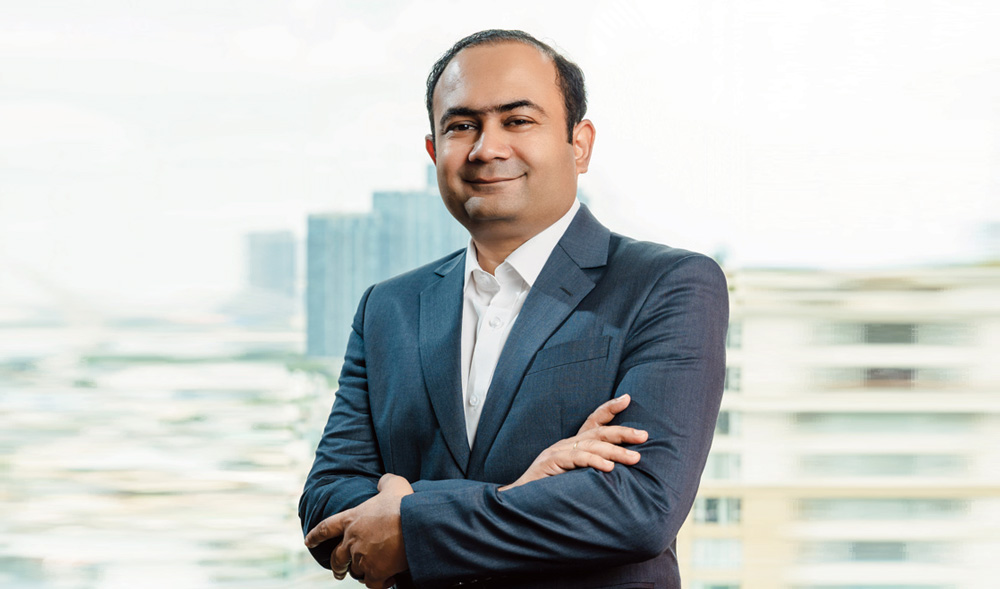
Vietnam is not a short-term sourcing option for ofi. It plays a strategic role in our global supply network. Our network of seven large-scale processing facilities and other sourcing and raw material processing facilities across key sourcing regions such as Dong Nai, Gia Lai, Dak Lak, and Tay Ninh, reflects sustained engagement with the market and enables us to serve customers reliably, at scale, and to international standards.
We see three key factors in Vietnam. First, a stable development environment that enables long-term investments. Second, a clear national direction on green growth, especially as climate change continues to impact agriculture. And third, and perhaps most importantly, the evolving mindset and capabilities of the workforce and farming communities.
Today, ofi’s Vietnam network brings together more than 4,500 employees and over 9,000 farmers. It’s a long-term partnership where people share know-how, solve problems, and keep improving together.
Vietnam is transitioning from a raw commodity exporter to creating higher value in the supply chain. What role does ofi play in this transition?
ofi supports this shift by expanding value-added processing and offering customers a range of sustainability and quality options that meet evolving market and regulatory expectations.
Historically, agricultural exports were often measured by volume. Today, value increasingly comes from quality, consistency, food safety, and compliance with international standards. In Vietnam, ofi’s facilities process raw materials into compliant ingredients and finished products, including cashews, pepper, soluble coffee, and ready-to-eat offerings, serving global customers in demanding markets.
Through our sustainability strategy, Choices for Change, we also give our customers the options they need to meet their sustainability goals without compromising product performance.
In recent years, ofi’s Vietnam operations have produced millions of ready-to-eat product units that meet international standards, supplying customers and retail partners in global markets. This reflects the country’s growing role in value-added food manufacturing, not only primary agriculture.
However, the application of technology is only part of where value add is derived. Transparency and quality control across the supply chain are equally critical. For instance, through ofi’s sustainable sourcing solution, AtSource, our customers can trace product origins, monitor environmental impact, and measure carbon emissions in real time. This is particularly important as regulations such as the EU Deforestation Regulation (EUDR) are increasingly becoming mandatory requirements in many markets.
We are not only exporting products - we are working with Vietnam to build and deliver standards that global markets can trust.
How has ofi turned sustainable development from a goal into concrete change for farmers and the entire value chain?
For us, sustainability is at the heart of our Purpose to be the change for good food and a healthy future.
Vietnam’s ambition to achieve net-zero emissions by 2050 provides an important foundation, enabling companies like ours to implement action in a consistent way while aligning global goals with local execution. It also helps us focus our efforts to meet our own SBTi-validated climate goals, including reaching net-zero greenhouse gas emissions across the value chain by 2050.
One way we are working towards our goal to work directly with thousands of farmers to adopt regenerative agricultural practices. In 2025 alone, more than 16,000 ha of farmland were transitioned to these models, helping to improve soil quality, enhance climate resilience, and optimize long-term productivity.
We also recognize that this transition is not always easy. It requires time, patience, and close partnership with farmers. But it is through this process that meaningful change takes place.
A farmer I met in Gia Lai shared his experience with me. He explained how farming relied heavily on traditional experience, with led to inconsistent yields. After adopting sustainable practices, his product quality improved and his profits increased as a result. It means that he and his family now feel more financially secure about the future.
These results reflect not only scale but also a long-term approach in which business growth can go hand-in-hand with community development.
How do you see Vietnam’s role in the global food system evolving?
Vietnam has strong fundamentals to move further up the global value chain, from production capabilities and agricultural ecosystems to its ability to adapt to international standards. In the next phase, the focus will not only be on expanding scale but on enhancing value and sustainability across the entire supply chain.
At ofi, we will continue to invest in the capabilities and people we have developed in Vietnam, from processing and technology to supply chain management. At the same time, we are progressively applying digital and AI-driven solutions to aim to improve operational efficiency and forecasting capabilities.
However, this journey cannot be achieved in isolation.
We will continue to work closely with our teams, the government, partners, customers and farming communities to help build a food and beverage sector that delivers both value and better outcomes for people and the planet over the long term.
As the global food sector faces increasing challenges, from climate change to rising expectations on transparency and sustainability, the role of companies like ofi is to be a part of how value chains evolve in the future. In that journey, Vietnam is no longer just a sourcing origin but is increasingly becoming a strategic partner in shaping the future of the global food value chain.


 Google translate