


By 2030, the northern province strives to draw more than 70 percent of new foreign direct investment (FDI) projects into priority industries, while completing infrastructure for at least 10 new industrial parks.
The plan aims to enhance the quality and efficiency of foreign capital utilization, contributing to Ninh Binh's goal of becoming a centrally governed city before 2030.
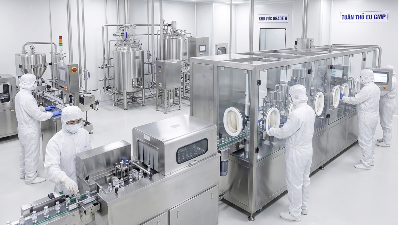
Ninh Binh is transitioning from an investment model reliant on incentives, low costs, and project volume to one driven by institutional quality, infrastructure, human resources, science and technology, innovation, digital transformation, and governance efficiency. Priority will be given to large-scale, high-tech, and source-technology projects capable of leading value chains, transferring technology, training workers, and integrating deeply into global supply chains.
Core pillar sectors include automotive engineering, information technology, electronics, manufacturing and processing, energy, and green materials. Projects that consume extensive land, energy, and resources while generating low added value will be restricted.
The province strictly refuses to trade environmental protection, cultural heritage, social welfare, or national security for mere economic growth, rejecting projects utilizing outdated, energy-intensive, or polluting technologies.
To meet the demands of high-tech investors, Ninh Binh will align vocational training with priority sectors and industrial parks, focusing on engineering, data, automation, production management, logistics, finance, and green and digital skills. Public vocational institutions will also be reorganized into high-quality training centers.
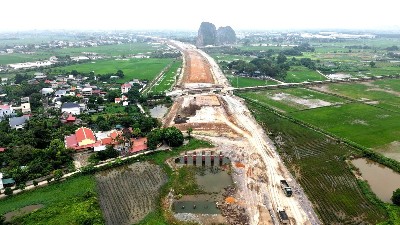
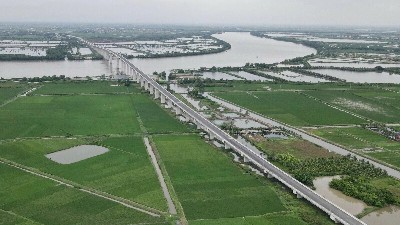
On the infrastructure front, the province is prioritizing key inter-regional transport corridors connecting the Phu Ly-Hoa Lu-Nam Dinh urban triangle with national economic hubs, alongside urban planning integrated with public transit, high-speed railway stations, economic zones, and seaports.
By 2030, Ninh Binh aims to complete infrastructure for at least 10 new industrial parks with ready-to-use clean land, targeting roughly 10 percent of all industrial parks to operate as eco-industrial parks. Authorities will also accelerate the launch of the Ha Nam High-Tech Park and ensure stable power supplies for high-tech production.
The province plans to maximize FDI spillover effects by helping local businesses upgrade management, technology, standards, and financial capacity to participate in multinational supply chains.
Investment promotion will shift toward directly targeting multinational corporations and strategic investors, paired with dedicated post-licensing support to resolve bottlenecks and encourage capital expansion.
Regulatory oversight will tighten initial project appraisals while shifting management from pre-inspection to digital lifecycle post-inspection.
Authorities will strictly penalize delayed projects, unutilized land, transfer pricing, disguised investments, and the concealment of beneficial owners, while prioritizing stable, long-term foreign indirect investment aligned with green and digital transitions.

 Google translate