



Mr. Pham Anh Tuan, Director General of the Payment Department, State Bank of Vietnam (SBV)
From the perspective of the payment regulator, expanding the network of QR code payment (QR payment) acceptance points has always been considered one of the essential prerequisites for promoting bilateral cross-border payments. In reality, however, cross-border payment activities in recent years have not met expectations, partly because the number of merchants accepting QR payments remains rather modest.
Looking back at the development of the payment market, we can clearly see a shift. More than two decades ago, cash dominated and bank cards were rarely used. Today, cards have become common, especially among young people, thanks to their convenience. QR payments not only inherit this advantage but also help merchants reduce the cost of investing in hardware. The question is how to make QR payments an essential consumer need while also supporting merchants in their technological transition.
However, the scale of QR payment development depends significantly on standardizing QR identification. Not only in Vietnam but even in Thailand, users can still encounter cases where they scan a code but cannot complete payment because it is a transfer code, not a payment code. This illustrates that establishing a unified national QR identification is essential.
Therefore, effective implementation requires cooperation across the entire financial ecosystem, with a shared goal of expanding QR payment acceptance across the market rather than competing for merchant acquisition. Moreover, participating in the QR payment project offers direct bilateral benefits for banks, as it helps promote domestic goods consumption and enables Vietnamese customers to make convenient payments abroad with far more favorable exchange rates than credit cards.
Meanwhile, card transaction fees still range from 3 to 4 per cent of total spending, creating a considerable burden for users. Thus, the long-term objective is for all merchants nationwide to use a unified QR payment identification and apply consistent policies and the same support and reconciliation processes, thereby ensuring a seamless and reasonably-priced payment experience for the public.
On that basis, the State Bank of Vietnam has issued decisions on the technical specification standard for QR codes displayed on the customer side, establishing a legal framework to unify QR standards in the market. Generally, service providers have adopted these standards, but the remaining challenge lies in interoperability between systems. This depends on policy, operational models, and the interests of each party.
With a relatively complete legal framework and an increasingly broad ecosystem, I expect that banks and payment intermediaries will continue to prioritize the shared interests of the economy and promote QR interoperability across the entire system. When that happens, the differences between QR payment codes at merchant locations will gradually disappear, delivering a more convenient, unified, and safer payment experience for individuals and businesses nationwide.
Mr. Nguyen Duc Le, Deputy Head of the Market Management Division, Department of Domestic Markets, Ministry of Industry and Trade
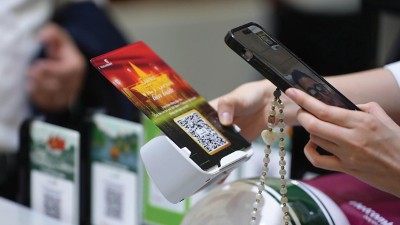
Cashless payments in general, and QR codes in particular, play an extremely important role in promoting e-commerce and market activities. QR codes are convenient, widely-used, and reliable tools. In terms of utility, people only need a smart device to make transactions.
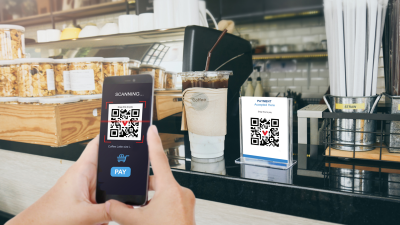
For businesses, especially small establishments such as coffee shops or bakeries, the cost of accepting payments via QR codes is very low; they simply need to print a code to receive payments. This makes QR codes highly accessible, as almost everyone in Vietnam has at least one smartphone.
Moreover, cashless payments build trust in transactions. Standardized QR codes, such as VietQR and VietQRPay, help reduce scams involving incorrect transfer accounts, bringing transparency to both buyers and sellers. Consumers are more willing to spend when they feel secure, which helps businesses expand their markets and reach cross-border customers through online sales, livestreaming, and e-commerce.
In particular, cashless payments help make the economy more transparent by reducing “underground” transactions and shifting activities onto official channels. This aligns with Project 319, approved by the Prime Minister in 2023, on combating counterfeit goods and protecting consumer rights in e-commerce.
E-commerce transactions are highly anonymous, making oversight difficult, especially for cross-border transactions or those occurring on social networks. These activities can easily be exploited for money laundering, illegal money transfers, and other fraudulent behavior. The Ministry of Industry and Trade has proposed policies to leverage electronic payments to increase transparency and prevent the misuse of e-commerce for unlawful purposes. Promoting cashless payments via banks and QR codes allows State agencies to more clearly monitor and identify payment sources, thereby helping them control illegal activities.
To effectively manage the market based on e-commerce platforms, State authorities must strictly oversee three factors that always accompany every goods transaction: Goods must be accompanied by valid invoices; invoices relate to tax administration (managed by the Tax Department); and money relates to banks and financial institutions (including e-wallets) to monitor cash flows. Managing these three elements well enhances transparency in State administration and reassures both businesses and consumers when conducting transactions.
Mr. Nguyen Hoang Long, Deputy CEO, National Payment Corporation of Vietnam (NAPAS)
The VietQRPay payment service, launched by the National Payment Corporation of Vietnam (NAPAS) in early 2025, is seen as a “transitional” step built on top of the 24/7 instant interbank transfer platform the organization has operated since 2009. Once the interbank transfer infrastructure had stabilized, the potential to expand into QR-based payments, which are already widespread in China, Thailand, and India, instead of relying solely on mobile banking, began to emerge.
The Covid-19 pandemic provided a major boost to the shift in consumer payment behavior. Reduced physical contact, the rise of online shopping, and the explosion of personal QR code transfers drove QR payments to become one of the most familiar payment methods.
NAPAS now handles some 15 million VietQR transfer transactions each day, with total annual transaction value standing at approximately VND40 trillion ($1.54 billion). On average, NAPAS processes about 35 million transactions daily, nearly half of which are VietQR. These figures show that QR payments have permeated every corner of life, from casual transactions to daily payment needs.
However, Peer-to-Peer (P2P) transfers only meet the needs of transferring money between individuals. If disputes arise, ordinary transfer transactions have no mechanism to protect the consumer. Meanwhile, payments between customers and merchants or business households require more complex features such as integration with point-of-sale software, electronic invoicing systems, and refund and complaint-handling mechanisms - capabilities that P2P transfers cannot support.
From this reality, in 2025 NAPAS began deploying QR payments to establish a commercial payment (Person-to-Merchant, or P2M) standard, thereby upgrading the payment experience for both buyers and sellers. While P2P QR transfers continue to meet the needs of certain user groups, QR payments are positioned as the choice for consumers who prioritize a fuller shopping experience as well as for merchants and businesses seeking to improve their service quality.
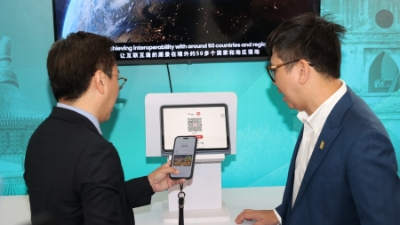
Developing QR payments require the combined efforts of NAPAS, regulators, and the entire payment ecosystem. The State Bank of Vietnam (SBV) plays the role of setting policies to promote cashless payments and issuing technical standards for NAPAS, banks, and payment intermediaries, forming the foundation for domestic interoperability, and future cross-border connectivity. The broader objective is to enable Vietnamese users to scan and pay abroad using domestic apps, and vice versa.
Beyond providing infrastructure, ensuring the security and safety of QR payment services is paramount. NAPAS is now directly connected to the SBV’s SiMo system to receive abnormal transaction alerts and collaborates with the Ministry of Public Security to share blacklist data. At the same time, big data and AI technologies are deployed to quickly detect suspicious accounts and automatically send alerts to banks. NAPAS is also working with the Vietnam Banks Association to develop a handbook on fraud-handling procedures, expected to be officially issued in December.
Regarding its roadmap, NAPAS will expand QR payments both domestically and internationally. In the domestic market, NAPAS, together with banks and payment intermediaries, will promote the shift from P2P to P2M transactions in order to standardize sales data, support market statistics, and enhance regulatory oversight. E-wallets will also be integrated, enabling users to make QR payments through more channels.
Internationally, NAPAS has been interoperable with Thailand since 2022, Cambodia since 2023, and Laos since early 2025. The system is expected to launch support for payments made by Chinese visitors to Vietnam in December this year, creating significant opportunities for domestic businesses and merchants.
Moving into 2026, NAPAS plans to connect with Japan, South Korea, Malaysia, Singapore, and more markets. Under the guidance of the SBV, NAPAS expects Vietnam’s QR payment network not only to serve the domestic market effectively but also to expand regionally, delivering practical benefits to consumers, merchants, and small and medium-sized enterprises, thereby contributing to the digital transformation of the economy.
Ms. Doan Hong Nhung, Member of the Executive Board and Director of the Retail Division, Vietcombank
The issue of multiple QR code schemes is a major concern for banks and payment service providers in Vietnam. At present, besides VietQR, operated by NAPAS, there are also VNPAY and several other providers, creating an urgent need for a unified standard or an intermediary gateway capable of accepting multiple QR formats.
International experience shows that, in China, though users commonly rely on Alipay and WeChat Pay, an intermediary gateway - China Payment Gateway - was launched in September to integrate various QR schemes. Without this gateway, transactions from Vietnam to China would require separate integration for each individual QR format. Therefore, Vietcombank in particular and NAPAS in general must make significant technical investments to integrate multiple QR formats into a single gateway, expanding payment capabilities for both Vietnamese users in China and Chinese users in Vietnam.
In Vietnam, expanding QRPay previously faced many challenges. Domestic banks have been offering free interbank transfers via mobile banking, while entities deploying QRPay had to invest in and operate their own systems. Today, with the rollout of electronic tax declaration and rising demand for convenient payments, conditions for scaling VietQRPay, especially in the context of cross-border payments, have become more favorable than ever. However, effective implementation critically depends on regulators’ involvement.
From the perspective of a tool that enhances payment experiences for both domestic and international customers, two distinct groups need to be considered: foreign visitors to Vietnam and Vietnamese travelers going abroad.
For foreign visitors, outside of markets where cross-border QR payments are already in place, such as Thailand, Laos, and Cambodia, most still rely on cards or cash. Even in markets with existing QR connectivity, if merchants do not accept VietQRPay or VietQR Global, users still face payment difficulties, limiting the effectiveness of these solutions. Once the interoperability system is fully developed, international visitors will be able to scan QR codes at any merchant in Vietnam and pay directly using their home-country mobile banking apps.
For Vietnamese traveling abroad, cross-border QR reduces risks associated with carrying cash or cards, lowers costs, and simplifies currency conversion. Moreover, the use of VND in international transactions supports currency security and foreign-exchange management.
Therefore, the nature of transactions must be clearly distinguished, with payments for goods and services separated from personal transfers. In the future, cross-border QR and cards will coexist, but cross-border QR is expected to become a widely-used payment method, especially across Asia, given its low cost, convenience, and flexible scalability.
Ms. Phan Thi Thanh Nhan, Head of the Card and Operations Center, BIDV
QR code payments have become one of the fastest-growing trends in the global digital economy over recent years. Figures show that QR code payment volumes reached nearly $5 trillion in 2023, rose to $5.8 trillion in 2024, and are expected to surpass $6 trillion this year. If current trends continue, the market could reach $8 trillion by 2029.
The Asia-Pacific region is the most dynamic growth area in the world, with China and India achieving near-universal QR acceptance in all stores and sectors. The key drivers are significantly lower deployment costs compared with point-of-sale (POS) terminals, along with high smartphone penetration. At the same time, many countries and territories are expanding cross-border QR connectivity, allowing users to pay overseas using their domestic banking apps.
In Vietnam, growth has followed the global trend. In the first nine months of this year, QR transactions increased by 61 per cent and transaction value by more than 150 per cent. However, behind these figures is mainly the popularity of VietQR, meaning QR for money transfers. With just a bank account and a personal QR code, any shop can receive money instantly without complex infrastructure.
Yet from the standpoint of banks and regulators, transfer QR codes are not true payment acceptance points because they are fundamentally personal account transfers. This model cannot distinguish civil transactions from business transactions, cannot track revenue, and most importantly, does not create a commercial transaction history to protect buyers in case of disputes. Despite these limitations, VietQR remains widespread for a simple reason: it is completely free and extremely easy to use.
QRPay, on the other hand, is designed under official payment standards specified in Circular No. 15. Payment acceptance points operate under a contract between the providing bank, the acquiring bank, and the merchant. As a result, QRPay overcomes most of the shortcomings of transfer QR in reconciliation and cash-flow management. However, this model incurs operating costs and requires infrastructure deployment, making expansion slower than simply placing a personal QR code on a counter.
Still, with national QR standards now in place and QR scanning already a widespread habit, opportunities for QRPay development are clearer than ever. The biggest barriers are cost and convenience; if these two issues are not resolved, the transition to QRPay will be slow. As one of the first banks working with the State Bank of Vietnam and NAPAS to deploy QRPay, BIDV is developing simultaneous solutions across three areas: customers, products, and services.
In terms of products, BIDV is finalizing an online onboarding process that allows small shops to register for QRPay without visiting branches or signing documents in person. The bank is also preparing to launch a dedicated merchant app, enabling users to track transactions and manage sales directly on their phones.
In terms of services, QRPay fully resolves the reconciliation difficulties associated with transfer QR codes. BIDV commits to providing complete reconciliation, dispute-handling, and complaint-processing procedures, protecting both buyers and sellers. The system also strictly complies with anti-money laundering regulations, especially for international transactions where risks are higher.
From a regulatory perspective, Vietnam should expand cross-border QR connectivity with countries that have large tourist flows, such as Thailand, Laos, China, South Korea, Malaysia, and Singapore, to boost demand for QR acceptance in tourism and services sectors. Second, the legal framework governing the use of personal accounts for receiving payments for goods and services should be strengthened to limit the avoidance of QRPay. Third, BIDV hopes that NAPAS and the broader financial ecosystem will share costs during the initial phase to reduce barriers for small merchants. Since QRPay cannot be “completely free,” this shared approach will help merchants transition more easily.
Mr. Tran Hoai Nam, Deputy Head of the Corporate Customer Division, VietinBank
From a banking business perspective, VietinBank has always placed customers at the center and continually developed QR payment solutions as part of its digital transformation roadmap. In addition to standard transfer transactions, the bank has also strongly implemented QR payments, allowing merchants to enjoy smooth, convenient, and unified payment experiences. As tax authorities increase requirements for invoice transparency and payment convenience, this is a crucial moment for organizations to effectively deploy this payment method.
Specifically, VietinBank has integrated QR payments into its API (Application Programming Interface) system for corporate clients, enabling merchants to conduct transactions directly and easily monitor and manage operations. As a result, the payment process becomes seamless, reducing manual steps and minimizing risks of errors in financial management.
At the same time, the bank has developed an anti-money laundering system to record complaint histories and promptly issue alerts for suspicious or potentially fraudulent transactions. This helps protect customer interests and enhances the overall safety of QR payments.
Previously, QR payments addressed only the payment step and did not provide full reconciliation information, making it difficult for merchants to track transaction status or handle arising issues. With the new solution, all transactions are recorded in detail, enabling both customers and merchants to clearly monitor the entire process, from payment initiation to reconciliation completion. This marks an important step forward, improving the customer experience while ensuring transparency and safety in QR payments at VietinBank.
Mr. Tran My Tuyen, Head of Operations and Head of Personal Banking, Agribank
Agribank is one of the four largest banks in Vietnam, focusing its operations on agriculture and rural areas. The bank has implemented QR codes since 2018 and has maintained stable growth, estimated at around 35 per cent annually. In rural regions, the development of QR codes has received special attention from branches and has seen positive results.
According to figures, Agribank recorded approximately 13.3 million QR code transactions in 2024, and this year the number is expected to increase to some 16.5 million. Though transaction volume continues to grow significantly, the total payment value is not as high as that of other banks because most transactions are small scale.
To promote QR code usage in rural areas, Agribank has adopted three main approaches, prioritizing simplicity, ease of application, and low cost. First, the bank promotes QR codes within communities and traditional markets.
Second, Agribank partners with agricultural supply stores and product collectors. QR codes are deployed at fertilizer shops, pesticide stores, and agricultural equipment providers, and are also expanded to post-harvest purchasing points, helping farmers make and receive payments more conveniently.
Third, the bank leverages the lending and deposit groups commonly found in rural communities and collaborates with grassroots organizations such as the Women’s Union, the Farmers’ Union, and the Veterans’ Association. These community groups act as key ambassadors, helping QR code adoption spread deeper into rural payment activities.
Mr. Do Tuan Anh, Deputy CEO, KiotViet Corporation
According to figures, in 2025 alone, QR code payments on the KiotViet platform increased by around 42 per cent, reflecting the rapidly-expanding demand for cashless payments as QR usage continues to rise strongly.
As a bridge connecting banks, NAPAS, and businesses and household merchants nationwide in deploying digital payment solutions, KiotViet offers three recommendations to promote the broader adoption of QRPay. First, banks and NAPAS should soon finalize a unified set of standards for technical connections, APIs, and identification (Know Your Customer, or KYC) procedures.
Another concern is payment fee structures, which significantly influence the decisions of household businesses. During coordination with local tax authorities to promote digital payment solutions, service fees are consistently the issue that users worry about most. Many workshops have been organized to address these concerns. We therefore hope that regulators will issue clear guidelines or even provide partial support in the initial phase, giving merchants time to adapt before QRPay is widely implemented.
Additionally, improving and fully digitizing administrative procedures related to the transition from transfer QR to QRPay is also essential. Currently, the conversion process remains quite complicated, especially when procedures cannot be completed entirely online. Therefore, administrative processes must be fully digitized to save time and reduce obstacles for both businesses and household merchants.
In the long term, KiotViet will continue working with tax authorities and banks on communication efforts and user guidance to help change payment habits. Transitioning to QRPay not only shortens transaction time but also enables clearer, more complete, and more consistent payment data. Moreover, greater transparency in transaction data helps reduce risks for users and facilitates tax administration in the future.





 Google translate