


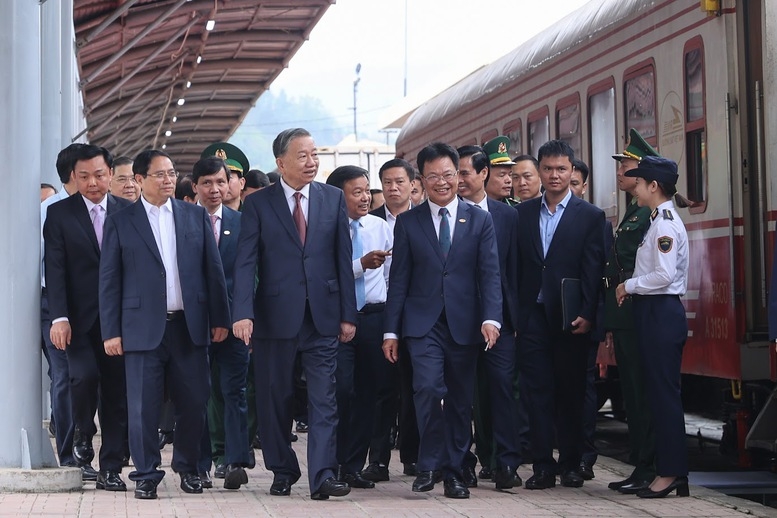
Party General Secretary To Lam has directed ministries and agencies to formulate a Vietnam–China railway development strategy as part of the national railway plan for 2026–2030, with long-term visions to 2045, 2100 and 2130.
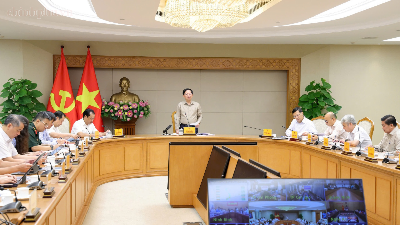
He issued the directive while chairing a working session with representatives of ministries, agencies and localities at Dong Dang railway station in the northern province of Lang Son, which borders China, on March 19, following an on-site inspection.
The Party Chief stressed that infrastructure connectivity, particularly railway links between Vietnam and China, must be treated as a strategic breakthrough in bilateral economic cooperation.
He outlined a range of expected benefits from enhanced rail connectivity, including reduced logistics costs, shorter transit times and improved competitiveness. Stronger rail links are also expected to accelerate trade, boost border economic activity, improve customs efficiency and ease congestion at road border crossings.
In the longer term, he said, the development of cross-border railways could foster logistics hubs, border economic zones and industrial clusters in frontier provinces. It would also support Vietnam’s integration into the wider Asia–Europe rail network, helping diversify transport options, reduce reliance on maritime shipping, and facilitate the formation of economic corridors and regional production chains.
Such developments, he added, would deepen regional economic integration and strengthen Vietnam’s position in Asian supply chains.
 Google translate