


The Ministry of Agriculture and Environment has set a durian export target for 2026 of at least $3.85 billion—matching the 2025 level—with the potential to reach $4 billion.
The ministry plans to focus on market diversification, quality standardization, traceability, and enhancing processing and logistics capacity.
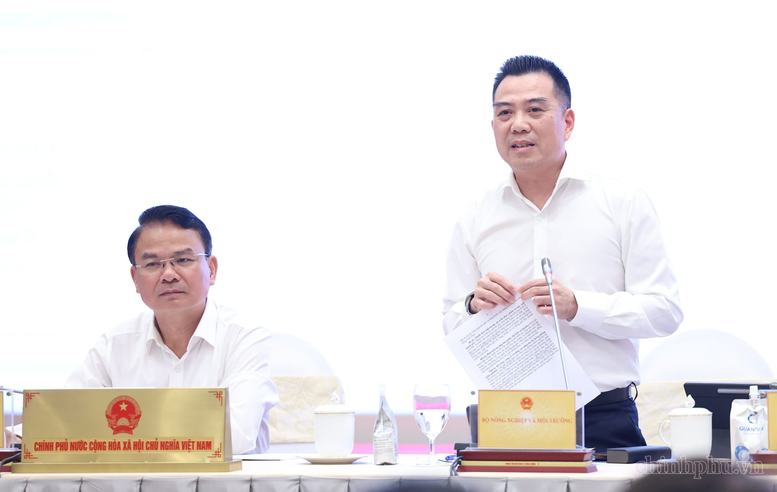
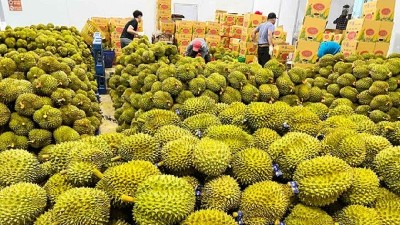
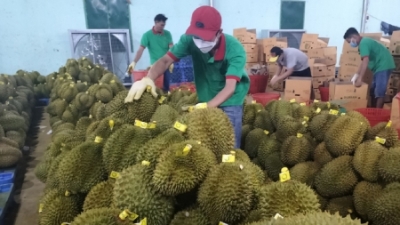
Addressing a regular Government press briefing on September 3, Deputy Minister of Agriculture and Environment Dang Ngoc Diep stated that durian is currently one of Vietnam’s highest-value agricultural products. The country maintains approximately 200,000 ha of cultivation area with an output of about 2.08 million tons. Durian export turnover has seen explosive growth, rising from $177 million in 2021 to $3.85 billion in 2025.
Durian is now a pillar of the domestic cultivation sector, accounting for roughly 40% of the industry’s total export value. In the first eight months of 2026, durian exports reached an estimated $1.95 billion, with the Chinese market contributing $1.85 billion, representing 95% of the total.
To maintain this momentum, the ministry has identified five key groups of solutions:
First, the ministry will step up trade promotion and market diversification, continuing negotiations to increase market share in potential regions such as India, Australia, and New Zealand. There will also be a shift toward increasing the export of frozen durian and processed products. Market analysis and forecasting will be strengthened to better guide production and harvesting.
Second, the focus will be on developing sustainable raw material areas by reviewing land, water, and climate conditions to ensure suitability. The ministry aims to develop infrastructure for these areas linked to preliminary processing, preservation, and export.
Additionally, it will foster stronger ties between farmers, cooperatives, and enterprises, encouraging businesses to reinvest in raw material zones to build a global brand for Vietnamese durian.
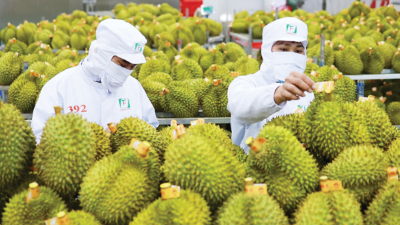
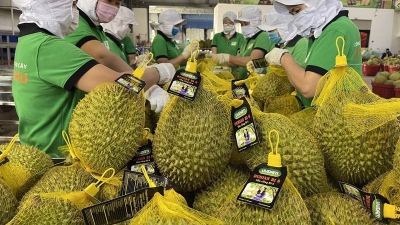
The third priority is standardizing quality, ensuring food safety, and maintaining strict traceability. This includes enhancing research, technology transfer, and digital transformation within the industry.
Fourth, the ministry aims to develop specialized infrastructure for preservation and logistics. This involves encouraging investment in cold storage and processing facilities in concentrated production zones, diversifying transportation methods, and applying technology to reduce costs and improve quality. Upgrading irrigation and transport infrastructure to serve raw material areas is also a priority.
Finally, the Ministry will expand and consolidate the laboratory system to improve the capacity to test for substances and other criteria required by international import markets.


 Google translate