



At the ongoing 10th session of the 15th National Assembly (NA), NA deputies on December 3 heard a verification report from the National Assembly's Economic and Financial Committee regarding a draft resolution amending and supplementing several articles of the NA's Resolution No. 98/2023/QH15 on piloting specific mechanisms and policies for the development of Ho Chi Minh City.
According to a government proposal, presented by Deputy Prime Minister Bui Thanh Son at the session on the same day, Ho Chi Minh City requires resources of approximately VND1.8 quadrillion (over $68 billion) to achieve the goal of annual double-digit growth rate over the next five years, whereas its current capabilities only meet about 30% of the capital demand.
"Supplementing breakthrough solutions beyond current laws into Resolution No. 98/2023/QH15 is essential to attract investment resources and foster development, aiming to build the city into the largest megacity in Southeast Asia," Deputy Prime Minister Son emphasized.
Accordingly, the Draft Resolution amends and supplements six existing articles; simultaneously, it adds a new article, Article 7a, focusing on four policy groups:
First, the City People's Council is allowed to use the local budget for compensation, resettlement support, creating reciprocal land funds, or making payments to investors under BT (Build-Transfer) contracts.
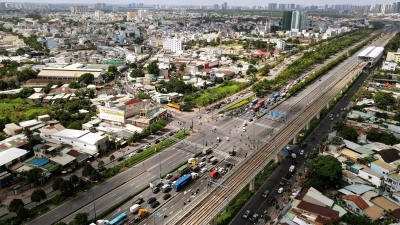
Second, the City is permitted to utilize 100% of the revenue from Transit-Oriented Development (TOD) land funds to invest directly in local railway projects and transport projects along TOD routes.
Third, the City People's Committee is authorized to decide on construction investments that combine housing, commercial, and service facilities at railway stations, train maintenance depots, and surrounding areas. Additionally, the Committee is empowered to determine technical-economic norms and planning land-use indicators in these areas that may differ from national technical standards.
Fourth, the scope of applying special investment procedures for projects within functional zones, aiming to shorten implementation time, will be expanded.
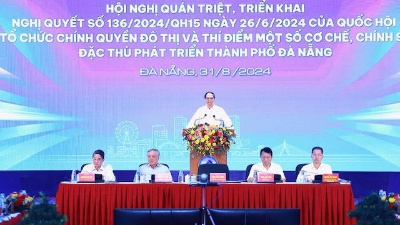
Regarding the free trade zone model, Article 7a has been added to establish a comprehensive legal framework, similar to the mechanisms currently applied in the cities of Hai Phong and Da Nang.
Accordingly, the Ho Chi Minh City is empowered to decide on the establishment, expansion, or adjustment of the boundaries of the free trade zone, stated the Deputy PM.
 Google translate