


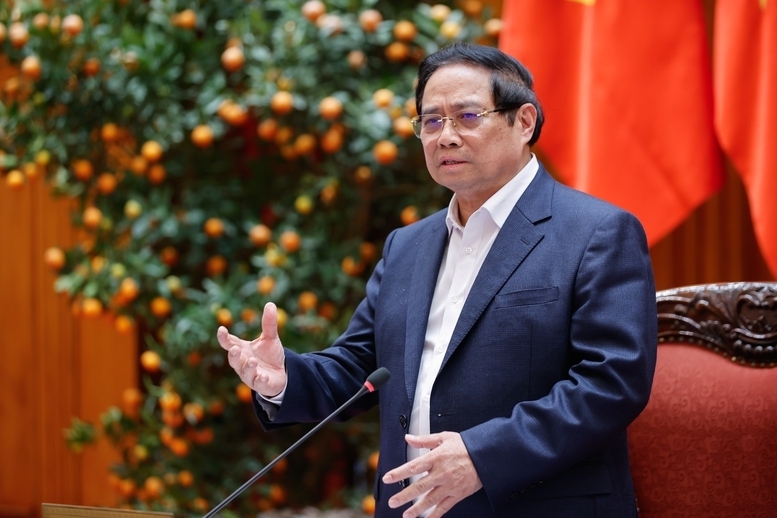
Concluding a working session on March 14 between the Government’s Standing Committee and Hanoi leaders on the Capital’s Master Plan with a 100-year vision, Prime Minister Pham Minh Chinh emphasized that the core philosophy of the planning must be human-centric, treating people as the subject and driving force of development.
The Capital Master Plan, approved by the National Assembly on December 11, 2025, establishes specific milestones: short-term to 2035, medium-term to 2045, long-term to 2065, and a strategic 100-year vision.
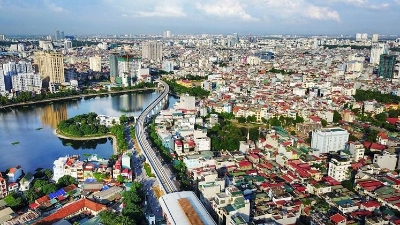
It outlines 11 groups of breakthrough solutions, emphasizing regional connectivity; a "Nucleus-Satellite" urban model; the development of urban railways and Transit-Oriented Development (TOD); and the creation of a smart, green, and sustainable city.
Other key focuses include urban redevelopment, the exploitation of multi-layered spaces, the development of the Red River axis, airport expansion, and the definitive resolution of environmental pollution. The plan also aligns general planning with specific action programs and unique mechanisms under the Law on the Capital.
Furthermore, the planning identifies nine development poles, nine major centers, nine dynamic axes, and various ring roads and regional/national corridors. It also preserves heritage spaces along river axes and the "Green Belt" in the west.
PM Chinh assessed the Master Plan as being of vital importance, not only for Hanoi but for the entire region and the nation. He stated that the plan embodies Vietnamese wisdom, culture, and identity, reflecting the country's development aspirations in a new era.
Reiterating that the consistent philosophy of the planning is to place people at the center as the primary subject, the PM set forth the requirement for Hanoi to develop into a prosperous, civilized, and modern city with a unique identity and a 100-year vision. He called for a multi-polar, multi-layered, and multi-centered development approach that ensures harmony between people, culture, society, and nature. This includes a balance between conservation and development, encapsulated in the concept of "villages within the city and the city within villages."
The Government leader requested that the planning strictly bridge the gap between the general framework and detailed content. He urged the city to maximize its unique potential, outstanding opportunities, and competitive advantages while ensuring strict implementation—finishing each phase of the project decisively. To enhance feasibility, he noted that the city must clearly prioritize tasks, especially those with high spillover effects that create strong momentum for growth.
Additionally, the Prime Minister agreed in principle on the establishment of a specific system of standards and regulations for the Capital. These should meet Hanoi’s unique requirements while remaining compatible with national standards when necessary. He also called for the diversification of resources, the promotion of public-private partnerships (PPP), and the effective mobilization of social resources to realize the 100-year strategic vision for Hanoi.

 Google translate