


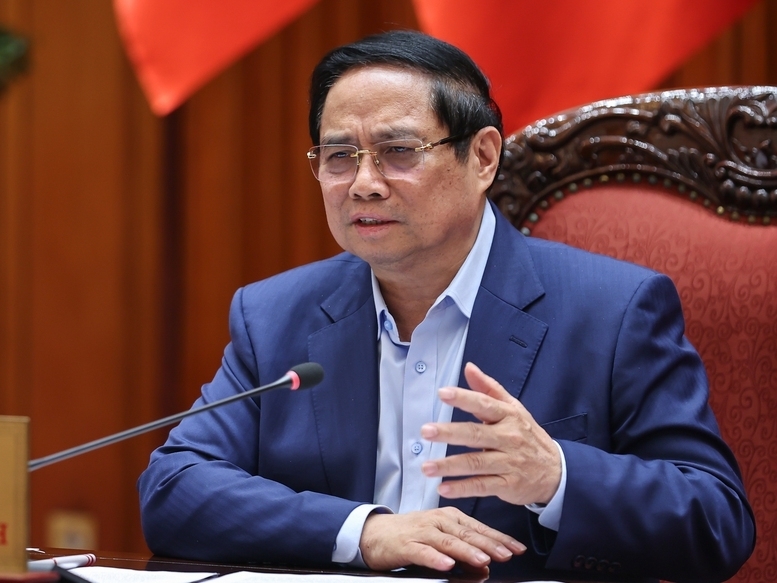
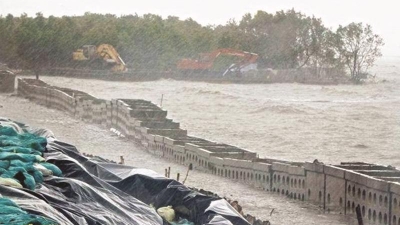
Prime Minister Pham Minh Chinh has called for diversifying funding sources—particularly through public–private partnerships—to address subsidence, erosion, flooding, drought and saltwater intrusion in the Mekong Delta.
He made the request while chairing a meeting of the Government Party Committee’s Standing Board and permanent Cabinet members to review the master plan on preventing these threats through 2035, with a vision to 2050.
The meeting also examined a report, to be submitted to the Politburo, on progress in resolving long-standing issues related to Ho Chi Minh City’s flood-control efforts and other projects concerning urban environmental protection and air-pollution mitigation.
PM Chinh stressed that resource mobilisation must follow the principle of “harmonised interests and shared risks,” with non-state funding expected to account for around 35%.
Underscoring the crucial role of science and technology, especially advanced solutions, he called for maximising existing effective measures; expanding non-structural approaches alongside structural interventions; and aligning population planning, production models and economic restructuring with the region’s characteristics.
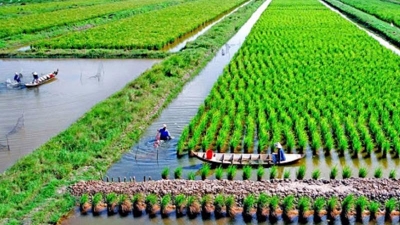
Earlier this year, the Ministry of Agriculture and Environment was tasked with developing the master plan to provide comprehensive solutions for the Mekong Delta’s sustainable development. The region is considered strategically important, accounting for 12.8% of Vietnam’s territory and nearly 18% of its population, while contributing 95%, 60% and 65% of national rice, aquatic and fruit exports, respectively.
 Google translate