


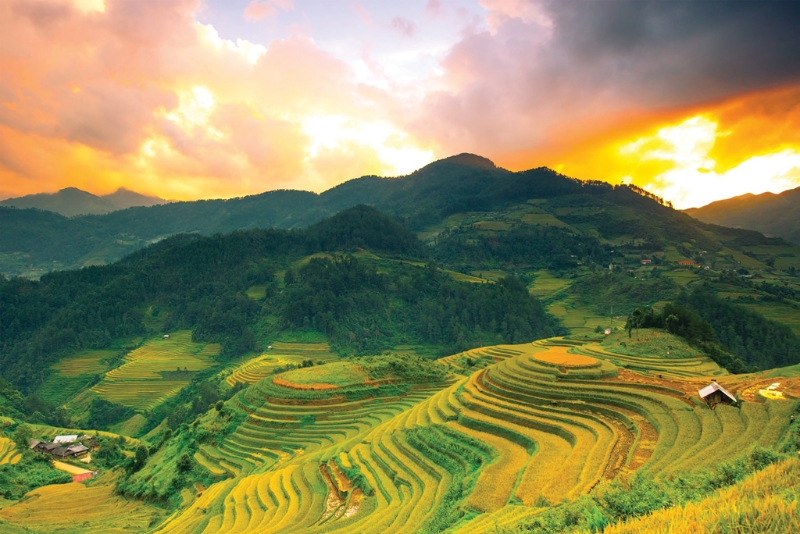
Vietnam’s northwestern provinces have steadily narrowed the development gap over recent years, with Dien Bien and Lai Chau - - emerging as bright spots for infrastructure upgrades and investment attraction, positioning themselves as potential new growth poles.
Bordering China and Laos, the two hold strategic importance for national defense and regional trade connectivity within the Greater Mekong Subregion. Located some 400-500 km from Hanoi, they share rugged mountain landscapes, terraced rice fields, and rich ethnic minority cultures.
Beyond their geographical advantages, Dien Bien and Lai Chau are also increasingly viewed as boasting strong potential to become new growth poles in the northwest. Both are prioritizing targeted investment attraction while leveraging strengths in tourism, agriculture, border gate economies, and cross-border trade.
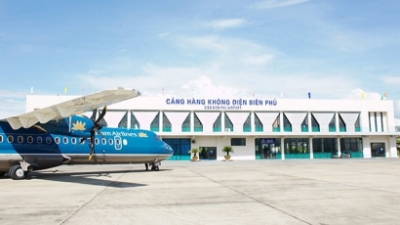
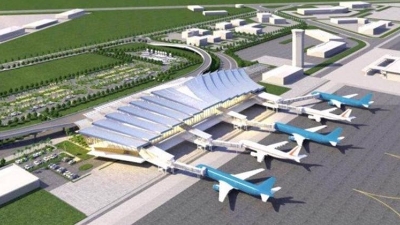
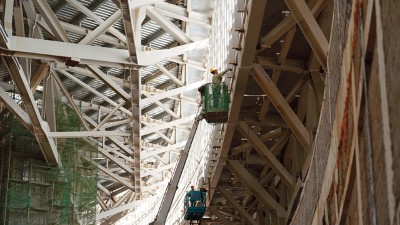
Transport infrastructure - long considered the region’s biggest bottleneck - is gradually being improved. Dien Bien Airport has been upgraded and expanded to accommodate larger aircraft, strengthening connectivity with major domestic economic hubs and paving the way for international links.
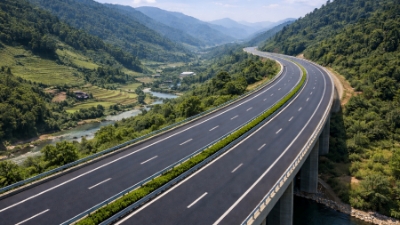
At the same time, preparations are accelerating for the Son La - Lai Chau - Dien Bien - Tay Trang International Border Gate Expressway project, raising expectations for broader development opportunities across the local region. A new transport route connecting Lai Chau with Lao Cai via O Quy Ho Pass has also helped ease the longstanding “single-access route” challenge facing both provinces.
Significant potential
Speaking at the 2026 Investment Promotion Conference organized recently by the Dien Bien Provincial People’s Committee, Deputy Prime Minister Nguyen Van Thang emphasized that once major infrastructure projects are completed, Dien Bien and Lai Chau will gain additional advantages in attracting strategic investors, creating momentum for rapid and sustainable socio-economic development.
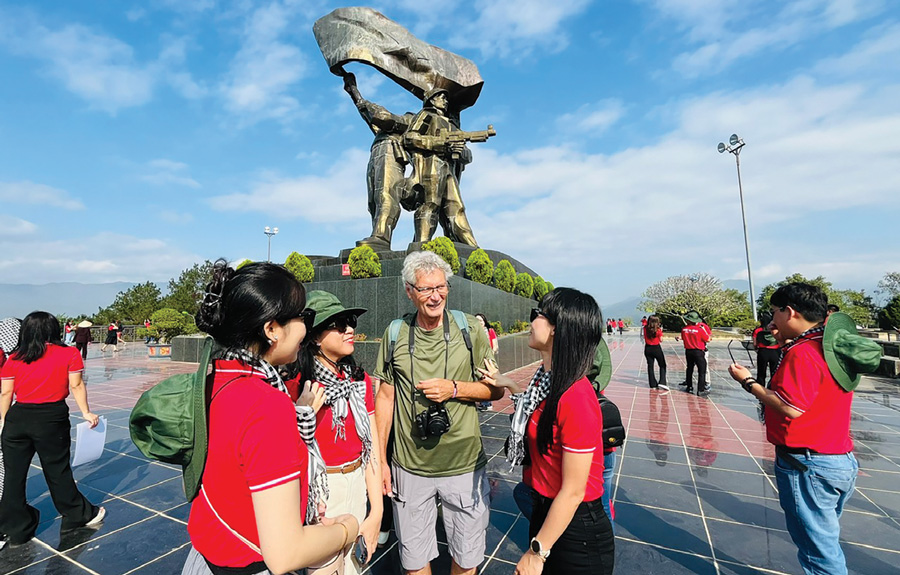
Mr. Le Van Luong, Deputy Secretary of the Dien Bien Provincial Party Committee and Chairman of the Provincial People’s Committee, said historical tourism linked to the Dien Bien Phu Special National Relic Site, combined with eco-tourism and indigenous cultural experiences, is attracting growing numbers of visitors.
The province welcomed around 5.5 million visitors during the 2021-2025 period, generating more than VND9.4 trillion ($361.5 million) in tourism revenue. In 2025 alone, Dien Bien hosted 1.45 million visitors, exceeding its target by more than 11 per cent, while tourism revenue stood at approximately VND2.4 trillion ($92.3 million).
Alongside tourism, key agricultural products such as coffee, macadamia nuts, and high-quality rice are gradually strengthening their brands and supporting rural economic growth. By the end of 2025, the province had more than 9,770 ha of high-quality rice, 8,377 ha of coffee, 12,360 ha of macadamia nuts, and over 5,000 ha of rubber, forming concentrated raw material zones to attract investment in high-tech agriculture.
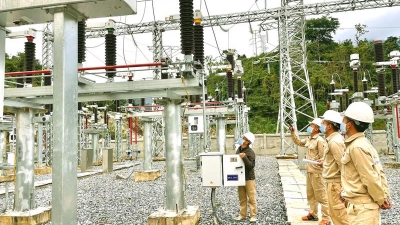
Dien Bien is also considered to have significant potential in renewable energy, with estimated capacity for 2,500-3,000 MW of wind power, 3,200 MW of hydropower, and biomass energy. This is viewed as a key advantage for building a long-term, sustainable clean energy structure.
Thanks to the effective use of its strengths, Dien Bien recorded average annual economic growth of 8.76 per cent during 2021-2025. In the first quarter of 2026, the province’s gross regional domestic product (GRDP) grew 9.04 per cent, ranking it fourth among Vietnam’s nine mountainous provinces and 13th among its 34 provinces and centrally-governed cities.
For sustainable development
For the 2026-2030 period, it aims to pursue green, smart, and sustainable development, with a focus on improving the investment climate and attracting businesses in high-tech agriculture, tourism, renewable energy, infrastructure, and processing industries. In the first quarter of 2026, total social investment capital was estimated at nearly VND3.5 trillion ($134.6 million), up 6.3 per cent year-on-year, with the private sector continuing to play a leading role.
Lai Chau is also stepping up efforts to capitalize on its strengths. In late April, the Lai Chau Provincial People’s Committee granted investment approvals to several large-scale agricultural and forestry projects aimed at promoting green growth and sustainable development.
Notable among them are a large-timber forest development project combined with tea and medicinal herb cultivation, belonging to the Green Forestry JSC, in Hua Bum, Pa Tan, and Pa U communes, covering more than 470 ha and with investment capital of VND62 billion ($2.4 million). The Hakovina Trade and Services Co., Ltd., for its part, is developing a production forest project spanning over 1,000 ha in Bum To and Muong Te, with total investment of VND92 billion ($3.5 million).
Meanwhile, the Normal One Co., Ltd. is investing VND96 billion ($3.7 million) in a high-tech pig farm with a capacity of 16,000 heads per cycle. The Linh Duoc Thien Vuong High-Tech JSC has also received approval for a forest development project covering over 1,300 ha in Hua Bum, with investment of VND180 billion ($6.9 million).
Mr. Ha Quang Trung, Chairman of the Lai Chau Provincial People’s Committee, said the province boasts strong advantages for developing green agriculture and high-value medicinal herbs thanks to its natural conditions, diverse climate, and rich cultural identity. Lai Chau has gradually developed a number of signature products, such as Seng Cu rice, tea, macadamia nuts, cinnamon, and Lai Chau ginseng, while also tapping aquaculture potential in large hydropower reservoirs.
For the 2026-2030 period, Lai Chau aims to develop a low emissions, circular green agricultural sector by accelerating land consolidation, technology adoption, and digital transformation, while strengthening value chains for tea, rice, fruit, livestock, aquaculture, and common medicinal herbs.
Urban development and clean energy
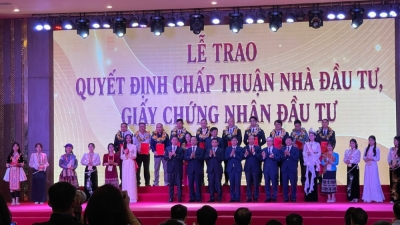
Recently, in Thanh Nua commune, Dien Bien province and Vingroup held a breaking ground ceremony for the Northwest Dien Bien Phu New Urban Area, Resort and Sports Complex project.
Mr. Le Khac Hiep, Vice Chairman of Vingroup, said the project, developed by the Green City Development JSC, is designed as a “green city within a city.” Covering approximately 228 ha with total projected investment exceeding VND23.66 trillion ($910 million), the project is expected to accommodate some 12,000 residents. A key highlight is an 18-hole golf complex spanning nearly 87 ha. The project will include nearly 1,000 villas, almost 1,900 townhouses, and close to 10 ha dedicated to social housing, with a maximum construction density of 40 per cent.
This will be the largest and most modern urban project ever developed in Dien Bien, integrating commercial infrastructure, international hotels, schools, and medical centers. The development will benefit from direct connectivity to Dien Bien Airport and the future Moc Chau - Son La - Dien Bien Expressway, creating momentum for interregional economic growth.
In addition to urban development, Vingroup has identified renewable energy as a strategic investment direction in Dien Bien. The VinEnergo Energy JSC, part of the Vingroup ecosystem, is studying plans for the Dien Bien 1 Solar Power Plant project, with a capacity of 300 MW and total investment of approximately VND5.371 trillion ($206.6 million).
The project would cover more than 509 ha in Dien Bien Phu ward and the communes of Na Son, Muong Lan, and Pu Nhi. It has already received provincial investment approval and aligns with Vietnam’s National Power Development Plan for 2021-2030, with a vision to 2050 (PDP8). Once operational, the plant is expected to add clean electricity, accelerate the green energy transition, and generate substantial budget revenue for the locality.
According to Mr. Hiep, the rollout of large-scale urban, tourism, and renewable energy projects is expected to unlock Dien Bien’s full potential, expand economic development space across the northwest region, and contribute to Vietnam’s sustainable development goals, emission reductions, and climate resilience.
Dien Bien welcomed around 5.5 million visitors during the 2021-2025 period, generating more than VND9.4 trillion ($361.5 million) in tourism revenue. In 2025 alone, the province hosted 1.45 million visitors, exceeding its target by more than 11 per cent, while tourism revenue stood at approximately VND2.4 trillion ($92.3 million).

 Google translate