Vietnam’s residential real estate market is expected to see positive shifts in the second quarter of 2026, with new supply increasing significantly compared to the beginning of the year.
The Thanh Hoa Provincial People’s Committee has approved a detailed master plan to develop the Hai Tien resort and urban complex in Hoang Phu commune, Hoang Hoa district. The complex will sit on some 395 ha and house 22,500 people, up from the current 2,300. The permanent population is expected to increase by about 17,700 people, while tourist numbers will rise to 2,500.
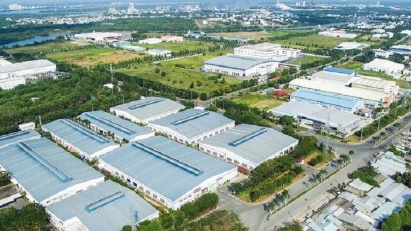
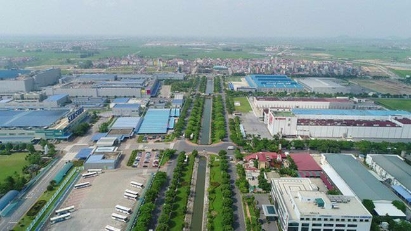
Under the industrial development planning of the Mekong Delta’s Tien Giang province to 2020 and vision to 2030, it plans to have 27 industrial clusters on an area of over 1,000 ha. Five industrial clusters - Trung An, Tan My Chanh, Song Thuan, An Thanh, and Gia Thuan 1 - are now in operation on an area of nearly 159 ha.
Many localities are announcing the auction of land use rights as the end of the year approaches. Northern Nam Dinh province will auction 74 land plots, the central highlands’ Dak Lak province 52 land plots, and northern Quang Ninh province 17 land plots. These auctions are being conducted openly, honestly, and equally, and protecting the legitimate rights and benefits of participating parties.
The Vietnam Institute of Real Estate Studies (VIRES) has said that investors in the country’s north are increasingly interested in the southern real estate market. They view the southern market as a “promised land”, especially Ho Chi Minh City and neighboring provinces. Recent large-scale projects developed by reputable investors and rising interest in general, especially from customers in the north, have boosted the real estate market in some southern provinces.
Comprehensive socio-economic growth and a lack of high-end accommodation have made Quy Nhon city in south-central Binh Dinh province a bright spot for real estate investment. Famous for its scenic spots, Quy Nhon has received a great deal of investment to turn it into the economic nucleus of the region and an international tourist destination.
Ms. Duong Thuy Dung, Senior Director of the Valuation, Research, and Consulting Department at CBRE Vietnam, said that more than 50 per cent of investors have problems with loans for real estate investment. If they continue to borrow, the cost will increase greatly. They want to sell but are unable to do so. If credit is not loosened by 2023, the real estate market will see a sell-off and prices will fall.