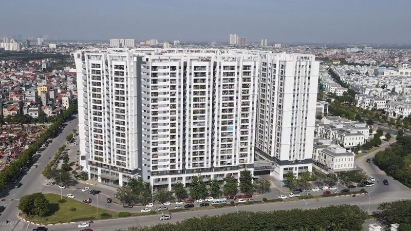
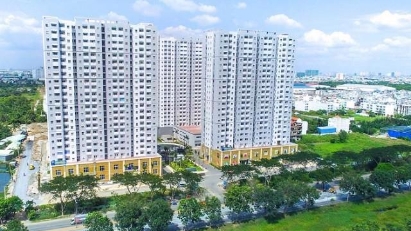
Vietnam’s residential real estate market is expected to see positive shifts in the second quarter of 2026, with new supply increasing significantly compared to the beginning of the year.
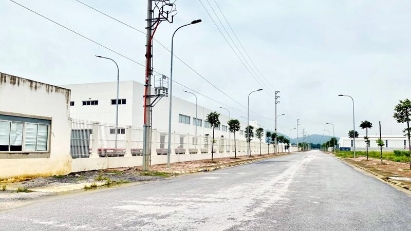
North-central Thanh Hoa province has decided to establish the Hai Long - Xuan Khang industrial cluster in Nhu Thanh district, on a total area of nearly 49 ha and with investment of VND350 billion ($14.92 million). The project is expected to be put into use from the second quarter of 2025.
South-central Phu Yen province will auction the land use rights for three housing projects with a total area of more than 50,000 sq m, a population of over 5,000 people, and total investment of some VND4 trillion ($170.8 million). The province has set a target of reaching a per capita housing area of 28 sq m by 2025 and 31.7 sq m by 2030.
It is necessary to mobilize more than VND120 trillion ($5.14 billion) to implement the Housing Development Program to 2030 and vision to 2050, which has recently been approved by the Quang Ngai Provincial People’s Committee. The central province has proposed many solutions to promote socialization in commercial and urban area housing projects.
Batdongsan.com and real estate investment fund Rich Invest have both forecast that Vietnam’s real estate market will continue to be quiet during the second half of the year because of tightening credit to the sector. Mr. Nguyen Van Dinh, Chairman of the Vietnam Real Estate Brokers Association, said the market is going through a period of rebalancing. House prices will increase due to rising costs and liquidity will decline.
According to Fiin Group, inventory turnover in real estate has increased to a high 1,497 days (more than four years). This is alarmingly high for real estate.
The Ministry of Natural Resources and Environment has said that the draft revised Land Law has eight important new points, such as institutionalizing the policy on abolishing land price brackets; introducing mechanisms and methods to determine land prices according to market principles; and establishing a synchronous legal corridor to shift the focus from administrative-heavy management methods to the use of economic tools to manage and regulate land relations, among others.