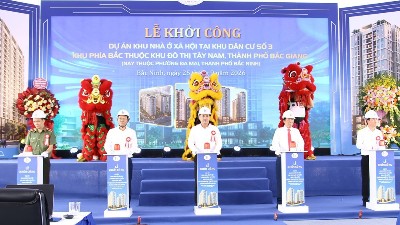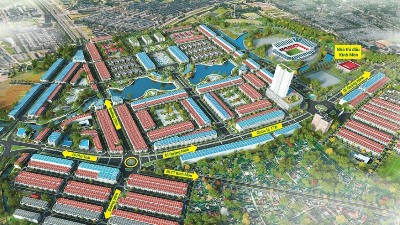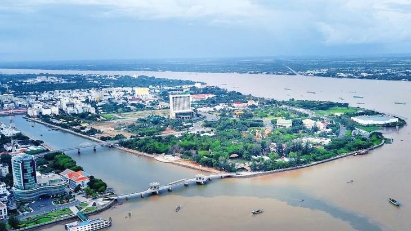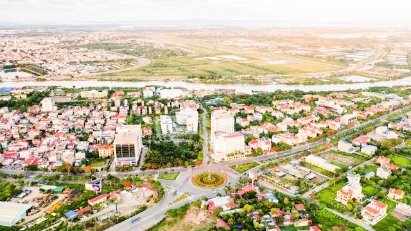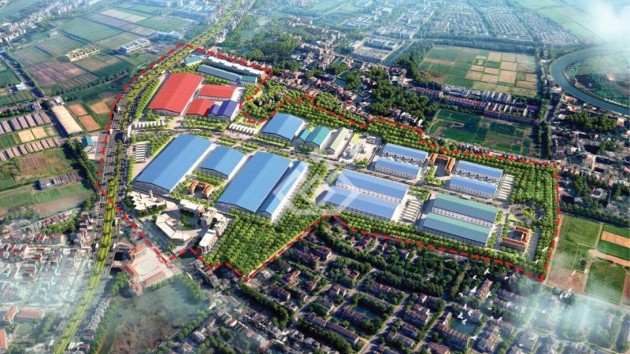
These projects have already received approved detailed planning and are part of the Mekong Delta city’s portfolio to invite independent social housing investment.
Hanoi is synchronously implementing the following types of planning: adjusting the master plan on construction in the city; completing coverage of subdivision planning; strengthening detailed planning and urban design; and completing and implementing planning for underground and overhead space.
Northern Thai Nguyen province targets becoming a modern industrial locality by 2030 and a socio-economic center and growth point that has spillover effects on the northern mountainous region. It is working to achieve an average housing area of 34.4 sq m per person by that time. Total land demand for housing development is 8,386 ha, with more than VND75.3 trillion ($3.2 billion) in capital required.
Ho Chi Minh City will review and approve a list of projects this month that need land to be recovered or change the land use purpose in 21 districts and Thu Duc City, including more than 900 ha of land for rice. Households and individuals in nine districts will be able to change the land use purpose to residential and commercial land.
The “Agriculture with high technology 3” project in Can Tho city, with total capital of more than VND3.583 billion ($157.04 million) from the T&T Group Joint Stock Company, has been revoked after the investor decided to terminate the project.
Real estate stocks have witnessed impressive price increases since the beginning of the fourth quarter, rising by 15.3 per cent. Many therefore believe the prospects for the group are promising into the future. The Omicron variant of Covid-19 is, however, likely to bring down the real estate market once more.
The biggest bottlenecks in the real estate market relate to mechanisms and policies. The industry is regulated by 12 different laws and there are differences between them, especially the three that are directly related: the Law on Land, the Law on Housing, and the Law on Real Estate Business.