


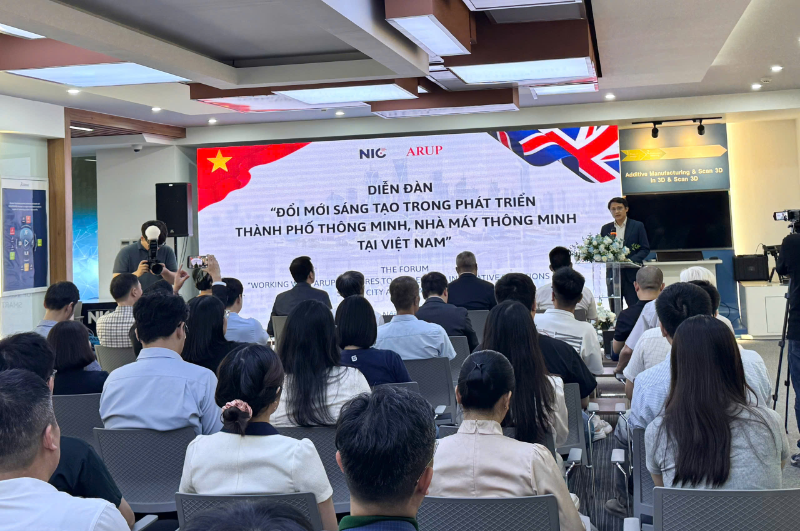
The Vietnam National Innovation Center (NIC) under the Ministry of Finance, in collaboration with Arup Ventures (UK), on May 15 organized the forum “Innovation in the Development of Smart Cities and Smart Factories in Vietnam.”
Amid intensifying global competition increasingly driven by capabilities in data governance, digital infrastructure, and core technologies, models of smart cities and smart factories are emerging as critical foundations for building national competitiveness in the new era.
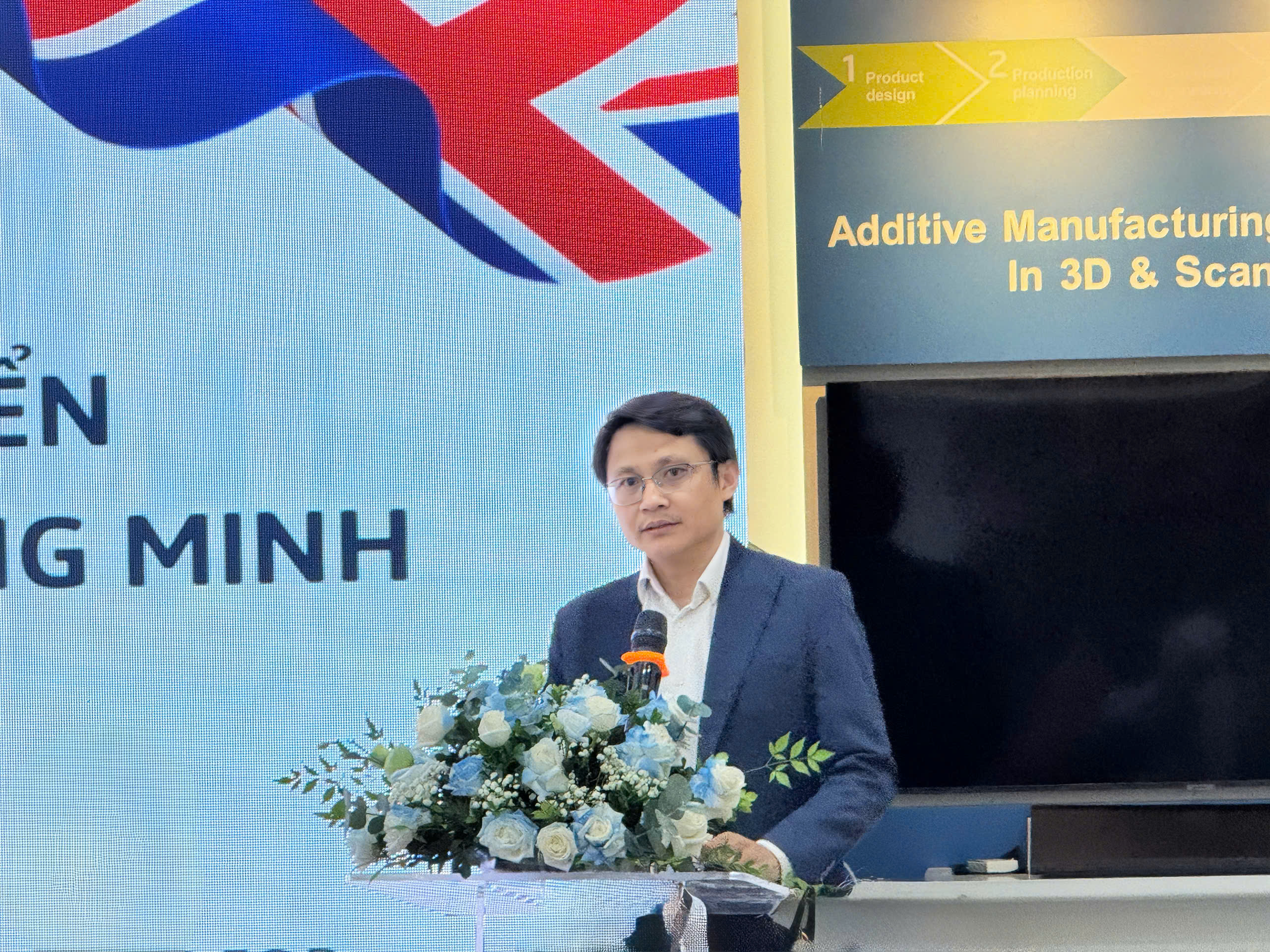
Speaking at the forum, Mr. Vo Xuan Hoai, Deputy Director of the Vietnam National Innovation Center (NIC), emphasized that smart cities and smart factories are no longer experimental models, but are becoming new growth drivers of the digital and green economy.
In particular, in the new phase of development, a country’s competitiveness is no longer determined solely by market size or natural resources, but increasingly depends on its ability to integrate data, connect infrastructure, and master core technologies.
Currently, Vietnam is having a major opportunity for breakthrough growth, as many localities have begun implementing next-generation urban planning, while domestic technology and industrial enterprises are gradually developing smart manufacturing complexes applying artificial intelligence (AI), digital twins, and advanced automation.
“Therefore, developing ‘Make in Vietnam’ smart city and smart factory platforms will not only enhance governance capacity and labor productivity, but also lay the foundation for Vietnam to achieve double-digit growth, strengthen technological self-reliance, and build competitive strategic industries,” Mr. Hoai affirmed.
Besides, Dr. Dao Thi Nhu, representative of the Urban Development Agency under the Ministry of Construction, shared orientations for building policy frameworks and mechanisms to promote smart urban development in a synchronized manner, ensuring data connectivity and placing people at the center.
Notably, according to Dr. Nhu, there is an urgent need to transform urban planning thinking, from traditional management models to digital governance models based on real-time data. This approach will help improve infrastructure operations while optimizing the management of traffic, energy, environment, and urban public services.
“Smart urban development must be closely aligned with urban planning and sustainable development goals. At the same time, urban data serves as a core foundation, and the development process must place citizens and businesses at the center, while ensuring data safety and security,” she stressed.
From an international perspective, Mr. Ricky Tsui, Director and Head of Investment and Business Development for Asia-Pacific at Arup, shared experiences in implementing smart city and smart infrastructure models across many developed countries.
Mr. Tsui noted that as cities face mounting pressures from population growth, environmental challenges, and energy demand, digital technologies and real-time data will serve as the “central nervous system” of smart cities. Through continuous data collection, analysis, and processing, these systems enable urban authorities to monitor, forecast, and make more timely and accurate decisions in managing infrastructure, transportation, energy, and the environment.
“In particular, digital twin technology in smart cities not only supports the simulation of planning and infrastructure operations, but also enables cities to anticipate risks, optimize resources, and enhance resilience against socio-economic fluctuations and climate change,” Mr. Tsui added.
According to experts, Vietnam is fully capable of mastering core technologies in AI, cybersecurity, and IoT, provided that it adopts long-term investment strategies and builds a supportive ecosystem. At the same time, as data becomes a strategic asset, ensuring cybersecurity and safety for critical infrastructure systems will be a prerequisite for all future smart city models.








 Google translate