


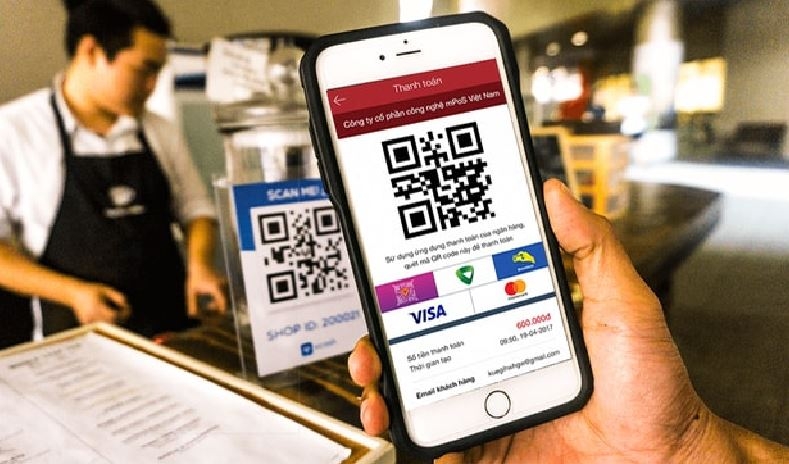
The shift towards merchant-based QR payment codes (QR payments) has become an inexorable trend but certain issues remain. These range from the absence of consumer-protection mechanisms and difficulties in transaction tracing to potential tax losses and the inability to link with international payment systems. According to analysts, such a transition will not only enhance transparency across financial flows and provide critical data for tax administration and market oversight but also create space for fintech companies to develop new value added services.
Behind the boom in QR payments
On November 19 in Hanoi, under the direction of the Payment Department at the State Bank of Vietnam, Vietnam Economic Times / VnEconomy, in partnership with the National Payment Corporation of Vietnam (NAPAS), convened a conference entitled “QR Code Payments: Transparency and Unlimited Experiences”, where experts noted that while personal QR codes offer clear advantages - speed, zero fees, and ease of use - their widespread adoption has exposed significant risks.
“QR payments have become so common in Vietnam that everything from a glass of water to a bag of vegetables can be paid for using a QR code,” said Mr. Pham Tien Dung, Deputy Governor of the State Bank of Vietnam (SBV). “But the question is: Are QR payments truly transparent, and in what way?”
QR codes help users reduce the steps required to enter account numbers when making transfers, he explained, but that does not automatically mean transactions become more transparent. Most QR transactions today are simply money transfers between accounts. They do not reflect the commercial nature of the transaction and are not integrated with accounting systems or invoicing tools.
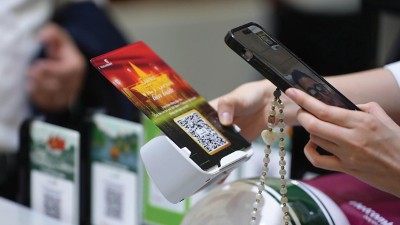
He noted that the surge in QR transactions stems from their simplicity and accessibility. Any shop-owner can adopt the method quickly by opening a bank account, generating a personal QR code, and placing it at the counter. The model requires no contracts, no specialized equipment, and, crucially, incurs no transaction fees.
However, from the perspective of payment management and infrastructure, using personal QR codes for transfers is not considered a true payment acceptance point. In essence, these are personal codes linked to individual accounts rather than to businesses or commercial entities. As a result, it becomes difficult to determine the real nature of a transaction: is it a payment for goods, a personal transfer, or a loan? This ambiguity introduces major risks regarding transparency and dispute resolution.
In reality, many shops still ask customers to transfer money to employees’ personal accounts. This practice erases the commercial trail of transactions, complicating complaints, reconciliation, and tax compliance.
Mr. Dung emphasized that any roadmap to move from QR transfers to QR payments must consider real-world conditions to ensure balance and avoid abrupt or excessive changes. For example, small market vendors selling vegetables often lack point-of-sale (POS) software or e-invoicing tools. For them, QR transfers remain practical, especially as banks have added useful features such as audio notifications for incoming funds.
By contrast, adopting true QR payments require merchants to meet much higher system requirements: order management, payment connectivity, invoicing, and, most importantly, automated posting into accounting systems. This level of integration demands seamless coordination between the seller’s systems, the buyer, banks, and payment intermediaries. Not every merchant has the capacity to fully implement QR payments.
He pointed to electricity bill payments as an example of successful integration. Banks connect directly with the electricity sector to retrieve billing data. Once payments are completed, the system automatically updates records, preventing duplicate payments. Invoicing and accounting entries are also automated. But such automation is only possible because the electricity sector has a centralized, standardized, and data-ready system.
QR codes are also proving effective in cross-border payments. “When I was in Laos, I simply used my Vietnamese mobile banking app to scan a merchant’s QR code and paid immediately,” Mr. Dung said. “No card, no currency exchange. It was seamless, cost-effective, and convenient for both myself and the seller.”
He called on experts, banks, and payment intermediaries to actively contribute ideas and clarify the tangible economic benefits that QR payments can deliver. At the same time, he urged the development of a suitable roadmap that avoids disruption or undue pressure on merchants. He also underlined the importance of identifying bottlenecks in the transition process and proposing feasible, sustainable solutions to promote a more transparent, comprehensive, and synchronized digital payment ecosystem in the future.
Cost of convenience
Experts at the conference warned that using personal QR codes for money transfers instead of official payment QR codes could lead to serious consequences, especially when it comes to transaction tracing, refunds, or dispute resolution in cases of payment errors.
A common point emphasized was the need to clearly distinguish between QR transfers and QR payments. QR transfers are typically linked to a personal bank account and lack control mechanisms, whereas QR payments are a one-time authenticated transaction with built-in security and complaint-handling capabilities. This distinction is crucial for protecting consumer rights. With QR payments, customers can request support for tracing or refunding in the event of an error, while QR transfer transactions are completed instantly, leaving users to bear all the risk.
Beyond consumer protection, QR payments also support tax authorities, and State management agencies more broadly, in monitoring money flows across the economy, generating accurate data for supervision and policy-making.
The importance of shifting from QR transfers to QR payments becomes even more evident as Vietnam expands cross-border payment links. “Chinese consumers cannot be allowed to transfer funds directly into a merchant’s personal bank account in Vietnam,” Mr. Dung emphasized. “That is invalid and not permitted.”
His comments underscore that QR payments are not only the operationally-optimal option but also a mandatory requirement for Vietnam to integrate into the global payment ecosystem and comply with international regulatory standards.
However, the transition is not straightforward. One major barrier is transaction fees. QR transfers remain free for users, while QR payments may carry a fee based on the transaction value. This gap has made many merchants hesitant or unwilling to adopt QR payments, despite the long-term benefits in transparency and operational control.
The market is also facing the threat of fee undercutting. Some banks are offering QR payment services to merchants completely free of charge to win market share, distorting competition and hurting the sustainability of payment infrastructure, particularly security and system-operation costs.
In response, many experts proposed that the SBV and the Vietnam Banks Association consider implementing a minimum floor-price mechanism, similar to models used in developed markets, preventing members from offering services below a regulated baseline. This would help maintain stability, fairness, and long-term sustainability in the payment sector.
For specific sectors such as hospitals, schools, and public services, experts suggested applying lower preferential fees, in line with policies promoting cashless payments in the public sector and ensuring broader social accessibility.
As QR payments continue to develop, NAPAS is widely regarded as the key infrastructure provider - an enabler that remains neutral and does not compete with its member institutions. Experts stressed that NAPAS should focus on building shared infrastructure, ensuring independence and neutrality, and supporting holistic market development.
Ultimately, consumers will determine the trajectory of QR payments. According to discussions at the conference, once users clearly understand the actual benefits, from legal protection and transactional safety to convenience, they will naturally choose QR payments. And when consumer demand becomes evident, merchants will have no choice but to follow. At that point, QR payments will grow in a natural, sustainable way, aligned with modern market trends.
According to data from the State Bank of Vietnam, cashless payment transactions rose 43.32 per cent in volume and 24.23 per cent in value year-on-year in the first nine months of 2025. Notably, QR code transactions surged 61.63 per cent in volume and 150.67 per cent in value, making QR the fastest-growing method among all electronic payment channels.
For NAPAS, as of the end of September 2025 the network had processed more than 8.3 billion transactions with a total value of VND47,530 trillion ($1.828 trillion). On peak days, the system handled more than 42.5 million transactions daily, maintaining an availability rate of 99.997 per cent.





 Google translate