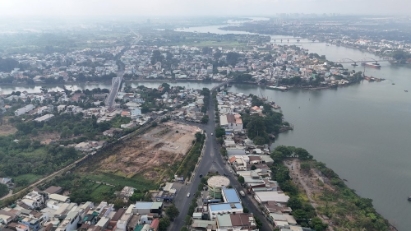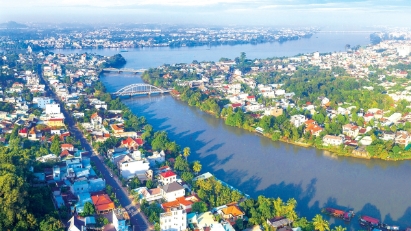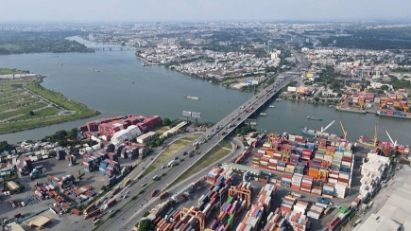
According to the southern province's decision, the planned area covers more than 3,131 ha, and is situated to the west of the Nhon Trach new urban area, bordering the Dong Nai River and Ho Chi Minh City.
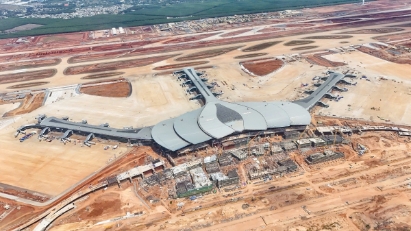
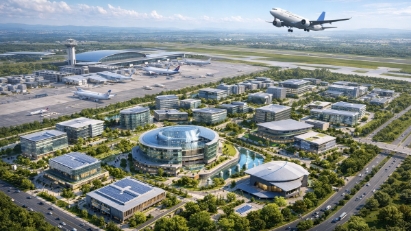
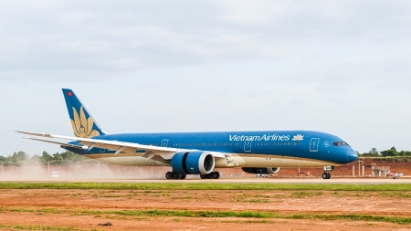
Post-2030, all scheduled international flights to and from Tan Son Nhat international airport in Ho Chi Minh City are expected to operate exclusively out of Long Thanh International Airport.
According to national and regional master plans, the future Dong Nai City will be developed under the model of an "industrial capital, modern urban area, logistics hub, and high-tech agricultural center."
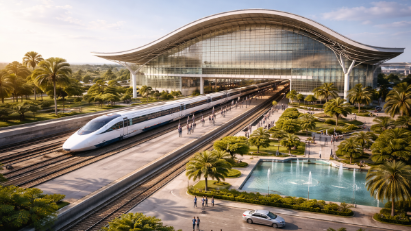
Currently, the eastern region of the southern province of Dong Nai —specifically the communes of Xuan Loc, Xuan Phu, and Xuan Hoa—is not served by any passenger station in the existing project plans.
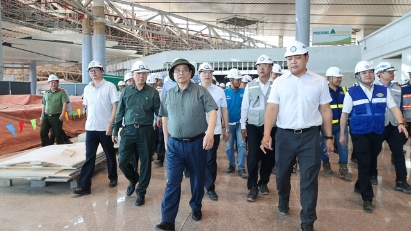
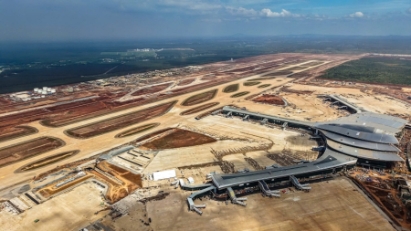
During his on-site inspection tour at the airport project on March 29, Prime Minister Pham Minh Chinh urged coordinated measures to support contractors facing rising input costs, while accelerating the completion of essential systems such as fuel supply, electricity, water, telecommunications, and operational facilities.
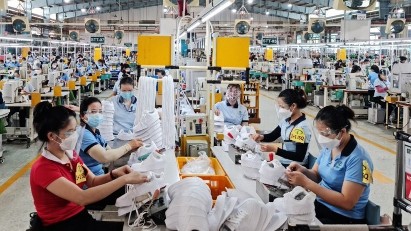
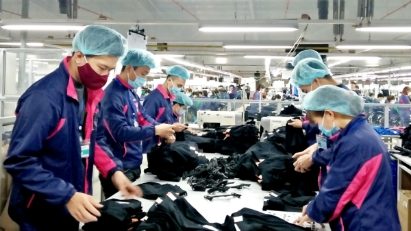
High demand for labor is concentrated in key sectors, including textiles and garments, footwear, construction, wood processing, mechanical engineering, and electronics.
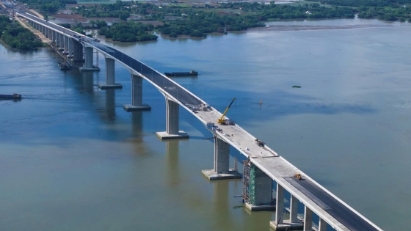
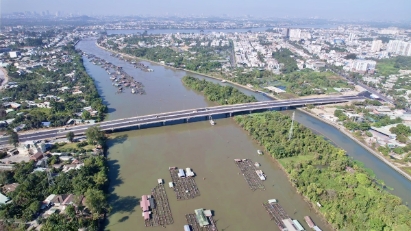
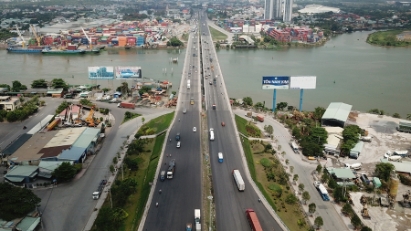
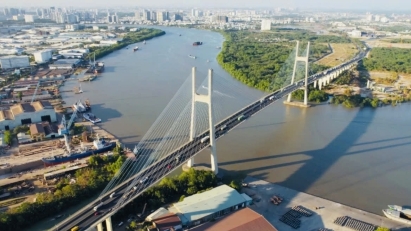
Thong Nhat Bridge plays a pivotal role in connecting the 294-hectare Hiep Hoa Urban Area, one of Bien Hoa’s priority zones for urban development in the coming period.
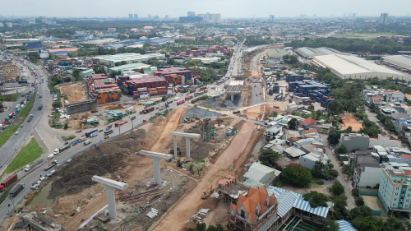
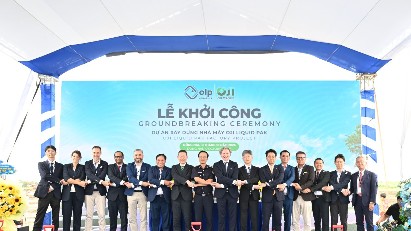
Over the past five months, the southern province has organized four rounds of simultaneous groundbreaking, foundation-laying, technical traffic openings, and inaugurations for more than 30 large-scale projects and works
Looking forward to 2026 and the 2026–2030 period, the southern province plans to accelerate its transition from an "extensive" to an "intensive" growth model.
The plan spans over 43,000 ha divided into five functional subdivisions, with the airport at its center acting as the "heart" of the entire urban area, facilitating massive flows of cargo and passengers.