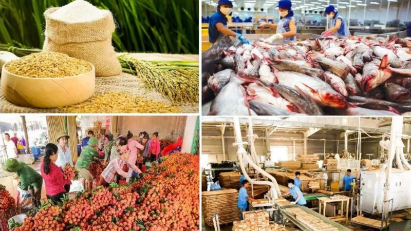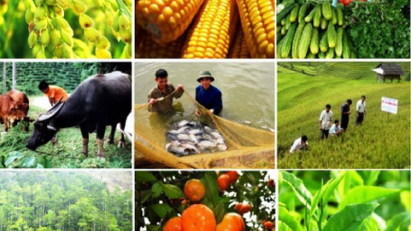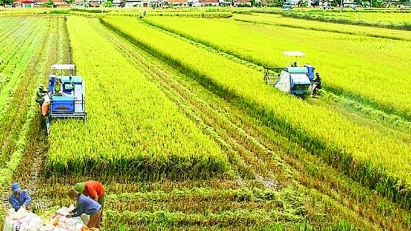
The agricultural sector performed quite well in October, with livestock production developing stably and the production of timber from planted forests increasing, while the harvest of the winter rice crop was slower than in other years. The General Statistics Office reported that, as of mid-October, Vietnam had harvested 893,100 ha of winter rice, or 57.4 per cent of the cultivation area and equal to 87.9 per cent of last year’s winter harvest. In the forestry sector, the newly-concentrated planted forest area was estimated at 33,300 ha in October, up 5.3 per cent year-on-year. Aquatic production in October was estimated at 815,900 tons, up 2.5 per cent year-on-year.
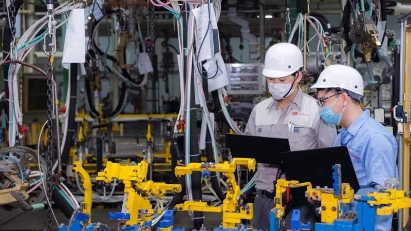
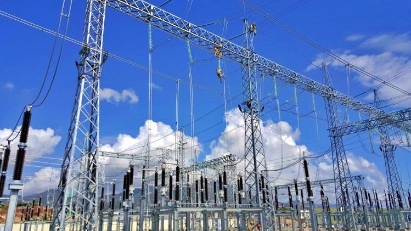
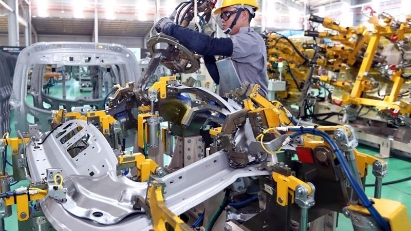
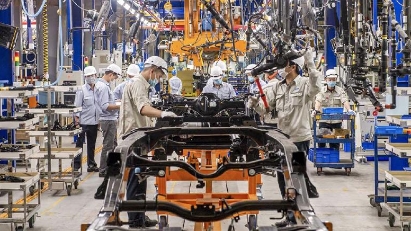
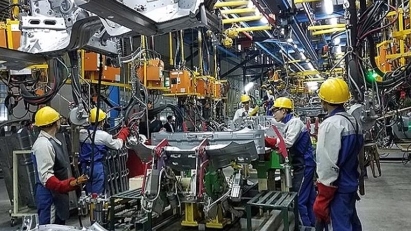
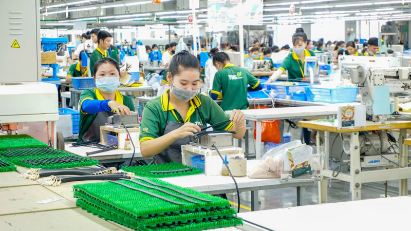
According to the General Statistics Office, the Index of Industrial Production (IIP) in October increased 3 per cent over the previous month and 6.3 per cent over October last year. Processing and manufacturing rose 5.7 per cent, mining 6.3 per cent, and electricity production and distribution 10.5 per cent. The IIP for the first ten months is estimated to have increased 9 per cent year-on-year.
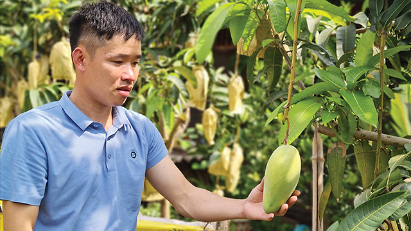
The Ministry of Agriculture and Rural Development has reported that Vietnam’s organic agricultural production has recorded many positive achievements after three years of implementing the “Organic Agriculture Project”. Exports of organic agriculture products reached $335 million each year, going out to 180 countries and territories around the world, from more than 17,000 producers, 555 processors, and 60 exporters.
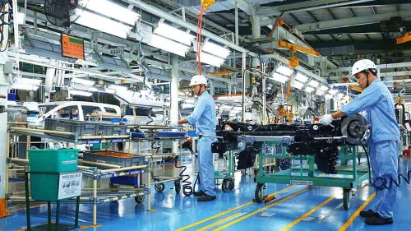
According to the General Statistics Office, the Index of Industrial Production (IIP) increased 12.12 per cent year-on-year in the third quarter of 2022 and 9.63 per cent in the first nine months. Processing and manufacturing continued to be a driving force of growth, increasing 10.69 per cent and contributing 2.74 per cent to higher added value in the economy.
At the recent “Propaganda and promotion to support the development of trade in mountainous areas and islands in 2022” conference, Mr. Tran Duy Dong, Director of the Domestic Market Department at the Ministry of Industry and Trade, said the production potential of mountainous and remote areas and islands is significant because of their area and geographical location, with many products bestowed upon them by nature.
Analysts at JP Morgan have said that Apple is currently preparing to make Vietnam and India important manufacturing hubs globally for the Group. In the context of global supply chain re-establishment taking place on a scale not seen in decades, JP Morgan estimates that Vietnam will contribute 20 per cent of the total production of iPad and Apple Watch, 5 per cent of MacBook, and 65 per cent of AirPods by 2025.
PYN Elite report notes that Vietnam’s economy is showing resilience thanks to strong domestic consumption and that production will continue to be promoted.
The Index of Industrial Production (IIP) increased year-on-year in the first eight months of 2022, with the processing and manufacturing sector being the largest contributor.
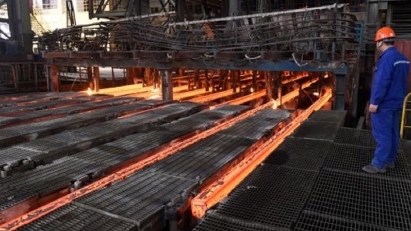
According to the Vietnam Steel Association (VSA), finished steel production reached 2.252 million tons in July, down 6.19 per cent compared to June and 12.5 per cent year-on-year. Consumption of steel of all types stood at 1.99 million tons, down 11.48 per cent against June and 12.1 per cent year-on-year.
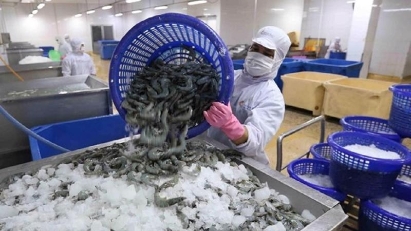
With exports of $2.3 billion in the first half of 2022, Vietnam’s shrimp industry is in a position to achieve its export target of $4 billion for the year as a whole. However, difficulties in shrimp farming and reduced production have resulted in shortages of materials at processing facilities.
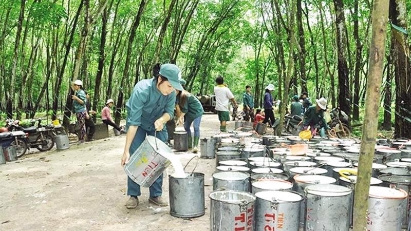
Vietnam is currently the third-largest rubber exporter in the world, accounting for 17.4 per cent of global trade with export value in 2021 reaching $9.5 billion, according to the Vietnam Rubber Association. Market demand for sustainable natural rubber in recent years has posed a challenge to rubber producers, who must improve their management, production, and application of traceability technology.
There are still scientific and technological gaps that need to be addressed to promote the sustainable development of Vietnam’s agricultural sector. Close links between science and policy need to be established in order to expand the application of scientific advances and modify the mechanisms that support and promote application.
Ho Chi Minh City will introduce flexible solutions to create the conditions necessary for food and food processing enterprises and e-commerce platforms to operate at greater capacity; give priority to vaccinations for workers in important production enterprises; and allow workers to return to work immediately after completing medical isolation.