


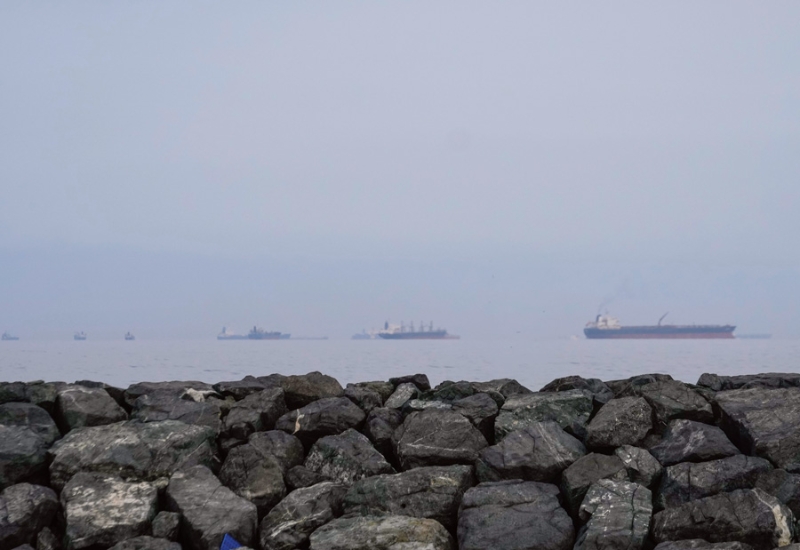
Amid intensifying geopolitical volatility, particularly the escalating tensions in the Middle East, Vietnam’s gasoline sector is confronting one of the most severe stress tests in its history. Disruptions centered around the Strait of Hormuz, a critical artery of global oil supply, have exposed structural vulnerabilities in the country’s energy system while underscoring the importance of policy coordination and corporate resilience.
Insights from industry leaders at the “Hormuz ‘Shock’: Energy Security Challenges for Vietnam” seminar, organized recently by Tap chi Kinh te Viet Nam / Vietnam Economic Times / VnEconomy, offer a detailed picture of how both policymakers and businesses are responding to events.
Unprecedented crisis
According to Mr. Nguyen Xuan Hung, Deputy Director General of the Vietnam National Petroleum Group (Petrolimex), the ongoing energy crisis represents an unprecedented disruption in the history of the global oil and gas industry. Citing assessments from leading international publications, he noted that unlike past crises in 1967, 1973, and 1991, when alternative supply sources were available, the present situation has created a supply gap that cannot be quickly filled.
He explained that the Strait of Hormuz accounts for roughly 20 per cent of global oil supply and serves up to 80 per cent of Asia’s demand. Following recent tensions, an estimated 20 million barrels of crude oil a day have effectively been cut off from global markets. Despite mitigation efforts such as rerouting through Saudi Arabia’s East-West pipeline and other alternative channels, the market still faces a shortfall of around 10 million barrels a day.
Echoing this assessment, Mr. Bui Ngoc Bao, Chairman of the Vietnam Petroleum Association, described recent developments as “violent waves” in global fuel markets, triggered by geopolitical instability. For Vietnam, he stressed, the implications go far beyond price movements, posing a direct threat to the continuity of supply.
The impact has been especially visible in pricing distortions. Mr. Hung pointed to a widening gap between crude and refined product prices: while Brent crude has risen by only 1.3 to 1.6-times, refined fuels in Singapore and Vietnam have surged far more sharply. Diesel prices have climbed by up to 3.5-times and jet fuel by more than 3.5-times, while fuel oil has doubled.
Mr. Bao added that refined products have at times reached $240-250 a barrel, and when premiums of $50-60 are included, actual costs can exceed $300 a barrel; levels unprecedented in the global gasoline industry. He further emphasized that the disruption of long-term import contracts has compounded the crisis, as many suppliers invoked force majeure clauses, leaving Vietnamese companies exposed to sudden shortages and heightened volatility.
Domestic vulnerabilities
Both speakers underscored Vietnam’s structural dependence on imported energy. Mr. Bao noted that domestic production currently meets only about 30 per cent of national demand, leaving the remaining 70 per cent reliant on imports, including crude oil for the Nghi Son refinery and refined products sourced from regional markets closely tied to the Middle East.
Mr. Hung added that Vietnam’s gasoline market is fully open and integrated with global markets, meaning domestic prices inevitably move in tandem with international trends. “The market breathes in sync with the world,” he said, highlighting the limited capacity to shield the domestic economy from external shocks.
Beyond supply dependency, the crisis has intensified operational and financial pressures across the sector. Mr. Bao pointed to soaring logistics costs, rising freight rates, and sharply increased war risk insurance premiums. In some cases, insurers have withdrawn coverage entirely for routes passing through conflict zones, forcing companies to seek costly alternatives.
Working capital has emerged as another critical constraint. Mr. Bao described capital as the “lifeblood” of gasoline companies, noting that financing needs have surged dramatically as prices doubled or tripled. However, many companies lack sufficient collateral to secure additional credit, reflecting historically thin profit margins in the sector.
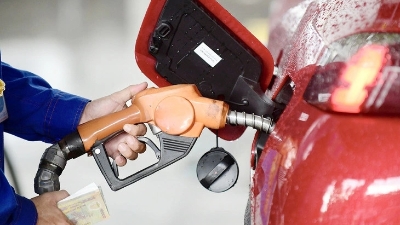
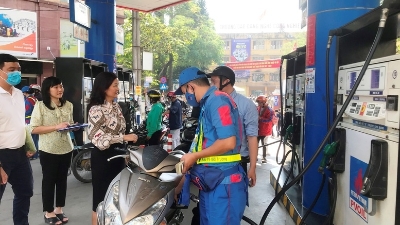
At the retail level, these pressures have translated into severe margin challenges. Mr. Bao noted that distribution margins have at times fallen to zero, particularly under the current pricing mechanism governed by Government Decree No. 83/2014/ND-CP, dated September 3, 2014, on gasoline and oil trading. Daily price adjustments in highly volatile conditions have left some companies incurring immediate losses, buying high in the morning only to face sharp price declines by the afternoon.
Responding and stabilizing
In response to these mounting pressures, the government has implemented a series of decisive stabilization measures. Mr. Hung noted that authorities have reduced taxes, deployed the gasoline price stabilization fund, and even drawn from the State budget to cushion domestic price increases.
These interventions have played a critical role in preventing extreme volatility. “Without timely measures, fuel prices could have tripled or more,” Mr. Hung said, emphasizing that current price levels reflect a balance between global market forces and domestic policy efforts.
At the same time, Mr. Bao argued that the crisis has exposed structural shortcomings in the regulatory framework. He revealed that a new decree is being drafted to replace Decree No. 83, with the aim of creating a more market-oriented mechanism, reducing administrative burdens, and addressing persistent issues related to pricing and distribution margins.
Within this broader context, Petrolimex has emerged as a key stabilizing force in the domestic market. According to Mr. Hung, the company deliberately chose not to restrict supply despite widespread uncertainty. While some distributors imposed purchase limits, Petrolimex maintained normal sales operations, with volumes reaching up to 1.5-times typical levels during peak demand.
This approach, he explained, is supported by a multi-layered supply strategy. Petrolimex maintains a global network of around 80 strategic partners, enabling early access to market intelligence and diversified sourcing options. Approximately 70 per cent of its supply is secured through long-term contracts negotiated well in advance, while the remaining 30 per cent is sourced through spot purchases to maintain flexibility.
In addition, its trading division in Singapore acts as an “extended arm,” capable of redirecting shipments to Vietnam in emergency situations. Support from strategic shareholder ENEOS, along with access to bonded storage facilities, further enhances the company’s ability to respond swiftly to supply disruptions.
Path forward
Looking ahead, both speakers agreed that strengthening Vietnam’s gasoline reserve is central to long-term energy security. Mr. Hung noted that current reserves are largely embedded within the commercial inventories of major distributors rather than held in an independent national system. To improve resilience, he stressed the need to develop standalone reserves capable of responding effectively to geopolitical shocks.
Vietnam has set a target of building reserves equivalent to 90 days of net imports by 2030. However, he estimated that even maintaining a 30-day reserve would require at least $1 billion, with higher targets placing increasing pressure on public finances.
Mr. Bao, for his part, emphasized that the challenge extends beyond financing to operational considerations. Gasoline products degrade within three to six months, requiring continuous rotation mechanisms to maintain quality. He also pointed out that current State payments for storage services have not been adjusted for decades, creating financial strain for participating businesses.
Both speakers pointed toward a hybrid approach as the most feasible path forward. Mr. Bao proposed leveraging existing private infrastructure, such as storage systems and port facilities, while allowing the State to invest in dedicated reserve capacity connected to these networks. Mr. Hung similarly highlighted the importance of combining State funding with private sector expertise, noting that major distributors are better equipped to manage storage, rotation, and distribution efficiently.
Such a model, they suggested, would enable Vietnam to build a flexible and responsive reserve system capable of stabilizing the market during future disruptions while avoiding excessive upfront public investment.



 Google translate