



The 2021-2025 period is now drawing to a close, leaving behind a term marked by unprecedented challenges. Amid this harsh landscape, under the decisive leadership of the Party Central Committee and the government, ministries and localities implemented bold and flexible measures, turning crises into opportunities. The economy steadily progressed month-after-month and quarter-after-quarter, laying a stronger macro-economic foundation, maintaining growth and controlling inflation.
Rising through challenges
At the recent “Vietnam Socio-Economy 2021-2025: Resilience and Breakthrough” seminar, experts agreed that despite facing global shocks and domestic hurdles from 2021 to 2025, Vietnam demonstrated remarkable resilience and a capacity for breakthroughs.
Ms. Ramla Khalidi, United Nations Development Programme (UNDP) Resident Representative in Vietnam, highlighted the country’s achievements in economic growth and human development. “The country has turned crises into opportunities, maintaining strong economic growth above 7 per cent and steadily improving its Human Development Index,” she said, while also praising Vietnam’s strong leadership and strategic vision that enabled the government to implement policies effectively, adapt to climate risks, and prepare for a new era focused on innovation, green growth, and inclusivity.
Echoing this, Dr. Phan Duc Hieu, Standing Member of the National Assembly’s Economic and Financial Committee, emphasized the economy’s resilience. “Vietnam’s growth has been sustainable because domestic capacity in the economy has strengthened significantly,” he believes. GDP growth is projected to average 6.3 per cent over the period, despite the unprecedented obstacles. The economy’s scale has also expanded, trade and foreign reserves have improved, and key macro-economic indicators remain well controlled.
Dr. Hieu cited several major shocks Vietnam has successfully navigated: the Covid-19 pandemic, reshoring trends affecting foreign investment, and US trade policies under the Trump administration. “In each case, Vietnam responded decisively,” he noted, pointing to social support programs, foreign investment inflows, and continued trade growth as evidence of the country’s ability to adapt.
Meanwhile, Professor Vu Minh Khuong, Practice Professor at the Lee Kuan Yew School of Public Policy at the National University of Singapore, described the 2020-2025 period as extraordinary. He highlighted three qualities driving Vietnam’s progress: courage, decisiveness, and selflessness. “These traits, combined with strong macro-economic fundamentals, have fostered a sense of aspiration and momentum, preparing Vietnam for a respected role on the international stage over the next two decades.”
He also noted the rapid advancement of digital technology, the emergence of skilled talent, and the growth of industries like plastics, which are increasingly integrated into global markets. “Vietnam has adapted well to the AI era, and economic growth has been accompanied by care for workers, especially women,” he added.
In addition to its economic achievements and notable social progress, Vietnam has also made strong headway on the United Nations Sustainable Development Goals (SDGs).
Ms. Khalidi highlighted the country’s poverty reduction as a key milestone, falling from 9 per cent to 4 per cent between 2016 and 2022. Health insurance now covers 94 per cent of the population, and school enrollments from pre-school through high school continues to rise. “These social indicators reflect Vietnam’s tangible progress on the SDGs,” Ms. Khalidi said. “The country has built a solid foundation and now needs to accelerate the digital shift to sustain and expand these achievements.”
Challenges remain, however. Inequality persists between urban and rural communities, between ethnic minorities and the majority Kinh population, and between men and women. Gaps in digital access also risk leaving some groups behind, limiting their ability to participate equally in Vietnam’s development. Regarding gender equality, Ms. Khalidi noted a concerning decline in female leadership at the provincial level, highlighting the importance of maintaining hard-won gains.
Environmental issues also demand attention. “Climate change alone costs Vietnam billions of dollars each year,” she emphasized, calling for both mitigation and strong investment in adaptation.
Looking ahead, she outlined three priorities: promoting innovation and green transformation to drive sustainable growth; investing in human capital to address inequalities and ensure inclusive development; and continuing institutional and administrative reforms to enhance coordination across sectors and build supportive alliances. Vietnam, Ms. Khalidi added, is well-positioned to maintain its SDG trajectory, turning social progress into lasting, inclusive development.
Turning lessons into future momentum
The past five years have tested Vietnam’s resilience, revealing lessons that will shape its path forward.
Dr. Hieu highlighted three strategic lessons. First, new challenges emerge as growth targets rise, requiring constant adaptation. Second, the quality and sustainability of growth are as important as scale. And third, maintaining reform momentum is critical, not only acting decisively today but ensuring the drive continues tomorrow.
He pointed to the government’s proactive approach to crises as a key lesson. During Covid-19, the National Assembly and government quickly enacted special resolutions, shifting strategies from purely pandemic control to a dual focus on public health and economic growth. Legislative agility was also evident: laws and policies were fast-tracked, including unprecedented moves to institutionalize Politburo Resolution No. 68, on promoting the private sector, in just 12 days. He also stressed the importance of citizen engagement: people should not only benefit from policies but actively participate in their design and implementation.
Dr. Khuong added an international perspective. Vietnam has turned external shocks into opportunities, exemplified by the swift negotiations with the US during tariff disputes. He emphasized two lessons for future development: shifting from mere growth to strategic evolution, which combines scale with foresight and systemic integration, and focusing on systemic vulnerabilities, addressing critical pressure points to create breakthroughs.
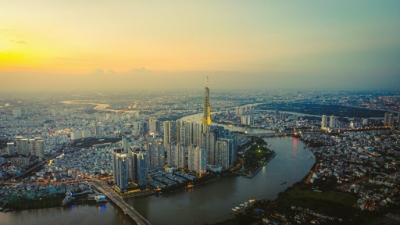
He also highlighted the importance of holistic, synergistic development: aligning resources, investment, and incentives across sectors and regions to achieve “1 plus 1 equals 11”. Strategic investment in global cities like Hanoi, Ho Chi Minh City, and Da Nang, paired with enhanced State capacity and human capital, will be pivotal for Vietnam’s next stage of growth.
Meanwhile, Ms. Khalidi underscored governance and sustainability as central to achieving Vietnam’s long-term ambitions, including net-zero emissions and double-digit economic growth by 2050. Success depends on strong strategic planning, intersectoral coordination, innovation-friendly policies, and evidence-based decision-making. Future crises, particularly climate-related, are inevitable, and adaptation strategies must be dynamic, data-driven, and inclusive.
She also emphasized that citizens must remain partners, not just beneficiaries, in development. Listening to people’s needs, perspectives, and experiences is critical to building an inclusive, sustainable path forward.
Catalyst for inclusive development
Vietnam’s leaders have set their sights on a bold goal: sustaining double-digit growth over consecutive years. Yet experts emphasize that growth alone is not enough; it must be sustainable, inclusive, and rooted in strong institutions.
Dr. Khuong noted that, internationally, economic expansion is always the product of structural reforms. Ambitious targets could propel Vietnam rapidly towards global benchmarks like Singapore or South Korea, but achieving 10-12 per cent growth depends on international conditions and must rest on a solid foundation rather than chasing short-term gains at the expense of institutional stability.
Ms. Khalidi added that the question is less about hitting double-digit growth and more about ensuring all communities benefit from development. She stressed the importance of implementing Vietnam’s policy and strategic frameworks with flexibility, adaptability, and innovation.
For his part, Dr. Bui Sy Loi, former Vice Chairman of the National Assembly’s Social Affairs Committee, underscored that rapid growth must be supported by a strong social foundation, reflecting the principle of “the Party’s direction, the people’s support.” Inclusive development should be human-centered, guaranteeing fairness and progress across all policies. In this new era, green, innovative, and humanistic growth, supported by skilled workers and digital capacity, will determine Vietnam’s economic resilience.
Experts agree that opportunities lie within challenges. Institutional reform, carefully designed and internationally informed, is critical. Vietnam must move beyond raw export volumes to generate higher value-added products and deepen strategic partnerships with key global markets. At the same time, developing human capital and fostering creativity will allow cities like Hanoi, Ho Chi Minh City, and Da Nang to become hubs for global talent and innovation. Together, these elements create a foundation not just for high growth but for a Vietnam that is sustainable, inclusive, and prepared to lead in the decades ahead.






 Google translate