


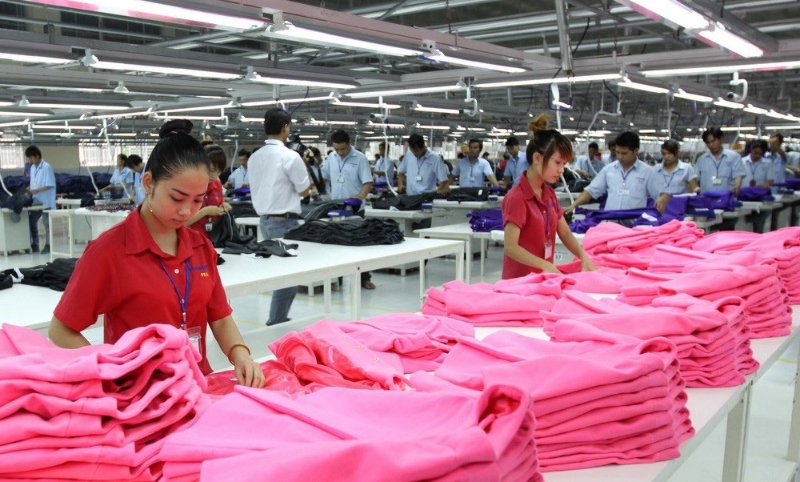
Speaking at the “Strategies for Developing Vietnam’s Textile and Garment Industry in a Fluctuating Environment” seminar, held recently, Mr. Vu Duc Giang, Chairman of the Vietnam Textile & Apparel Association (VITAS), said 2025 marked a pivotal phase in the industry’s global economic integration, as its position and stature become more firmly established. Export turnover reached $46 billion, up an impressive 5 per cent against 2024 and reinforcing Vietnam’s place among the world’s Top 3 textile and garment exporters.
Challenges on all fronts
As the industry moves into 2026, Vietnam’s textile and garment sector faces not isolated difficulties but an interconnected ecosystem of challenges. According to Mr. Giang, the industry is being heavily affected by global economic uncertainty, rising trade protectionism, and increasingly-strict technical barriers from major markets such as the US and the EU. Requirements related to environmental protection, labor standards, and especially traceability are no longer recommendations but prerequisites for Vietnamese products to reach global retail shelves.
One of the most deep-rooted challenges lies in the “health” of domestic enterprises. Ms. Nguyen Hong Ha, Program Manager at Better Work Vietnam (BWV), noted that around 90 per cent of companies in the sector are micro, small, and medium-sized enterprises (MSMEs). With limited financial resources and poor risk management capabilities, this cohort has become the most vulnerable link in the supply chain as it confronts a “dual transition”: digitalization to boost productivity, and greening to meet sustainability standards. Rising logistics costs and compliance expenses related to green standards are forcing businesses to be cautious in their use of financial leverage and to prioritize long-term stability over short-term, rapid growth.
Human resources have also emerged as a critical bottleneck. Vietnam’s textile and garment workforce is aging, while attracting younger workers is becoming increasingly difficult. More concerning, around 80 per cent of current jobs remain low-skilled, and workers’ skill levels have seen little meaningful improvement since 2012. As competitiveness based on cheap labor fades, it is being replaced by demands for resilience and reliability in labor relations.
In addition, the sector faces significant challenges in implementing green commitments. Ms. Nguyen Thi Ngoc Minh, Lean Manager at Hanesbrands, said that while brands have made strong sustainability pledges, the journey from commitment to actual implementation at the factory level remains long and complex. Emission reduction solutions require substantial investment in green technologies and renewable energy, placing direct pressure on price competitiveness.
From a policy perspective, Dr. Tran Cong Chinh from the University of Economics & Business at the Vietnam National University, Hanoi (VNU-UEB), highlighted barriers relating to recycling permits. Many companies wish to reuse wastewater but are constrained by regulations, as permits are tied to industrial parks. If an industrial park lacks this function, its member enterprises are also prohibited from implementing circular water treatment solutions.
Dual roadmap
Amid mounting pressure, digital transformation and the application of science and technology are widely seen as the keys to helping the textile and garment industry escape the “low-cost trap” and move up the value chain.
H.E. Kees van Baar, Ambassador of the Netherlands to Vietnam, emphasized the role of international cooperation in advancing sustainable transformation, recommending that the industry continue to accelerate technological innovation, supply chain transparency, and compliance with new European market standards. “Technology adoption in textiles should not be narrowly understood as replacing humans with robots, but rather as people leveraging AI to work smarter and make more accurate, data-driven decisions,” he said.
Mr. Jatin Paul, CEO of World Fashion Exchange, said that instead of spending hours or days manually entering hundreds of pages of data on designs and measurements, AI can read and process them in seconds. Notably, AI can also function as a living “knowledge library,” preserving a company’s production know-how even amid high workforce turnover, ensuring business continuity and smooth knowledge transfer. This is a crucial solution for helping enterprises respond more rapidly to the constantly changing demands of international brands.
Alongside digitalization, “greening” has become a matter of survival. Vietnam has set a net-zero target for 2050, and the textile and garment industry must be among the pioneers. Implementing green solutions cannot stop at audit reports but must penetrate actual production processes, including investments in renewable energy and advanced waste treatment technologies.
The circular economy model, built on five pillars - sustainable design, green production, waste management, product life extension, and supply chain management - is being actively promoted by organizations such as IDH. At model industrial parks like Bao Minh in northern Ninh Binh province, the application of Phase 2 wastewater treatment technology has reduced sludge by up to 55 per cent and chemical use by 35 per cent. This demonstrates that with the right vision and investment, technology can fundamentally address environmental challenges, transforming “waste” into “resources” through industrial symbiosis.
Mr. Wu Liang Jie, Chairman of Hikari Precise Machinery, said modernizing equipment and adopting smart sewing machines are critical solutions to boost productivity, cut costs, and improve product quality, enabling Vietnamese enterprises to better meet international brand requirements.
Unlocking breakthrough policies
To achieve the export target of $64.5 billion by 2030, equivalent to annual growth of 6.5-7 per cent, enterprise efforts alone will not suffice. A policy framework that is both enabling and grounded in reality is essential.
One of the most positive developments for the industry, according to Dr. Chinh, is the National Assembly’s passage of the amended Law on Value Added Tax, effective January 1, 2026. Under the new law, enterprises purchasing agricultural products such as cotton fiber and pandan leaves will no longer be required to declare the 5 per cent VAT previously applied, directly reducing input costs and encouraging the use of domestically-sourced organic materials. In addition, the removal of overly stringent VAT refund regulations is expected to free up significant financial resources for businesses.
However, Dr. Chinh argued that the concepts of waste and reusable materials need to be redefined. Currently, many types of fabric scraps are still classified as waste requiring disposal rather than as inputs for other industries. Regulations on recycling permits within industrial parks should also be relaxed to allow factories to implement circular water treatment without being constrained by outdated infrastructure rules.
Another key recommendation, put forward by Ms. Nguyen Thi Minh Thuy, Senior Program Manager at IDH, is the development of a sector-specific circular economy roadmap with clear guidance by industry level. At present, many enterprises, especially small ones, feel overwhelmed by the lack of a clear action framework. Establishing international standards and developing eco-labels for Vietnamese textile and garment products would serve as a powerful lever for enterprises to fully capitalize on free trade agreements. In parallel, public-private partnership (PPP) models should be strengthened to share the financial burden of investing in green technologies, where payback periods are often very long.
According to Ms. Thuy, the voices of enterprises need to be more substantively heard during the legislative process. VITAS should continue to persistently advocate for reforms related to the Law on Social Insurance, trade union fees, and administrative procedures, to improve the business environment.



 Google translate