


Implemented since early 2021, the Free Trade Agreement between Vietnam and the United Kingdom (UKVFTA) has delivered strong trade outcomes. Two-way trade turnover topped £10 billion ($13 billion) in 2025, up 25 percent year-on-year and double the 2020 figure. However, expanding bilateral ties require looking beyond agricultural and garment trades.
Economic relations are entering a deeper phase, marked by Vietnamese technology groups expanding in the UK and aviation deals connecting to Airbus and Rolls-Royce. Rapid real economy expansion demands large-scale financing, increasing domestic need for sophisticated services such as maritime insurance, asset management, supply chain finance, and digital financial tools.
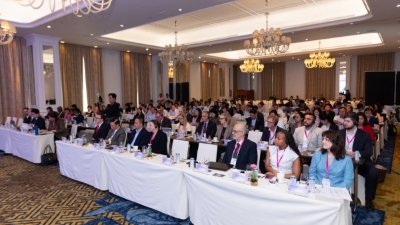
At a seminar titled “From UKVFTA to International Financial Center: Opportunities for Vietnam-UK Investment and Financial Cooperation,” on November 5, Mr. Joshua Ashworth, Head of Trade and Investment at the British Embassy in Vietnam, highlighted the potential for integration. The UK’s financial and related business services sector generates mearly £281 billion ($365 billion), accounting for 12 percent of its GDP. London’s ecosystem holds advantages in trade finance, capital markets, green finance, and fintech, offering potential synergy with Vietnam's growing market.
National Assembly Resolution 222/2025/QH15 and a supporting legal framework have established institutional foundations for VIFC in Ho Chi Minh City and Da Nang. UK institutions and advisory firms offer key support across three areas outlined by Associate Professor Dr. Nghiem Thi Tha, Vice President and Secretary General of the Vietnam Association of Financial Consultants (VAFC).
First, UK firms transfer operational experience. Established British financial institutions and audit firms in Vietnam, including HSBC, Standard Chartered, EY, and KPMG, can help standardize operations and convert UKVFTA commitments into capital flows.
Second, the UK acts as a bridge directing international capital into VIFC, providing global credibility for the center.
Third, British advisors assist Vietnamese firms in standardizing fundraising profiles, enhancing transparency, and adopting International Financial Reporting Standards (IFRS) to attract long-term investment.
International financial centers require market trust. Mr. Joshua Ashworth noted that global investors evaluating VIFC look for four core factors: confidence in the business environment, operational transparency and independence, reliable regulatory oversight, and alignment between financial policies and macroeconomic strategy.
Addressing legal risk, Mr. Nguyen Minh Khoi from the Tony Blair Institute for Global Change (TBI) pointed to international arbitration mechanisms and predictable law enforcement as critical. Establishing dispute resolution aligned with international standards rather than purely domestic law is a key requirement, alongside policy predictability through small-scale pilot testing.
Associate Professor Dr. Nghiem Thi Tha added that VIFC’s success rests on six factors: a transparent legal framework, competitive tax policies, market maturity, skilled workforce, digital payment infrastructure, and international integration. Streamlining processes between local authorities in Ho Chi Minh City and Da Nang and central ministries remains necessary to address investor concerns regarding operational scope, legal protections, and administrative support.



 Google translate