Dear readers,
The 16th National Assembly, during its inaugural session that began on April 6, elected top leaders of the State apparatus or approved the appointment of Deputy Prime Ministers, Ministers, and other members of the new cabinet for the 2026-2031 term. Party General Secretary To Lam was elected as State President, Politburo Member and Chairman of the Party Central Committee’s Organization Commission Le Minh Hung as Prime Minister, and Politburo Member and Chairman of the 15th National Assembly Tran Thanh Man as Chairman of the 16th National Assembly. The new cabinet comprises Prime Minister Le Minh Hung, six Deputy Prime Ministers, and 17 Ministers and heads of ministry-level agencies.
The completion of the new State apparatus, shortly after the 14th National Party Congress, creates new momentum for national development, right from the first year of the five-year socio-economic development plan (2026-2030) adopted by the Party Congress.
Vietnam’s economy has firmly stood its ground in the face of many external fluctuations resulting from the conflict that erupted in the Middle East on February 28, recording positive performance in the first quarter of the year.
According to the government report supplementarily assessing the results of the implementation of the socio-economic development plan for 2025 and implementing the plan for 2026, presented by Prime Minister Le Minh Hung on April 9 at the first session of the 16th National Assembly, the macro-economy is basically stable, inflation is under control, and major economic balances have been ensured, with quarterly GDP growth estimated at 7.83 per cent; the highest level for a first quarter in 16 years, since 2011.
The government report further noted that all three economic sectors grew well - agriculture by 3.58 per cent, industry and construction by 8.92 per cent, and services by 8.18 per cent. Agricultural production remained stable. Industry continued to develop, with the Purchasing Managers’ Index (PMI) reaching 51.2 points in March, marking the ninth consecutive month of expansion above 50 points, while manufacturing and processing increased 9.7 per cent.
Trade and services maintained growth momentum, while Vietnam attracted nearly 6.8 million international visitors, an increase of 12.4 per cent. The construction of socio-economic infrastructure was implemented in a synchronous manner, focusing on key projects such as highways, high-speed railways, airports, and digital infrastructure.
However, Vietnam’s economy still faced certain limitations, inadequacies, and challenges in the first quarter. The macro-economy was significantly affected by adverse external factors. Production and business activities in some sectors encountered a host of difficulties. Traditional growth drivers underperformed, domestic purchasing power was low, and exports still depended heavily on the FDI sector. New growth drivers remain in the early stages of development and could not yield immediate results. The real estate market is undergoing a slow recovery, which poses its own risks. Some administrative procedures remain cumbersome, while online public services are not yet truly convenient for citizens and businesses.
Our Cover Story in this edition therefore focuses on Vietnam’s socio-economic achievements as well as the difficulties and challenges it had to face in the opening quarter of 2026; the first year of implementing the Resolution from the 14th National Party Congress, which set a challenging GDP growth target of 10 per cent or more.
Warmest regards
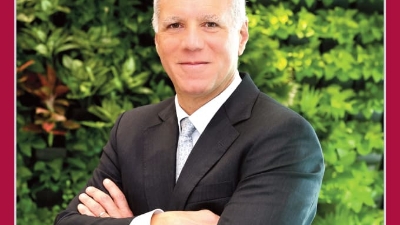
Dr. CHU VAN LAM
CHAIRMAN OF THE EDITORIAL BOARD

![[Interactive]: Economic overview - September 2026](https://premedia.vneconomy.vn/files/uploads/2026/10/06/9e0f403040dd4384ad690004bc1911ab-124594.png?w=400&h=225&mode=crop)