


Vietnam and France are seeking to deepen cooperation in science, technology, and innovation, with closer links between businesses, universities, and research institutions key to translating research into commercial applications.
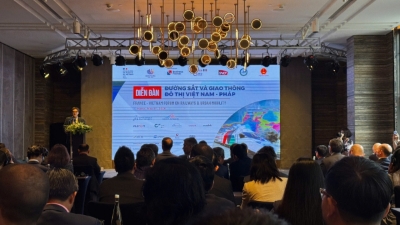
Against this backdrop, France-Vietnam Forward 2026, held in Ho Chi Minh City on October 15, focused on five industries: healthcare, financial technology (fintech), transportation, industry, and construction, with an emphasis on the practical application of technology across these fields.
Organized by the French Chamber of Commerce and Industry in Vietnam (CCIFV), La French Tech Vietnam, the Embassy of France in Vietnam, Business France, and French Foreign Trade Advisors (CCE), the event brought together representatives from diplomatic missions, businesses, startups, investors, universities, and young professionals from both countries.
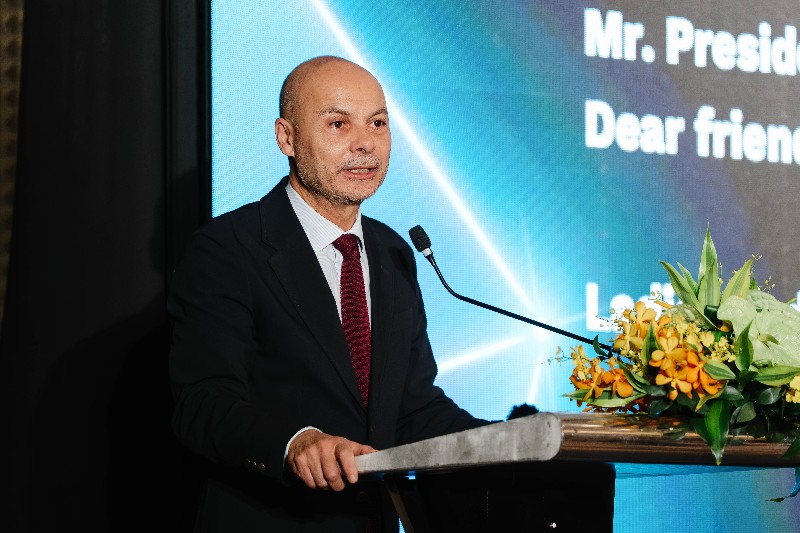
Speaking at the event, Mr. Tran Trong Tuyen, Deputy Director of the Ho Chi Minh City Department of Science and Technology, said the city wanted to strengthen cooperation between businesses, universities, research institutions, and government agencies to develop a more open innovation ecosystem.
Businesses would drive innovation, universities and research institutions would contribute knowledge and technology, while the government would provide an enabling policy framework. “We want research outcomes not to remain confined to laboratories or scientific publications, but to be transferred, commercialized, and effectively applied in production, business, and social life,” Mr. Tuyen said.
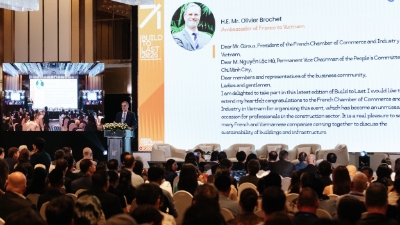
Speaking with VnEconomy / Vietnam Economic Times, H.E Didier Le Bret, Ambassador of France to Vietnam, said the two countries shared an interest in strengthening technological sovereignty, developing domestic capabilities, and ensuring innovation contributed to long-term development. “France can contribute not only technological solutions, but also research and engineering expertise, training, knowledge transfer, and long-term industrial partnerships,” he said.
Turning research into commercial outcomes
Ambassador Le Bret said France’s innovation ecosystem brought together major international companies, leading research institutions, and dynamic startups. Its strengths span aerospace, transportation, AI, semiconductors, healthcare, quantum technologies, and low-carbon energy.
Beyond established partnerships, France and Vietnam are exploring opportunities in emerging fields, including space and quantum technology. Party General Secretary and State President To Lam’s participation in an international space summit hosted by French President Emmanuel Macron in Paris in September highlighted the strategic importance both countries attach to space cooperation, the Ambassador added.
A delegation of four French companies specializing in quantum technologies was also expected to visit Vietnam to explore potential partnerships with local businesses. Research cooperation offers another route to strengthening bilateral innovation. French institutions, including the National Research Institute for Sustainable Development (IRD) and the Agricultural Research Center for International Development (CIRAD), work with Vietnamese partners to jointly identify research priorities.
On April 12, 2025, the Embassy of France in Vietnam and Vietnam’s National Innovation Center (NIC) signed an MoU to strengthen links between the two innovation ecosystems, including in AI, quantum technology, the green transition, enterprise digitalization, and fintech.
For Ho Chi Minh City, the priority is to translate these institutional links into joint research, technology transfer, and commercialization opportunities for local businesses.
Transportation is a key area in which French technological expertise could support Vietnam’s development plans. France has more than 125 years of experience in metro systems and over 40 years in high-speed rail, alongside expertise in driverless metro systems and innovative tramway technologies.
As Vietnam modernizes its national railway network, advances the North-South high-speed railway project, and expands metro networks in Hanoi and Ho Chi Minh City, cooperation could extend beyond technology supply to engineering, system integration, railway safety, operational management, and staff training.
Existing projects illustrate the scope of cooperation. Hanoi’s Metro Line No. 3 is one example of the bilateral partnership, while Alstom and Vingroup recently signed an agreement to supply up to 200 next-generation metro trainsets for Hanoi’s urban rail network.
France is also supporting Vietnam Railways in areas including workforce training and preparations for future high-speed rail projects. Studies on modernizing the Hanoi - Hai Phong railway line and cooperation on a planned Railway Technology School in Hanoi reflect a longer-term focus on developing local expertise. “The successful development of modern railway infrastructure depends not only on the quality of the technology, but also on the ability to operate, maintain, and develop these systems over the long term,” Ambassador Le Bret said.
He added that cooperation between French and Vietnamese companies could create opportunities in engineering, maintenance, railway services and, where appropriate, local production of equipment and components. Such partnerships could strengthen Vietnam’s industrial capabilities and help domestic suppliers participate more deeply in international value chains.
Beyond railways, French expertise in energy-efficient buildings, low-carbon materials, and climate-resilient urban planning could support Vietnam’s urban development and emission-reduction objectives.
French companies are also looking to deepen cooperation in renewable energy, including wind, solar, and hydropower. France is open to exploring civil nuclear energy cooperation, while the Just Energy Transition Partnership (JETP), supported by France and other partners, provides another framework for advancing Vietnam’s energy transition. The French Development Agency (AFD) plays a role in translating these commitments into practical initiatives.
Workforce development underpins long-term cooperation
Beyond technology partnerships and investment, workforce development remains essential to translating bilateral commitments into tangible results. Ambassador Le Bret identified three requirements for effective cooperation: strong political will, an active business community, and a skilled workforce.
More than three decades of cooperation in education, training, and research have laid the groundwork. The Programme de Formation d’Ingénieurs d’Excellence au Vietnam (PFIEV), a joint engineering training program, has produced more than 9,000 alumni through a five-year curriculum meeting French and European standards, according to the Ambassador.
The French-Vietnamese Center for Management Education (CFVG) has trained more than 6,000 alumni over the past 15 years, while the University of Science and Technology of Hanoi (USTH) represents another example of bilateral educational cooperation.
Academic exchanges also work in both directions, including French master’s students spending six months to a year studying in Vietnam. Ambassador Le Bret said skilled professionals would be increasingly important as Vietnam develops and manages complex infrastructure, particularly railway and transportation systems.
The private sector is also responding to demand for specialized talent. Citing an Accenture representative attending the event, the Ambassador said the company was recruiting thousands of employees to meet demand in Vietnam and potentially across the region.
For startups, international expansion requires more than funding. Access to customers, reliable partners, local expertise, and an understanding of target markets are also essential, Ambassador Le Bret said.
France supports companies through the Team France network. Business France helps businesses explore new markets and develop international partnerships, while CCIFV facilitates connections between French and Vietnamese companies. La French Tech strengthens these links by promoting French technology innovation and connecting entrepreneurs with local businesses and partners.
France also works with Vietnamese authorities, universities, and innovation organizations. A delegation from Ho Chi Minh City’s Center for the Fourth Industrial Revolution (C4IR), for example, attended VivaTech 2026 in Paris to meet potential partners and learn from France’s innovation ecosystem.
Initiatives such as Bach Khoa Innovation (HACKATHON), together with networking activities involving businesses and students, aim to encourage entrepreneurship and help young talent connect with employers.
The five sectors featured at France-Vietnam Forward 2026 offer opportunities to develop cross-border business models by combining French technological expertise with Vietnam’s industrial capabilities, skilled workforce and expanding market.
Ambassador Le Bret also pointed to agreements signed during Party General Secretary and State President To Lam’s visit to France in September, covering strategic areas such as AI, quantum technologies, aerospace, clean energy, critical minerals, scientific research, and sustainable development. Partnerships involving companies including Thales, Airbus, and Alstom illustrate the potential to combine French expertise with Vietnam’s industrial strengths.
The Ambassador said the objective was to bring French innovation and Vietnamese talent closer together and turn shared ambitions into concrete partnerships.
With the France-Vietnam Innovation Year concluded, the next challenge is to translate bilateral relationships into projects that respond to market needs, accelerate technology adoption, and develop the skills required by emerging industries.






 Google translate