


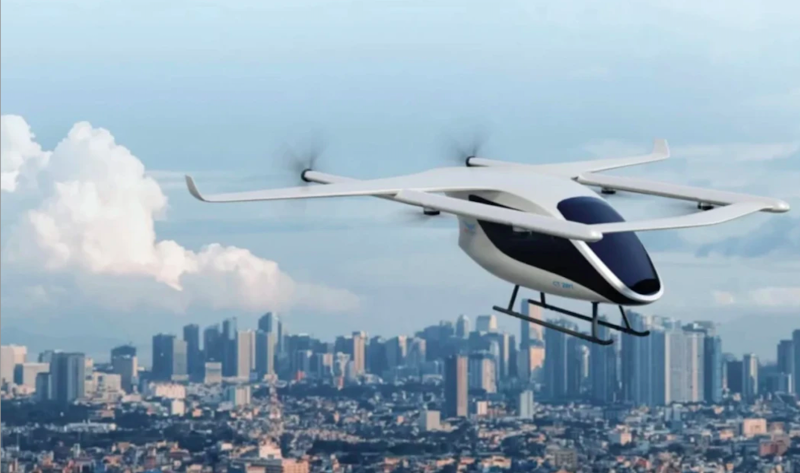
The Politburo has issued Conclusion No. 99-KL/TW on the exploitation, governance, and safeguarding of low-altitude airspace to serve national development in the new era.
According to the Ministry of Science and Technology, a key highlight of the Conclusion is a fundamental paradigm shift in how low-altitude airspace is approached.
Low-altitude airspace is no longer viewed solely through the narrow lens of flight management; rather, it has been defined as a "national resource, a new national development space, and a special sovereign domain" tied to protecting airspace sovereignty, data sovereignty, cybersecurity, and key strategic installations.
This marks a pivotal transition: moving from simply regulating flight vehicles and operations to actively exploiting, governing, and defending an entirely new economic frontier.
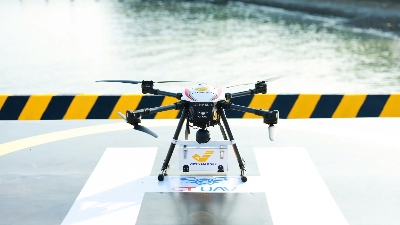
Under this framework, the "low-altitude economy" is not synonymous with unmanned aerial vehicles (UAVs). Instead, UAVs serve merely as one of several technological tools used to harness this space.
Targeting a 1.5% GDP contribution by 2045
Conclusion No 99 sets explicit benchmarks for the emergence and scaling of the low-altitude economy.
By 2030, Vietnam aims to operationalize three national-level flight test zones across diverse topographical terrains, alongside at least one national R&D and testing center dedicated to UAVs.
By 2045, the low-altitude economy is targeted to mature into a major techno-economic sector and a primary engine of economic growth with strong regional competitiveness, contributing roughly 1.5% of the national GDP.
The strategy also targets a domestic localization rate for core industrial production UAVs exceeding 30–40% by 2030, rising to over 85% by 2045.
The Ministry of Science and Technology emphasized that these targets demonstrate that developing the low-altitude economy goes beyond expanding end-use consumer markets; it is aimed at technological self-reliance, building industrial manufacturing capacity, and establishing domestic supply chains, thereby reinforcing autonomy over strategic technologies, infrastructure, and national data.
Another critical pillar of the Conclusion is defining the State's role during the formative market stage.
The State will assume a guiding and market-creating role through public procurement, pilot programs, and public-sector deployment, while incentivizing enterprises, research institutes, and universities to participate in UAV research, development, manufacturing, and commercialization.
Under this model, the State focuses on architecting the legal and governance framework, establishing technical standards, developing foundational physical and digital infrastructure, and seeding initial demand, while private and state enterprises serve as the centerpiece of research, production, and commercial market rollouts.







 Google translate