


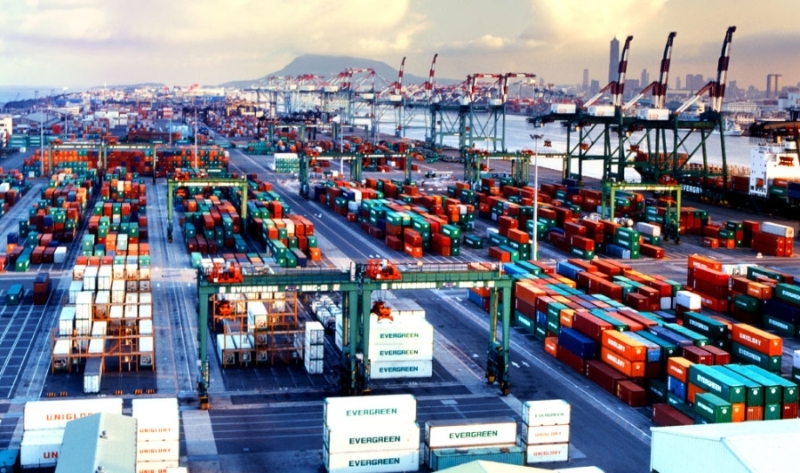
Deputy Prime Minister Bui Thanh Son signed Decision No. 2229/QD-TTg on October 9 , approving Vietnam’s for 2025-2035 with a Vision to 2050, which is to position the country as a leading logistics hub in Southeast Asia by 2035. It seeks not only to boost national competitiveness but also to underline logistics as a critical, high-value-added economic sector and a key driver of socio-economic growth.
Logistics services are expected to account for between 5 and 7 per cent of GDP in the 2025-2035 period, while logistics costs relative to GDP are to fall by between 12 and 15 per cent. Vietnam aims to move into the Top 40 in the global Logistics Performance Index (LPI), develop at least five modern logistics service centers, and ensure that 70 per cent of the logistics workforce receives professional training, including 30 per cent with a university degree or higher.
Targets rise further when 2050 comes into view, with logistics expected to contribute 7-9 per cent of GDP and logistics costs relative to GDP to come down by 10-12 per cent. Vietnam is to be in the Top 30 in the LPI by that time. Ten modern logistics centers will be developed nationwide, and 90 per cent of the workforce is expected to hold professional qualifications, including half with a university degree or higher.
Priority tasks
To achieve these objectives, the Strategy sets out nine groups of key solutions and priority tasks.
First, it calls for institutional improvements and enhanced State management. A central element is the development of digital customs and smart customs systems to shorten clearance times, reduce costs, and increase transparency. Issuing classification criteria for logistics centers will support planning, management, and investment attraction.
The Strategy stresses the need to review, amend, and supplement legal regulations related to logistics, promote administrative reform, adopt electronic documentation, and develop national and international standards, thereby strengthening the legal framework and encouraging private-sector participation. Priority will be given to developing logistics centers in Hanoi, Ho Chi Minh City, Hai Phong, and Da Nang, linked to seaports and international airports. Developing a national container shipping fleet is also considered crucial to increasing autonomy in international transportation.
Second, the Strategy focuses on building synchronized and modern logistics infrastructure. This includes the development of large, modern logistics centers in key economic regions; upgrading seaports, airports, inland container depots, and international rail connections; and prioritizing infrastructure for e-commerce, smart warehouses, and green urban logistics to reduce transport costs and improve supply chain efficiency.
Third, regional connectivity is emphasized. The Strategy identifies opportunities for logistics growth in the Red River Delta, the southern region, and the central region, with Hanoi, Hai Phong, Ho Chi Minh City, and Da Nang all key growth poles. Major economic corridors will be connected through modern infrastructure to strengthen regional and international links.
Fourth, it seeks to develop cargo sources and expand the logistics market by attracting investment from major manufacturing and distribution corporations and developing free trade and bonded zones to help Vietnam become a regional transshipment hub. It also encourages the development of specialized logistics services for agriculture, processing industries, and cross-border e-commerce.
Fifth, improving the competitiveness of logistics enterprises is a central priority. The Strategy calls for digital transformation and green transformation programs that will optimize routing, automate warehousing, promote the use of renewable energy, and develop low-emission transport, contributing to the national commitment to net-zero emissions by 2050. It also supports the formation of strong logistics enterprises capable of providing integrated 4PL and 5PL services and expanding internationally, while promoting connections between domestic firms and foreign enterprises to leverage technology, management expertise, and global networks.
Sixth, innovation, digital transformation, and green transition are all highlighted, to grow through modern technologies such as AI, big data, and blockchain for supply chain management, the development of digital and smart customs, and the promotion of green logistics to reduce emissions and move towards carbon neutrality.
Seventh, building a high-quality workforce is another key objective. The Strategy aims for 70-90 per cent of logistics workers to receive professional training by 2050, with half earning university degrees or higher. Multi-level training programs will be implemented and linked with international institutions to enhance skills and practical experience. National occupational skills standards for logistics will also be issued to guide training and assessment, while cooperation with international universities and research institutes will help improve training quality and produce a workforce ready for global integration.
Eighth, the Strategy emphasizes the role of associations and pioneering enterprises. It encourages the development of leading logistics companies capable of driving the market and supporting other enterprises. Logistics associations will act as a bridge between businesses and the government, promote modern supply chains, and organize international forums, conferences, and exhibitions to enhance Vietnam’s logistics profile.
Ninth, the Ministry of Industry and Trade will lead coordination with relevant ministries, agencies, localities, and associations to implement the Strategy, guide the development of action plans, and conduct reviews and report to the Prime Minister. Other ministries are assigned specific tasks, ranging from infrastructure investment and human resources training to standards development, digital customs models, and the expansion of free trade zones.




 Google translate