



The Ministry of Science and Technology is preparing to issue a list of around 20 groups of specialized semiconductor chips that will receive priority in State procurement, focusing on artificial intelligence, edge computing, next-generation telecommunications, sensors, IoT, power electronics and hardware security.
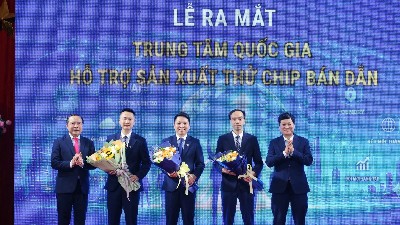
Mr. Nguyen Anh Tuan, Director of the National Centre for Pilot Semiconductor Chip Manufacturing Support under the Ministry, revealed the plan at a seminar held on September 10 on challenges and solutions for developing specialised semiconductor chips in Vietnam.
Mr. Tuan said that amid intensifying global technology competition, the semiconductor industry is not only a high-value economic sector but also increasingly important to technological self-reliance, national security and economic competitiveness.
Vietnam considers specialised chips a suitable way to leverage its existing strengths and gradually participate more deeply in the global semiconductor value chain.
Unlike general-purpose chips, specialised chips are designed to perform specific tasks and are used in applications including AI cameras, IoT devices, robots, UAVs, telecommunications systems, power electronics and smart grids. Their value lies less in mass production than in optimising performance, reducing energy consumption and meeting specific product requirements.
The strategy aligns with Vietnam’s existing capabilities, including a growing chip-design workforce, a strong electronics industry and a sizeable domestic market in telecommunications, AI, electric vehicles, energy and digital transformation.






 Google translate