


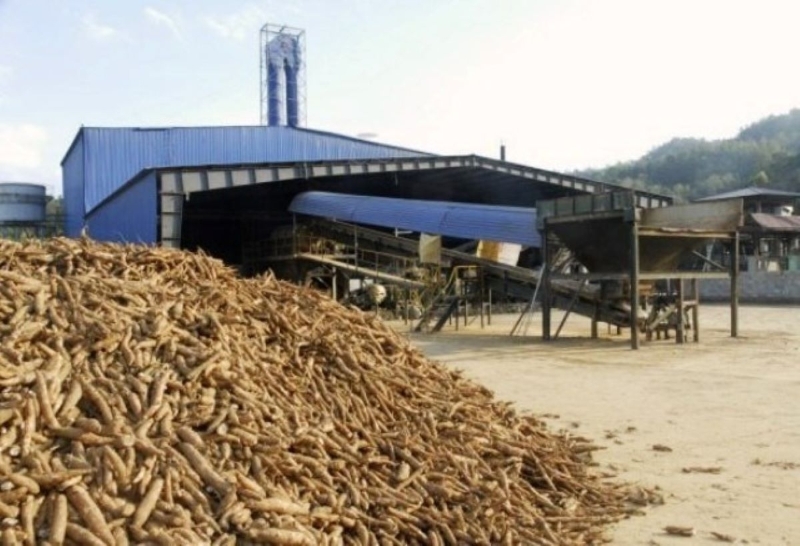
Vietnam exported more than 3.9 million tons of cassava in 2025, generating approximately $1.26 billion in revenue and ranking as the world’s third-largest cassava exporter, according to the Ministry of Industry and Trade.
China remained the dominant market, accounting for 94.1% of export volume and 92.6% of total value. Other notable destinations included Taiwan (China), Malaysia, and the Philippines.
Cassava is cultivated on over 500,000 hectares nationwide, with average yields of around 20.5 tons per hectare.
At a conference held in Hanoi on January 28 under the theme “Vietnam’s cassava supply chain: Current situation and challenges,” participants highlighted the need to increase added value through deeper processing as a key long-term solution. This would involve gradually reducing exports of dried cassava chips and low-processed starch, while promoting investment in higher-value products such as modified starch and cassava-based inputs for the food, pharmaceutical, industrial, and bioenergy sectors. Such a shift would help improve efficiency, sustainability, and resilience to raw material price fluctuations.
Experts also stressed the importance of restructuring the supply chain, tightening control over production and land use, formalising informal activities, and improving transparency to meet increasingly strict traceability requirements in export markets.




 Google translate