


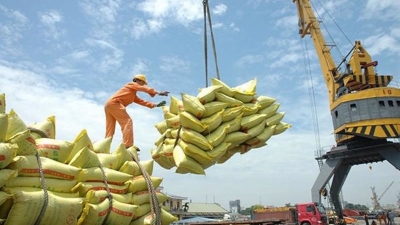
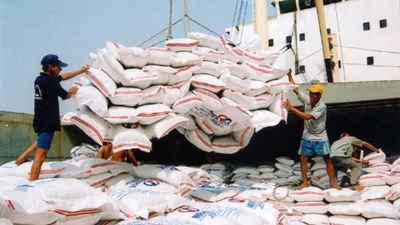
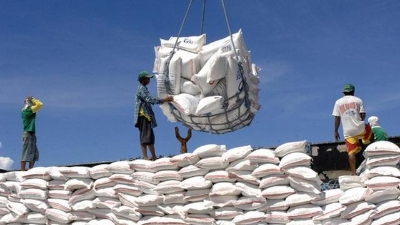
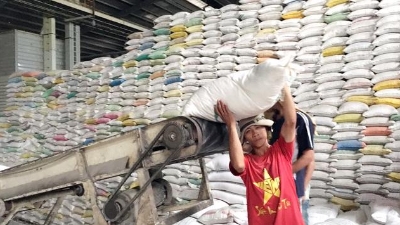
In November 2025, Vietnam exported 320,000 tons of rice, earning $169.8 million, according to the Ministry of Agriculture and Environment. Over the first 11 months, rice exports totaled 7.5 million tons and $3.83 billion, marking an 11.5% decrease in volume and a significant 27.7% drop in value compared to the same period in 2024. These figures highlight the global rice market's stagnation, exacerbated by the Philippines' import restrictions—a country that has long been Vietnam's largest rice consumer.
Significant decline in rice exports
Throughout the first 11 months of 2025, the Philippines remained Vietnam's largest rice market, accounting for 39.8% of the market share. Ghana and Ivory Coast followed, with shares of 12.8% and 11.5%, respectively. However, the export value to the Philippines plummeted by 34.9%, contrasting with a 29.8% increase in Ghana and a substantial 79.8% rise in Ivory Coast.
Notably, among the top 15 markets, Bangladesh saw the highest increase in export value from Vietnam, surging 155.1 times, while Malaysia experienced the steepest decline, dropping 51.3% compared to the previous year.
The average export price of rice in the first 11 months of 2025 was only $512.1 per ton, an 18.3% decrease from the previous year. This significant drop reflects the global market's pressure amidst weak demand and increased competition among exporting countries.
According to the Vietnam Food Association (VFA), early December 2025 saw stable export rice prices, with 5% broken rice at $420–440 per ton and Jasmine rice at $447–451 per ton. The VFA forecasts a 11.5% decline in rice exports for 2025 compared to 2024, primarily due to the sharp downturn in the Philippine market.
The most significant impact on Vietnam's rice exports comes from the Philippines, which accounts for nearly 40% of Vietnam's rice exports. The country extended its temporary import suspension until December 31, following a 60-day ban from September 1, 2025, to support local farmers during the harvest season. This has led to a sharp decline in Vietnam's rice exports to the Philippines this year.
The Philippine Statistics Authority (PSA) noted that farmgate rice prices (palay) fell by 27.8% year-on-year, down to 17.11 pesos per kilogram, with some areas seeing prices as low as 8 pesos per kilogram.
Agriculture Secretary Francisco Tiu Laurel Jr. attributed this to excessive rice imports earlier in the year, totaling 3.5 million tons by the end of September, exceeding the annual target by 800,000 tons. Since liberalizing imports in 2019, the Philippines has been unable to impose quotas, allowing cheap rice to flood in and depress domestic rice prices. Consequently, the government had to implement the ban to stabilize rice prices.
However, the prolonged import ban has significantly reduced national reserves. Therefore, the Philippine government plans to reopen imports in January 2026, with an expected volume of around 300,000 tons, before pausing again from February to April 2026 to protect domestic rice prices.
Starting January 1, 2026, the Philippines will implement a flexible rice import tariff mechanism, adjusting tariffs by 5 percentage points for every 5% fluctuation in international rice prices, with a range from 15% to 35%.
In Vietnam, the Vietnam Food Association (VFA) believes that the reopening of the Philippine market in January 2026 could create short-term opportunities for Vietnamese rice. However, the new tariff rates, along with the limited one-month import window, will affect the competitiveness of Vietnamese businesses.
Amidst global rice price fluctuations, Thailand and India continue to compete fiercely, while year-end 2025 inventories and the start of the Winter-Spring harvest could pressure Vietnamese rice prices in the first quarter of 2026.



 Google translate