



While many economies have posted negative growth in recent times and taken years to regain their footing, Vietnam managed to maintain positive growth even in its toughest period. Following the pandemic, Vietnam’s economy not only recovered but quickly regained its high-growth pace, underscoring strong domestic fundamentals and effective policy management. GDP in 2025 is projected to reach about $510 billion, rising five places year-on-year to rank 32nd worldwide and fourth in ASEAN. Economists believe the country stands out as one of the few to rebound faster than the global average.
Towards a higher-growth future
While global growth in the 2022-2023 period stood at just 3.5 per cent, Vietnam remained prominent as one of the economies with the most impressive recovery capacity during this time. Experts believe the target of 8.3-8.5 per cent growth for 2025 is entirely achievable, especially as all three quarters of the year have recorded positive results, with GDP growth of 6.93 per cent in the first quarter, 7.96 per cent in the second, and 8.23 per cent in the third.
Mr. Nguyen Nhu Quynh, Director of the National Institute for Economics and Finance at the Ministry of Finance, emphasized that the most important driver stems from the government’s determination to build a solid foundation for recovery and to promote growth across key pillars of the economy.
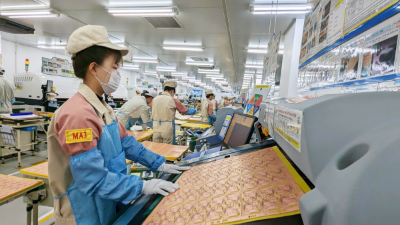
Industry continues to play a leading role, maintaining stable expansion with 9.5 per cent growth in the third quarter. The services sector has also accelerated strongly, rising 8.56 per cent, with many service subsectors achieving double-digit growth, reflecting a strong rebound in domestic demand and improving international demand. Agriculture has sustained its role as the economy’s stabilizing force, with 3.74 per cent growth, continuing to support market stability and production.
Alongside sector-based drivers, macro-economic stability remains a crucial foundation ensuring Vietnam’s sustainable recovery. Inflation has been maintained at a reasonable 3.1-3.5 per cent, creating confidence among businesses and citizens to continue production and commercial activities.
In addition, trade and FDI flows have continued to maintain stable growth despite global economic volatility. These results further strengthen Vietnam’s position in the eyes of foreign investors and within global supply chains.
These drivers are creating an important launch pad for Vietnam to move towards higher growth targets in the new era. Nevertheless, the economy will still need to unlock and develop additional new growth drivers to maintain its strong momentum. “Over the past two years, Vietnam’s economy has relied heavily on consumption, public spending, and public investment for recovery,” Mr. Quynh emphasized. “This raises an urgent requirement for us to expand new growth drivers in the coming period to ensure sustainable and long-term development.”
Headwinds for momentum
Despite achieving a range of positive results, Vietnam still faces a series of challenges, both external and internal, that could create significant headwinds for growth in the time to come.
On the international front, the global landscape is becoming more unpredictable than ever as geopolitical conflicts and instability intensify, competition between major powers grows increasingly fierce, and the rules-based order of globalization and free trade faces potential disruption. In addition, new tax policies are exerting strong impacts on the global economy, while growth in global trade and international investment is forecast to decline in the years ahead.
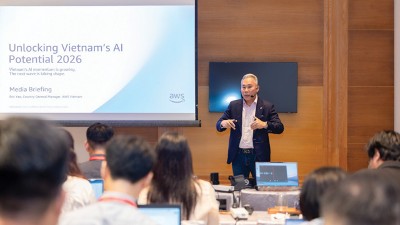
Notably, the global boom in new technologies is accelerating rapidly, bringing both opportunities and major pressures for Vietnam. According to Mr. Quynh, this is a critical moment for Vietnam to seize the opportunity for innovation. Yet it also represents a challenge, as the country’s capacity for technological innovation and application remains limited. Without stronger acceleration in innovation and high technology, Vietnam risks falling behind.
Vietnam’s economy continues to grapple with several structural weaknesses. The growth model remains outdated and competitiveness is low, and these issues represent not only short-term risks but also long-term challenges that could cause Vietnam to lag behind and fall into the middle-income trap.
Additionally, Vietnam’s population is aging faster than anticipated, while institutional bottlenecks, infrastructure constraints, and limitations in workforce quality have yet to be fully resolved. “Though Vietnam has made major breakthroughs in infrastructure development, labor quality has seen almost no significant improvement,” he noted.
Mr. Jochen Schmittmann, Resident Representative of the International Monetary Fund (IMF) in Vietnam, Laos, and Cambodia, observed that Vietnam’s Total Factor Productivity (TFP), including institutional quality, national governance effectiveness, corporate governance, and technological capability, remains significantly lower than that of many emerging economies. This indicates that Vietnam is not yet making optimal use of its resources, as capital, labor, and technology are not being allocated to sectors that can generate the highest value, thereby limiting market efficiency.
At the same time, the current labor structure and credit allocation remain misaligned, causing Vietnam’s private sector to lose many opportunities to break through. The workforce lacks the skills required for new technological demands, while private enterprises face significantly higher borrowing costs compared with FDI enterprises and State-owned enterprises (SOEs). “Expensive capital makes it difficult for them to scale up, invest in technology, or improve productivity, which in turn undermines the long-term competitiveness of the entire economy,” Mr. Schmittmann said.
New mindset for 2026-2030
Experts warn that meaningful breakthroughs will be hard to achieve without a shift in approach. What Vietnam needs most, they argue, is a new development mindset, one that reshapes leadership, the growth model, resource mobilization, and the nation’s overall development space.
Vietnam has set an ambitious goal of moving towards double-digit annual growth in the 2026-2030 period. This will be the pivotal stage for realizing the vision of becoming a developing country with modern industry and upper-middle-income status by 2030 and a developed, high-income country by 2045. These goals demand bold breakthroughs in mindset and in the growth model.
According to Mr. Quynh, Vietnam will need major breakthroughs across all growth drivers to achieve high growth during this “acceleration” phase. Several sectors must post double-digit growth, with manufacturing and processing maintaining more than 12 per cent to remain the economy’s anchor. Digital transformation, the digital economy, and innovation-led industries offer key opportunities to close the technology gap with leading economies. But success, he noted, ultimately hinges on political will and effective policy execution.
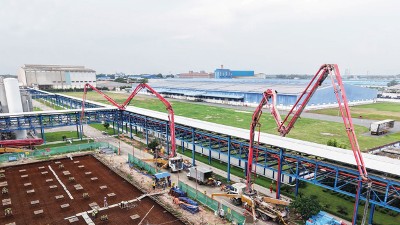
A second strategic priority for 2026-2030 is restructuring the country’s economic and social development space. This involves rezoning, expanding growth hubs, and establishing North-South and East-West economic corridors to improve regional connectivity. Stronger links between growth centers, seaports, and strategic transport routes would help optimize capital, trade, and logistics flows.
At the same time, a selective FDI attraction strategy must be prioritized. Vietnam should target high-technology projects with strong spillover potential and adherence to ESG (environmental, social, and governance) standards. Such projects must promote technology transfer, support innovation, enhance the capabilities of domestic enterprises, and generate high added value, rather than concentrating on labor-intensive or high energy-consumption industries.
Experts believe that prioritizing “next generation” FDI aligns with global trends, as international corporations increasingly value sustainability and transparent governance. This approach will not only help Vietnam maintain investment attractiveness but also elevate its position within regional and global supply chains, moving towards a greener, more modern, and more self-reliant economic model.
Many free trade agreements (FTAs) currently remain at the level of framework commitments, without the deep liberalization of services, procedural reforms, or significant reductions in non-tariff barriers. In the years to come, Vietnam will need to leverage FTAs more effectively, enhance the standardization of certification processes, and increase utilization rates so that domestic enterprises can fully benefit from these agreements.
Finally, narrowing the gap between Vietnam’s domestic enterprises and FDI companies in global supply chains is an urgent requirement. Currently, 73 per cent of Vietnam’s export turnover belongs to the FDI sector, while domestic enterprises struggle to access international buyers.






 Google translate