



Vietnam’s talent landscape is undergoing one of its fastest periods of transformation in a decade, as rapid digital adoption and foreign investment together with evolving employee expectations reshape hiring across the country’s major industries. According to PERSOL’s Industry Insights Report 2025, employers are entering a new phase in which hybrid skill sets, ESG (environmental, social, and governance) literacy, and multilingual capabilities increasingly outweigh traditional experience as determinants of competitiveness.
Drawing on insights in 12 Asia-Pacific markets, the report positions Vietnam as one of Southeast Asia’s fastest-growing hubs for digital hiring, particularly in e-commerce, omni-channel retail, high-tech manufacturing and data-driven logistics. But as momentum accelerates, talent shortages are widening, and companies are struggling to meet the expectations of a workforce that is both more confident and more selective.
“The region’s talent economy is at a crossroads,” said Mr. Elvin Tan, Regional Director and Head of Operations at PERSOL. “Workforce gaps are no longer just about headcount. They are about adaptability. Employers who balance technology investment with cultural intelligence and purpose-led hiring will emerge stronger in the next cycle.”
Talent shifts
Across Asia-Pacific, PERSOL identified several fundamental shifts that are reshaping how organizations hire, develop, and retain talent; trends that are particularly visible in Vietnam.
First, hybrid skills are emerging as the centerpiece of modern workforce expectations. Digital fluency and human capability now go hand-in-hand, with employers seeking professionals who can balance AI and data literacy with collaboration, communication, and critical thinking. In Vietnam, this dual capability is becoming essential across sectors such as manufacturing, consumer goods, and logistics, where technology and strategic judgement increasingly intersect.
Second, sustainability and compliance literacy are moving from niche competencies to mainstream hiring priorities. As ESG expectations become more deeply embedded in business strategy, knowledge of environmental standards, responsible sourcing, and regulatory compliance is now required not only in sustainability teams but across finance, operations, and supply chain roles. Companies in Vietnam, especially those exposed to global supply chains, are accelerating the recruitment of professionals with ESG-oriented skills.
Third, the employer-employee dynamic is shifting as candidates behave more like consumers. Jobseekers expect transparent communications, mobile-first engagement, and a clear sense of purpose from the hiring process itself. Nowhere is this trend more visible than in Vietnam, where candidates place strong emphasis on clarity, convenience, and authenticity. Slow or opaque recruitment cycles often lead to immediate drop-off, particularly among younger applicants.
Fourth, changing expectations among Gen Z and millennial professionals are reshaping work cultures across the country. Younger workers prioritize flexibility, belonging and personal growth, with many placing greater value on meaningful work and supportive leadership than on salary alone. These preferences are compelling employers in Vietnam to adopt more progressive, people-centered workplace practices if they want to attract and retain top talent.
Finally, the report calls for deeper collaboration between business, education, and government to bridge widening skills gaps. As automation and sustainability reshape industries, coordinated action is essential to ensure that talent development keeps pace with economic transformation. This need is especially acute in Vietnam, where rapid growth in digital and high-value sectors requires faster adaptation to prevent shortages from intensifying.
Sector-by-sector breakdown
Hiring patterns have shifted sharply over the past year in Vietnam’s consumer goods sector. The rapid expansion of e-commerce and omni-channel retail has pushed companies to prioritize digital talent over traditional FMCG (fast-moving consumer goods) profiles. Skills in data-driven marketing, platform management, and consumer insights are now among the most difficult roles to fill.
Global trends, such as rising sustainability expectations and health-conscious consumption, intersect with Vietnam’s own digital transformation agenda to reshape hiring criteria. Talent that can blend digital fluency, sustainability awareness, and commercial acumen is increasingly prized.
Candidate expectations have evolved just as quickly. Transparent pay structures, mobile-first application experiences, and consistent employer branding are now baseline requirements. Flexibility, once rare in retail and consumer goods, has become a decisive factor even for roles historically tied to physical operations. Employers report widening gaps between what senior candidates expect - career acceleration, leadership culture, innovation exposure - and what companies can currently offer.
Meanwhile, Vietnam’s corporate and professional services sector is experiencing accelerated change as new investors enter the market and companies localize leadership roles long held by expats. Demand has surged for senior finance, human resources (HR), and legal professionals, particularly Chief Financial Officers (CFOs), Chief Human Resources Officers (CHROs), and Heads of Risk and Audit.
Southern Vietnam is seeing strong hiring momentum in finance, accounting, and auditing, driven by FDI from China, Taiwan (China), and Hong Kong (China). This shift has created intense competition for bilingual and multi-lingual professionals, especially those fluent in Vietnamese, English and Chinese, who are now essential for cross-border operations.
Severe shortages persist in areas such as merger and acquisition (M&A) advisory, data privacy, intellectual property (IP) law, and strategic audit. With regulatory frameworks evolving and business operations growing more complex, companies increasingly need professionals able to navigate compliance, stakeholder management, and strategic transformation.
Candidates are also taking the lead in negotiations. Flexibility, mental health support, and transparent career pathways are now as important as salary. Lengthy or unclear hiring processes risk losing top talent, particularly as some candidates accept offers quickly or withdraw last-minute when better packages appear.
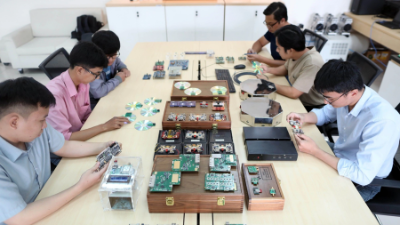
Regarding manufacturing, the sector continues to benefit from global supply chain diversification and strong government incentives, with high-tech industries such as electronics, semiconductors, automation, and renewable energy expanding rapidly. Hiring demand for engineers and technical specialists is rising faster than supply.
Acute shortages are evident in high-skill roles - automation engineers, robotics technicians, semiconductor designers - and in multilingual talent able to interface with Chinese, Taiwanese and Western stakeholders. At the same time, younger workers are avoiding repetitive factory jobs, leaving low-skilled roles increasingly filled by older workers.
Professionals across engineering and sourcing now expect flexibility, an inclusive culture, and clear career development. Hybrid work options, once considered impractical for manufacturing, are becoming more commonplace in planning, engineering, and administrative roles. Companies that fail to modernize workplace practices risk losing competitiveness in a market where workers increasingly prioritize purpose, culture, and development.
Looking ahead, semiconductor design, renewable energy technology, and sustainability engineering are expected to dominate hiring as automation, AI integration, and global semiconductor policy shifts reshape the industrial landscape.
Employers are placing greater emphasis on adaptability, problem-solving, and resilience, recognizing that operational know-how alone is no longer sufficient in a disrupted logistics environment. Mandarin-speaking talent is also in short supply as Chinese companies expand operations into Vietnam.
Candidate expectations are shifting significantly. Flexibility and career development now weigh as heavily as compensation. Employers with rigid pay structures or mandatory in-office schedules for non-operational roles are losing ground. Younger professionals, in particular, expect stronger employer branding, clearer learning pathways, and more progressive cultures.
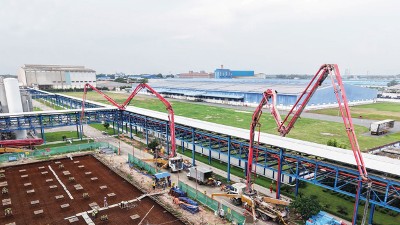
Vietnam’s logistics sector is evolving from a low-cost operating base into a strategic hub for high-value functions. Whether this potential can be unlocked will depend on companies’ ability to adapt hiring practices and workplace cultures to attract and retain tech-enabled talent.






 Google translate