


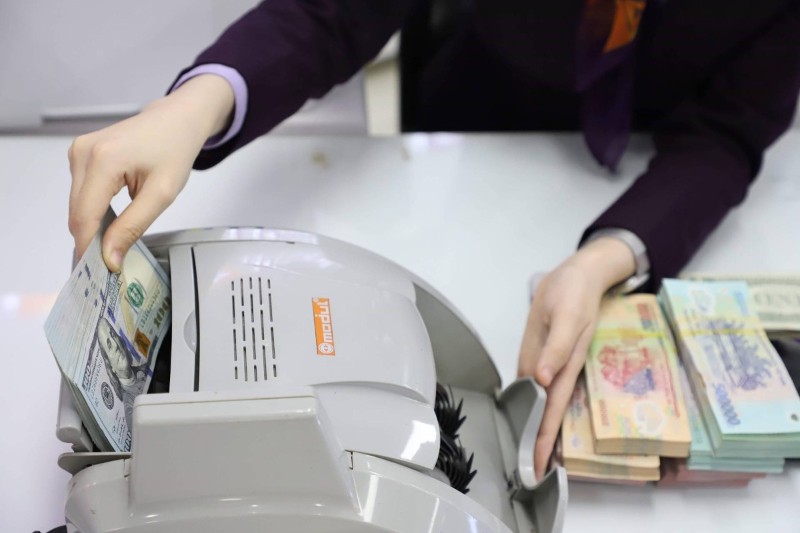
The State Bank of Vietnam on November 2 announced the central exchange rate at VND25,631 per US dollar, down VND6 from VND25,637/USD on October 30, equivalent to a decline of about 0.02%.
At commercial banks, the US dollar was commonly quoted at around VND25,580 for cash purchases, VND25,610 for transfer purchases, and VND25,990 for sales, largely unchanged from October 30.
Meanwhile, the unofficial market recorded a more noticeable decline. On November 2, the free-market buying rate stood at VND26,000/USD, down VND 140 from October 30, while the selling rate fell by VND160, from VND26,210/USD to VND26,050/USD.
As a result, the gap between free-market and commercial-bank dollar selling rates narrowed significantly, from VND220/USD on October 30 to just VND60/USD on November 2.
Since the beginning of 2026, the central exchange rate and market USD rates have moved in opposite directions.
As of November 2, the central exchange rate had risen 2.02% compared with the start of the year, with most of the increase occurring in August following relatively stable movements during the first half of the year. In contrast, the dollar selling rate at commercial banks declined by around 1.5%, while the free-market rate fell by 2.87%.
This trend has unfolded despite a strengthening US dollar in international markets. As of October 30, the US Dollar Index (DXY) stood at 101.75 points, up 3.49% year-to-date. Meanwhile, the USD/VND interbank exchange rate was quoted at VND25,802/USD, down 1.87%.
Compared with other Asian currencies, the Vietnamese dong ranked among the strongest performers against the US dollar. Among the ten Asian currencies surveyed, the dong ranked third, behind the South Korean won and the Chinese yuan.
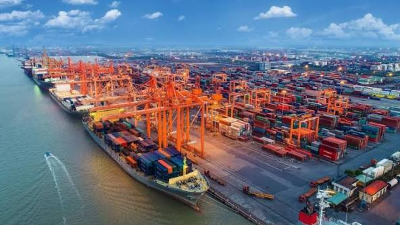
Notably, the dong has appreciated despite Vietnam facing dual pressures from a large trade deficit and a stronger U.S. dollar globally. According to preliminary data from the Vietnam Customs, Vietnam's cumulative merchandise trade deficit reached $17.66 billion as of October 15. At the same time, the DXY or USD Index had gained 3.49% since the start of the year through October 30.
The dong’s appreciation against the US dollar has generated three positive effects on Vietnam’s macroeconomic stability: easing imported inflationary pressures, reducing the burden of foreign-currency debt, and helping anchor market expectations.
A key factor supporting exchange rate stability has been the State Bank of Vietnam’s flexible management of interest rates and liquidity in the money market. This approach has both ensured adequate liquidity for the banking system and maintained a VND-USD interest rate differential that favors the domestic currency.






 Google translate