


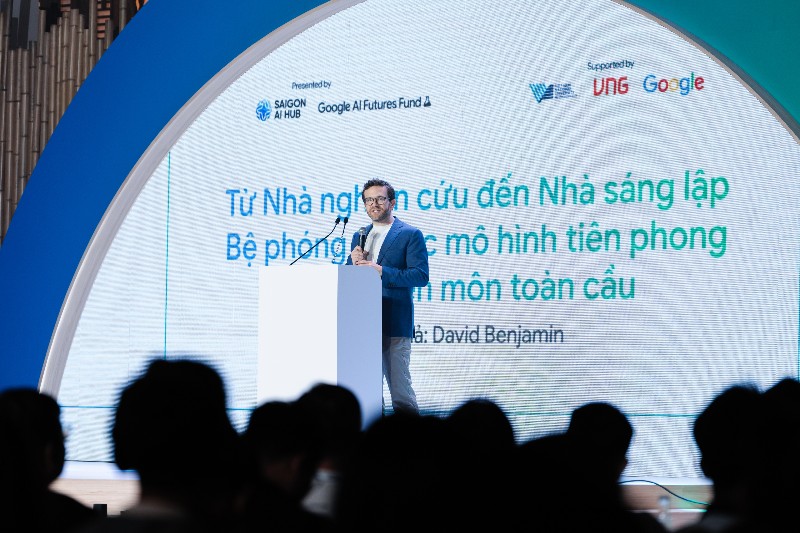
Having seen the Cohort 1 projects firsthand, what impressed you most about the Vietnamese research teams and the solutions they developed?
What blew me away was not just the technical depth but also the speed of execution and the ambition to tackle deeply meaningful problems.
In just six months, nearly 60 researchers at the Applied AI Lab moved from conceptual designs to functional prototypes. We saw meaningful applications, including automated polyp segmentation for early cancer detection, speech models tailored to the tonal nuances of regional Vietnamese dialects, and media forensics tools designed to detect deepfakes.
Crucially, these teams demonstrated that their work can compete at the highest global levels. Cohort 1 teams earned Top 5 placements at the IEEE/CVF Conference on Computer Vision and Pattern Recognition (CVPR), Top 3 placements at the ACM International Conference on Multimedia (ACM Multimedia), and first place at the ACM International Conference on Multimedia Retrieval (ICMR). One team also gained early commercial traction with an AI-powered drone training platform, showing that Vietnamese researchers are not just interested in publishing academic papers; they want to build solutions that work in the real world.
From the Google AI Futures Fund’s perspective, what gaps did Cohort 1 reveal between Vietnam and more mature AI ecosystems? What needs to improve most to help teams bring their products from prototype to market?
Cohort 1 made one thing crystal clear: the barriers in Vietnam were never a lack of talent, intellectual ability, or ambition. What we observed was a challenge common to academic ecosystems worldwide: the gap between a brilliant research paper and a viable, production-ready product.
Academic incentives often reward novelty and publication over edge-case testing, operational deployment, and unit economics. Closing this gap requires three essential shifts.
First is the problem-first orientation. Instead of asking, “Here is an interesting algorithm; where can we apply it?”, they should start with a more practical question: “Here is an urgent, high-value problem; what is the most effective way to resolve it?”
Second is access to production environments and data. Prototypes must be stress-tested using real-world data and in live enterprise or clinical settings, rather than relying solely on sanitized research benchmarks.
Last but not least is founder discipline. Equipping research leads with the complementary muscle of commercialization - understanding product-market fit, unit costs of inference, and building multidisciplinary teams that include operators and designers, not just machine learning engineers.
With Cohort 2 expanding nationwide, what changes will the program introduce based on lessons from Cohort 1? How will it help teams move beyond research and prototypes, and will it place greater emphasis on startup creation or investment?
With Cohort 2, we are starting directly with real-world demand. At the recent Applied AI Lab Demo Day’s event, we launched an open Call for Challenges across four mission-critical areas: manufacturing, agriculture, climate change and national challenges. We plan to bring challenge owners - enterprises and public sector agencies - to the table on Day 1 to provide real operational data, domain expertise, and sandbox environments.

Our ambition is for the Applied AI Lab to become a key engine connecting Vietnam’s leading academic minds with high-impact products and, ultimately, economic growth. The model has significant potential, and the work in Vietnam could serve as a blueprint for similar ecosystem initiatives developed by the Google AI Futures Fund globally.
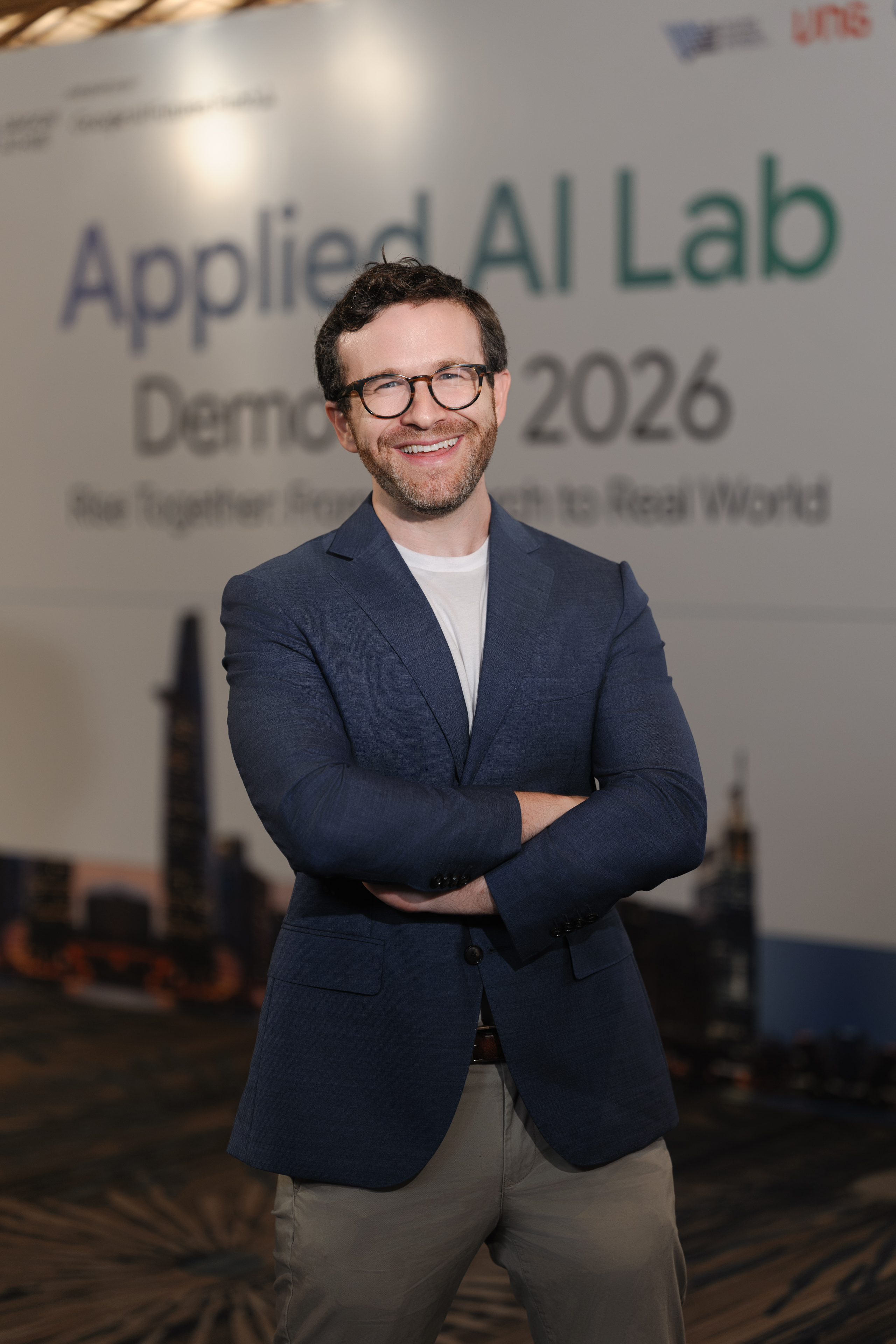
The Applied AI Lab is designed to be an operational springboard, where promising solutions have an eventual straight line to backing from the local and global venture ecosystem.
Based on the projects you have seen in Vietnam, should Vietnamese startups focus first on resolving specific domestic problems or aim from the outset to build products that can compete internationally?
It shouldn’t be framed as an “either/or” - in AI, the deepest local problems can be the most scalable global blueprints.
When you build for Vietnam, you are engineering for nuance and operational complexity. If you build computer vision for automated quality control in Vietnamese manufacturing hubs, predictive AI for climate-resilient agriculture in the Mekong Delta, or speech AI that masters tonal Vietnamese dialects, you are resolving high-friction, mission-critical problems under real-world constraints.
Proving a solution in Vietnam simply gives teams a credible starting point. It provides the initial validation they need to evaluate whether and how that model can adapt to other markets. Global investors and enterprises aren’t looking for another generic wrapper around an API; they are looking for defensible, domain-specific AI that solves real-world pain. Winning at home builds the moat that lets you win abroad.
You have said that Vietnam’s main barriers are not a lack of talent or ambition but are instead limited access to frontier computing, tools, and mentorship. Could you elaborate on this gap? What is the most critical barrier Vietnam must overcome to move from being an “AI user” to an “AI builder”?
Vietnam is already one of the most enthusiastic AI user bases in the region. According to our e-Conomy SEA research, Vietnam leads the region in AI readiness and trust, with over 80 per cent of users engaging with AI tools daily and actively upskilling.
To move from using AI tools to building AI products, researchers need more than talent and enthusiasm. They need access to advanced computing resources and AI models, hands-on guidance from experienced practitioners, and industry partners and real-world data to develop, test, and deploy their solutions. Becoming a builder at the frontier requires three things.
First, compute and foundation models: Without access to frontier compute and state-of-the-art base models, researchers hit an invisible ceiling where they can only theorize, not deploy.
Second, hands-on mentorship: Pairing local researchers side-by-side with experts from teams like Google DeepMind and Google Labs to enable high-touch support and guidance on AI model usage, prototyping, product development, and commercialization strategies.
Third, domestic partners and datasets: Having access to domestic, collaborative industry partners, and curated, localized datasets across verticals and municipal services so that models and products reflect local reality.
We think our partnership through Saigon AI Hub (SAIH) is built precisely to supply that missing infrastructure, transforming Vietnam’s incredible developer energy into enduring intellectual property.
Looking ahead, what impact do you expect the Applied AI Lab to have on Vietnam’s AI research and startup ecosystem? How will Google measure the program’s success over the years to come?
Our ambition is for the Applied AI Lab to become a key engine connecting Vietnam’s leading academic minds with high-impact products and, ultimately, economic growth. The model has significant potential, and the work in Vietnam could serve as a blueprint for similar ecosystem initiatives developed by the Google AI Futures Fund globally. Over the next three to five years, we will assess the program’s impact across four areas.
First, real-world deployment: The number of research projects that progress to applied use cases and production environments across key Vietnamese industries.
Second, startup creation and funding: The number of sustainable spin-offs established, their ability to attract private and public investment, and their potential to become the next generation of technology leaders in Vietnam.
Third, research excellence: The number of publications and technical breakthroughs accepted at leading global conferences, including CVPR, NeurIPS, and ACM.
Fourth, a stronger domestic ecosystem: Whether Vietnam can create an environment in which its brightest scientific minds have access to the capital, computing resources, and industry partners needed to build world-class technology at home.
About the Applied AI Lab
Google AI Futures Fund and Saigon AI Hub (SAIH), an open research institution established by the VNG Group and the Vietnam National University Ho Chi Minh City (VNU-HCM), announced a strategic partnership on May 4, 2026, to establish the Applied AI Lab in Vietnam.
The Lab aims to help researchers translate AI research into practical applications by providing access to Google’s AI models, technical guidance, and opportunities to develop and test prototypes.
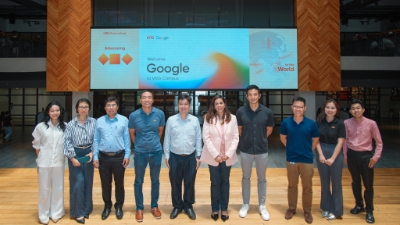
At the Applied AI Lab Demo Day on October 8, 2026, six of the first cohort’s ten research teams presented their prototypes, spanning areas including cancer detection, Vietnamese speech processing, and deepfake detection. The event also marked the launch of Cohort 2, which will focus on addressing real-world challenges identified by businesses and public sector organizations.





 Google translate