


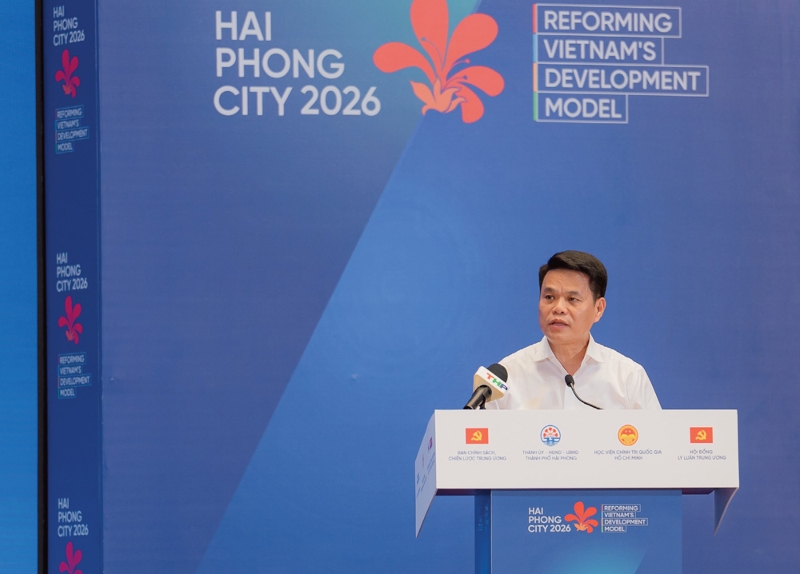
The need to reform Vietnam’s development model based on science and technology, innovation, and digital transformation is becoming more urgent than ever in order to create breakthrough momentum in the digital era. This spirit is consistently reflected in Politburo Resolution No. 57, the documents from the 14th National Party Congress, and Conclusion No. 18-KL/TW dated April 2, 2026, issued by the Party Central Committee on the socio-economic development plan, national finance, public debt borrowing and repayment, and medium-term public investment for the 2026-2030 period, associated with Vietnam’s double-digit growth target. In this context, the transition to a new growth model based on science and technology, innovation, and digital transformation has been identified as the primary driver of development.
Most recently, at a ceremony celebrating Vietnam Science, Technology, and Innovation Day on May 18, Prime Minister Le Minh Hung reaffirmed that science, technology, and innovation are “vital factors” and the “golden key” to realizing the country’s development aspirations in the new era.
Expanded development space
Against this backdrop, the recent national scientific conference on “Reforming Vietnam’s Development Model Based on Science, Technology, Innovation, and Digital Transformation” in Hai Phong carried not only theoretical significance in supplementing and refining development thinking for the country’s new stage, but also profound practical and contemporary importance by helping clarify major orientations, mechanisms, policies, and breakthrough solutions for promoting rapid and sustainable development on the basis of science, technology, innovation, and digital transformation. As a major port city, northern Vietnam’s maritime gateway, an industrial center, transportation hub, and a key growth pole of the Northern Key Economic Region, Hai Phong has continued over many years to affirm its role as a regional growth engine through strong and relatively stable economic performance.
In particular, from July 1, 2025, following its merger with Hai Duong province, Hai Phong entered a new phase of development with greater scale, enhanced strategic importance, stronger development potential, and more abundant resources, while also assuming greater responsibilities in supporting the country’s development in the new era.
With an area of nearly 3,200 sq km, a population of more than 4.6 million, and an economy approaching $30 billion, Hai Phong now ranks third nationwide in economic scale. In 2025, the city recorded gross regional domestic product (GRDP) growth of 11.81 per cent, ranking it second nationwide and the highest among centrally-governed cities. Notably, Hai Phong is the only locality in Vietnam to sustain double-digit GRDP growth for eleven consecutive years.
Its economic structure has continued shifting toward industrialization and modernization, with industry-construction and services accounting for nearly 90 per cent of GRDP. Alongside economic development, social welfare, healthcare, and education continue receiving attention, while national defense and security remain firmly maintained.
In 2026, despite facing numerous challenges, the city’s socio-economic performance has maintained positive momentum. First-quarter GRDP rose 11.21 per cent, ranking it third nationwide and first among Vietnam’s six centrally-governed cities. State budget revenue exceeded VND78 trillion ($3 billion), equal to 40.3 per cent of the annual target assigned by the central government.
FDI inflows were estimated at nearly $1.3 billion, up 76.8 per cent year-on-year, bringing the total number of FDI projects in the city to 1,044, with combined registered capital exceeding $44 billion. Total export turnover reached approximately $18.3 billion, up 26.2 per cent year-on-year, while cargo throughput at ports stood at nearly 59 million tons, up 11.6 per cent.
Alongside socio-economic development, Hai Phong has also focused on implementing Politburo Resolution No. 57 under the principle of the “six clarities” and has achieved a number of important initial results. The city currently ranks third nationwide in the Provincial Digital Transformation Index (DTI) and fourth in the Provincial Innovation Index (PII).
Notably, according to a Ministry of Home Affairs’ announcement on May 11, Hai Phong has continued to rank first nationwide in both the Public Administration Reform Index (PAR Index) and the Satisfaction Index of Public Administrative Services (SIPAS), reaffirming its position as a leading locality in administrative reform, digital transformation, and the building of a two-tier local government model focused on efficiency and effectiveness.
At the same time, the Hai Phong City People’s Council and People’s Committee have issued six resolutions and four decisions to implement special mechanisms and policies on science, technology, and innovation under Resolution No. 226 from the 15th National Assembly on piloting special mechanisms and policies for Hai Phong’s development.
Piloting new models
Based on its development experience, Hai Phong has identified that in the coming period it will not only strive to become the country’s leading modern industrial, seaport, and logistics center, but also position itself as a growth pole driven by knowledge, science and technology, innovation, and digital transformation, while becoming a pioneer in reforming development models, strengthening modern governance capacity, and improving growth quality.
To realize this goal, the city has set ambitious targets for the 2026-2030 period, including maintaining average annual GRDP growth of at least 13 per cent and striving for 14 per cent; increasing the digital economy’s contribution to GRDP to over 35 per cent by 2030; and building Hai Phong into Vietnam’s international center for marine science and technology training, research, and application.
However, alongside the demands for rapid and sustainable growth, practical challenges remain that require further study and refinement, ranging from institutions and science and technology policies to mobilizing resources for innovation, attracting and utilizing scientific talent, and developing high-quality human resources. The objective is to ensure that science, technology, innovation, and digital transformation genuinely become key drivers and breakthroughs for socio-economic development. These are also major issues that the Party General Secretary and central leaders have closely directed in recent years.
In this context, hosting the national scientific workshop in Hai Phong carried not only professional significance but also reflected the connection between the central government’s strategic thinking and local development realities. It also demonstrated the central government’s attention to and expectations for Hai Phong’s role, position, and development potential within the country’s new development model.
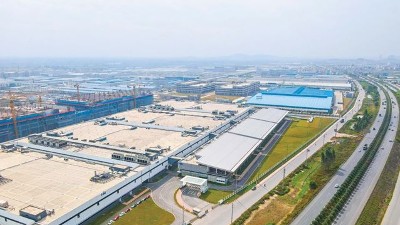
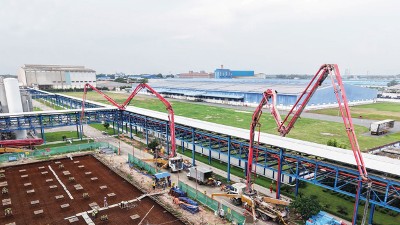
With its strengths as a seaport, industrial and logistics center, and a locality deeply integrated into the global economy, Hai Phong is considered well-positioned to lead pilot programs for new development models, governance mechanisms, digital infrastructure, smart ports, smart logistics, and innovation ecosystems linked to high-tech industries.
It hopes to continue receiving support from central agencies and ministries, cooperation from other localities, and, in particular, valuable recommendations, strategic insights, and practical experience from experts and scientists to help refine development thinking, strengthen governance capacity, and realize the city’s development ambitions in the new era. At the same time, Hai Phong affirms that it will continue creating favorable conditions for scientists and experts to implement research projects and pilot models in the locality.



 Google translate