


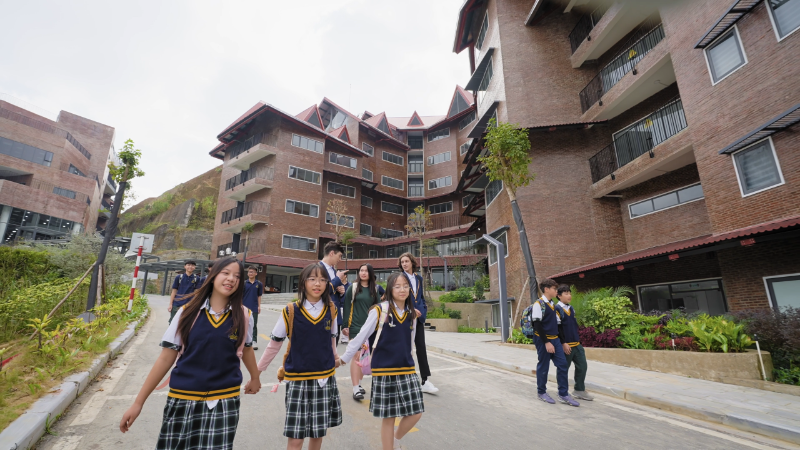
As international education expenses continue to rise amid pressures from exchange rates, inflation, and operating costs, long-term financial planning for children’s education is becoming an increasingly pressing concern for many Vietnamese families.
Against this backdrop, Ardingly College Vietnam, in collaboration with Vietnam Prosperity Joint Stock Commercial Bank (VPBank), annouced the launch of “World Ready” Finance–Education solution on April 9.
The solution, that has been exclusively designed for parents of students at Ardingly College Vietnam, allows parents to secure tuition and related costs throughout a student’s academic journey through an initial savings deposit.
Under the scheme, parents make a deposit aligned with their child’s study plan and duration. The interest generated will be then used by the bank to cover tuition fees over time, while the principal remains intact and will be returned upon completion of the programme, along with any accrued interest, depending on the selected terms.
Growing demand for a balanced international education environment
This approach effectively locks in education costs from the outset, reducing exposure to tuition fee fluctuations while enabling parents to take a more proactive approach to long-term financial planning.
Speaking with VnEconomy/Vietnam Economic Times, Mrs. Nguyen Thi Kieu Oanh, Chairperson of Khoi Nguyen Investment Group (KNI), the developer of Ardingly College Vietnam, said the initiative is designed to ensure financial stability for parents throughout their children’s education journey. Locking in costs while preserving and growing capital can provide greater peace of mind, particularly as international education expenses continue to rise.
From an education perspective, the introduction of a British boarding system in Vietnam also reflects a broader trend of diversifying learning options, as the domestic market still lacks fully developed boarding school models.
According to Mrs. Oanh, while boarding education remains relatively new in Vietnam, it is widely adopted in the UK, where parents value not only academic performance but also a holistic development environment.
She noted that boarding programmes are designed to encourage hands-on participation, reduce reliance on digital devices, and limit negative impacts from the online environment. As children are exposed to technology at an increasingly early age, the need for a more balanced and healthy learning environment is becoming more urgent.
A well-structured boarding environment, she added, supports not only academic development but also life skills, social interaction, and independence—factors that are gaining increasing attention among parents.
Broadening access to international education
In practice, finance–education models are not entirely new in Vietnam. In 2019, when establishing the Canadian International School (CIS) in Ho Chi Minh City, KNI introduced a financial package backed by 100 founding parents. Each contributed $50,000, ensuring uninterrupted education for students, with the funds returned upon completion of the programme.
Notably, this initiative was launched during a period of credit constraints in Vietnam, highlighting the role of flexible financial solutions in sustaining education. Previously, most international schools required parents to pay a deposit equivalent to one year’s tuition to secure enrolment.
Compared to earlier models, the “World Ready” package represents a more structured approach with the involvement of a financial institution, helping improve transparency and optimise cash flow. It is particularly relevant for families with multiple children enrolled in international programmes, where financial pressure can be distributed more effectively over time.
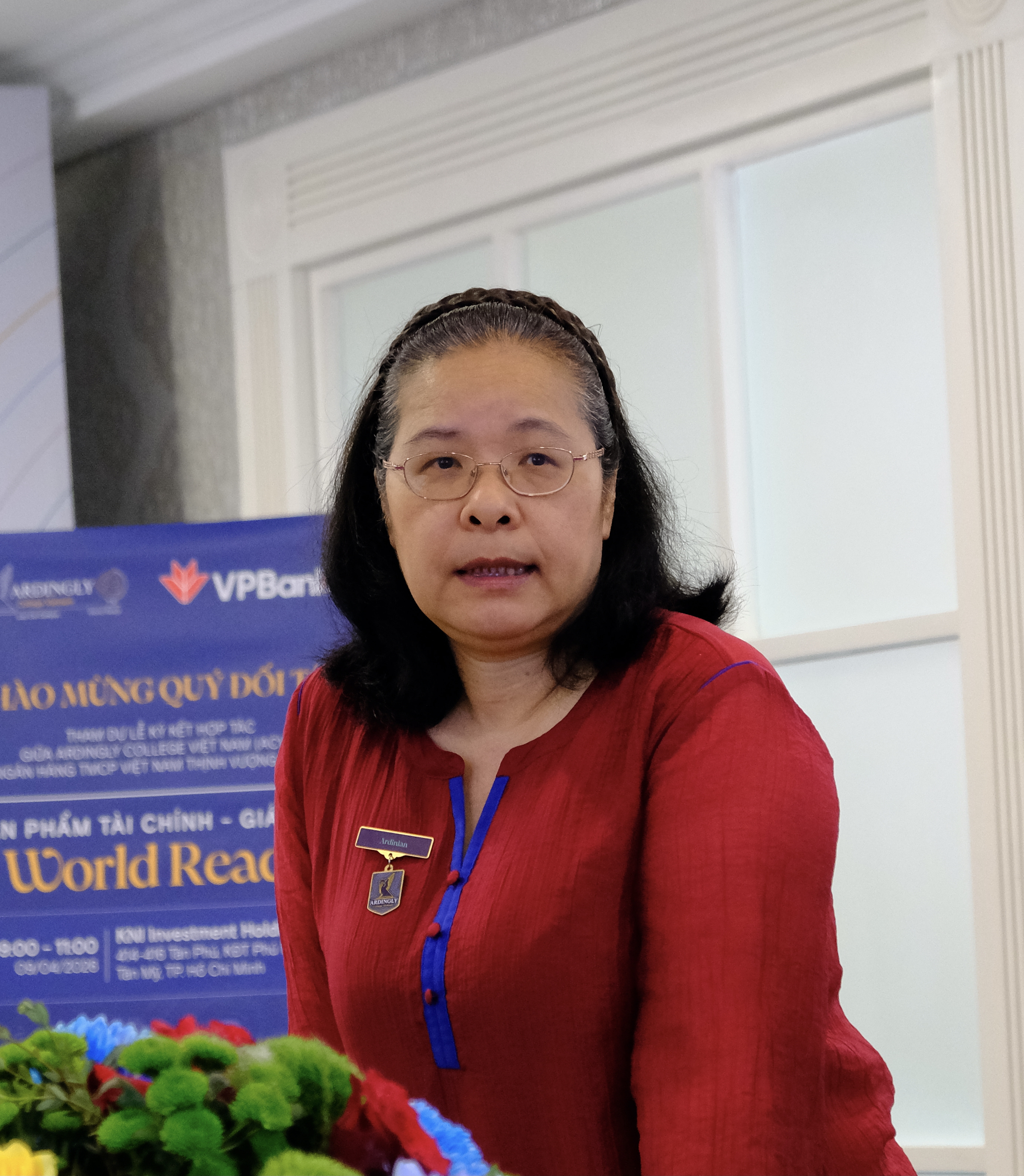
Mrs. Oanh also noted that the programme includes a commitment to stabilising tuition fees throughout the study period for a limited number of participants in the initial phase. This helps reduce exposure to market volatility and rising global education costs.
“In an uncertain environment, parents’ biggest concern is ensuring stable financial resources to support their children’s long-term education without disruption,” she said, adding that the model aims to address this gap.
Beyond domestic families, the model also opens up access to international education for children of foreign professionals working in Vietnam. Depending on corporate policies, foreign-invested enterprises (FDIs) can establish savings accounts with partner banks and use these funds to cover tuition fees instead of making annual payments.
This approach not only helps optimise corporate benefit costs but also strengthens companies’ ability to attract and retain high-quality international talent.
Ardingly College Vietnam plans to offer both bilingual and international programmes, with day and boarding options. The school is expected to begin enrolment for the 2026–2027 academic year, while limiting the number of finance–education packages in the initial rollout.
From a market perspective, the emergence of finance–education models such as “World Ready” reflects a growing trend of cross-sector collaboration to meet evolving parental needs. In the longer term, however, the effectiveness of such models will depend on their ability to balance financial flexibility, educational quality, and transparency.
In an increasingly competitive and dynamic international education market, such innovations not only expand options for families but also place higher expectations on service providers from education to finance in building trust and delivering sustainable value.
Guided by the “World Ready” philosophy, Ardingly College Vietnam is committed to the holistic development of students in academics, skills, and character, preparing them for international higher education and to become global citizens in an ever-evolving world.

 Google translate