



In this era of globalization and rapid digital transformation, higher education faces an urgent need for continuous innovation in order to adapt to rapidly-changing social conditions and the knowledge-based economy. Industry 4.0, marked by the explosive development of AI, big data, the Internet of Things (IoT), and digital technology, has profoundly transformed how people learn, work, and interact. Against this backdrop, higher education not only plays a role in training human resources but has also become a critical component of the national innovation ecosystem.
The State and society are paying increasing attention to training quality as well as the innovation capacity of higher education institutions. This is reflected in policies promoting university autonomy, encouraging research, knowledge transfer, and cooperation between universities, businesses, the government, and the community.
At the same time, the shift from a “traditional education” model - focused primarily on theoretical knowledge - to a model of “liberal and innovative education,” which emphasizes critical thinking, problem solving, interdisciplinary skills, and adaptability, is reshaping teaching and learning at universities. In response to these new demands, higher education institutions are compelled to become centers fostering innovation, nurturing the entrepreneurial spirit, developing creative ideas, connecting research with practice, and making practical contributions to the country’s sustainable development.
According to the Vietnam Education e-magazine, the country currently has 244 higher education institutions, including 172 public institutions (26 of which are under local authorities) and 67 non-public institutions (five with foreign investment). In addition, there are 20 teacher training colleges (three under the Ministry of Education and Training and 17 under local authorities).
Key innovation trends
Comprehensive digital transformation in management and teaching
This is an inexorable trend in higher education aimed at improving training quality and management efficiency. Universities have adopted learning management systems (LMS), enterprise resource planning (ERP) software, and online platforms to support teaching, assessment, and university governance. Blended learning models, massive open online courses (MOOCs), and virtual classrooms have been widely implemented, enabling students to learn more flexibly and proactively. AI is being integrated to personalize learning content, while big data supports analysis of learner behavior and improvements in curricula.
Internationalization of education and interdisciplinary cooperation
Internationalization has become a core strategy for many universities to enhance training quality and global competitiveness. Institutions are actively establishing partnerships with international universities, research institutes, and businesses through joint training programs, collaborative research, and technology transfer.
Many universities have introduced dual-degree programs, expanded international student and faculty exchanges, and increased the number of specialized courses taught in English. At the same time, interdisciplinary collaboration is growing rapidly, with the integration of technology, social sciences, business, and environmental studies into teaching and research.
Vietnam National University, Hanoi (VNU Hanoi) is among the pioneering institutions in restructuring curricula and training organization to adapt to international integration. It focuses on developing students’ technological competencies and shortening training duration. The university aims to expand enrolments in STEM (Science, Technology, Engineering, and Mathematics) and engineering-technology fields to 65 per cent within the next three years, from nearly 50 per cent at present.
In its digital transformation strategy, VNU Hanoi places strong emphasis on the application of digital technologies and AI, implementing blended learning models and integrating AI into teaching, assessment, and personalized learning pathways. In particular, AI supports the maximization of potential among talented students and encourages early participation in scientific research.
Promoting entrepreneurship and innovation among students
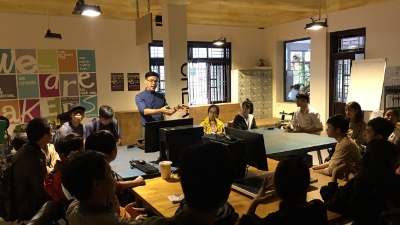
Fostering entrepreneurship and innovation has become a key focus in the development strategies of many universities. Institutions have established innovation centers, co-working spaces, and startup incubators to support students in forming and developing business ideas. Numerous startup competitions, hackathons, bootcamps, and mentoring programs are organized regularly, creating experiential and practical environments for students.
Liberal education and comprehensive capacity development
Rather than focusing on one-way knowledge transmission, current curricula emphasize the development of core competencies such as critical thinking, creativity, problem solving, and teamwork. Universities are also integrating content on personal character, professional ethics, and social responsibility into coursework, with the aim of cultivating global citizenship and a sense of community service among students.
Innovating curricula and teaching methods toward sustainability
In the global context of sustainable development, many universities have proactively reformed curricula and teaching methods to meet modern societal demands. A notable trend is the integration of the Sustainable Development Goals (SDGs) into teaching content, helping students understand their role in addressing environmental, social, and economic challenges. Traditional teaching methods are gradually being replaced by project-based learning, experiential learning, and problem-based learning.
These approaches help students develop critical thinking, teamwork, and the ability to solve complex real-world problems. In particular, strengthening connections with businesses through internships, site visits, and industry lecturers is being intensified, narrowing the gap between theory and practice and enhancing graduates’ adaptability in an ever-changing work environment.
Addressing challenges
Despite innovation being an inexorable trend in higher education, implementation still faces many challenges.
The first challenge is limited financial and human resources, which pose significant barriers for many institutions, especially local or non-public universities. Investment in technological infrastructure, curriculum upgrades, and attracting high-quality human resources requires substantial funding, while State budgets and financial autonomy remain limited.
The second is the uneven level of readiness for innovation across institutions. Some major centrally-managed universities can quickly access new technologies, while many others continue to struggle with traditional training models and lack adequate facilities or capable staff to implement modern programs.
The third challenge lies in traditional, administratively-oriented management mindsets, which remain prevalent, and slow institutional adaptation to innovation demands.
And the fourth is the lack of breakthrough support policies from the State, particularly mechanisms that encourage autonomy and innovation. This has reduced reform incentives at some institutions.
Future outlook
To promote effective and sustainable innovation in higher education, coordinated solutions are needed across institutions, resources, and interdisciplinary cooperation.
Strengthening investment in technological infrastructure and faculty development is a prerequisite. Universities need budgetary support or financial mobilization mechanisms to upgrade information technology (IT) systems, digital learning platforms, and modern teaching tools. At the same time, enhancing faculty capacity - in digital skills, new pedagogical methods, and digital learning design - is essential for substantive digital transformation and improved training quality.
Enhancing links between businesses, research institutes, and local authorities is key to improving the practical relevance of training, aligning graduate outcomes with labor market needs and supporting the commercialization of university research results. Establishing innovation centers based on the “triple helix” model (University - Business - State) will help promote an open academic-technology ecosystem.
Developing a comprehensive innovation ecosystem inside and outside of universities is crucial, including creative spaces, startup incubators, policies supporting student research and entrepreneurship, as is fostering a culture of innovation within the academic community. This ecosystem not only nurtures creative ideas but also lays the foundation for a generation of students with open mindsets - willing to think, act, and embrace change.
(*)Dr. Bui Thi Quyen and Dr. Dao Thi Ha Anh are Lecturers at the University of Economics and Business, Vietnam National University, Hanoi






 Google translate