


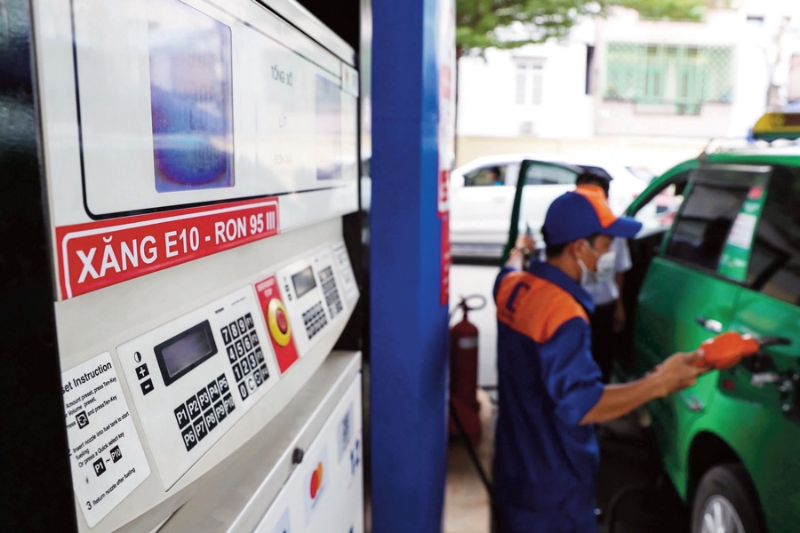
At a time of extreme volatility in global oil prices, accelerating the blending of ethanol at a 10 per cent ratio (known as E10) has been identified as one of the key technical and market tools available to ease pressure on domestic gasoline prices in Vietnam while enhancing energy self-reliance. This step is not merely an environmental measure, but a critical solution to reduce dependence on imported fossil fuels, creating a “shield” to safeguard national fuel security against global price shocks.
At the “Hormuz Shock: Energy Security Challenges for Vietnam” seminar, organized recently by Tap chi Kinh te Viet Nam / Vietnam Economic Times / VnEconomy, Mr. Nguyen Anh Tuan, Head of the Petroleum and Gas Business Management Division at the Domestic Market Management and Development Department under the Ministry of Industry and Trade (MoIT), said that to implement the transition to E10 biofuel the Ministry recently issued Circular No. 50/2025/TT-BCT, which sets out a roadmap for blending biofuels with traditional fuels in Vietnam.
Roadmap to early transition
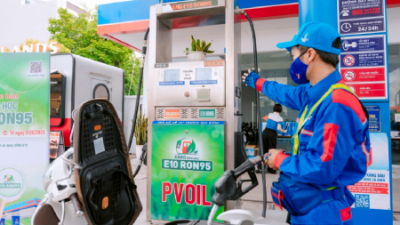
Accordingly, from June 1, 2026, gasoline meeting current technical standards will be required to be blended into E10 for use in gasoline-powered engines nationwide. Companies such as Petrolimex and PVOIL have already piloted E10 gasoline use in cities such as Hanoi and Hai Phong.
Regarding the transition roadmap, Mr. Bui Ngoc Bao, Chairman of the Vietnam Petroleum Association, noted that the biofuel transition program was introduced previously by the government through Decision No. 53/2012/QD-TTg on the roadmap for applying biofuel blending ratios with traditional fuels.
Under the newly-issued Circular No. 50, from June 1, 2026, Vietnam will fully convert mineral gasoline to E10. At the same time, the production and use of E5 gasoline will continue until December 31, 2030. “This means that, from June 1, 2026, the market will only have biofuels,” Mr. Bao emphasized.
Though Vietnam’s biofuel roadmap has been somewhat slower than that of its regional and global peers, domestic enterprises have proactively invested in upgrading storage tanks, pumps, and technical equipment for more than ten years, since the rollout of E5 gasoline. As a result, the preparation for E10 mainly involves upgrading blending systems. These costs have already been factored into corporate investment plans thanks to early forecasts by the MoIT.
Mr. Bao added that the Vietnam Petroleum Association and businesses have proposed that the Ministry allow additional blending costs to be included in the base price of petroleum products in the future. Overall, the additional investment required for the biofuel program is not significant due to prior preparation. However, the program is expected to deliver substantial benefits, particularly in environmental protection and reducing dependence on fossil fuels. This is considered a correct and well-aligned policy direction.
System ready for rollout
From a business perspective, Mr. Nguyen Xuan Hung, Deputy Director General of the Vietnam National Petroleum Group (Petrolimex), said it has participated in multiple workshops and surveys in countries with longstanding biofuel markets, such as the US, Thailand, and the Philippines. These countries have used E10 gasoline for more than 15 years without consumer complaints regarding product quality. In the US, E10 is widely used for all transport vehicles, and E85 is also commercially available. In Europe, amid rising gasoline prices, countries have shifted to biofuels, including E50 and E85.
In Vietnam, after more than five years of E5 use, there have been no technical incidents or consumer complaints related to product quality. However, the adoption of E5 has been limited due to product positioning. “E5 was previously positioned based on lower-grade RON 92 gasoline, leading consumers to perceive it as a low-cost product,” Mr. Hung noted.
In the upcoming E10 rollout, the objective is broader: reducing dependence on fossil fuels, improving environmental quality, and promoting agriculture linked to industrial development. Mr. Hung said Petrolimex has upgraded its entire laboratory system to meet national standards, along with storage and blending systems. The entire system is now ready for E10 implementation.
“Experience from other countries shows that switching to E10 biofuel does not cause technical issues,” he continued. “In Vietnam, there are no obstacles in preparation, including ethanol supply, base gasoline, or blending processes that ensure product quality for consumers. With the current vehicle standards in Vietnam, there is no cause for concern when using E10.”
Encouraging adoption
Amid extreme global oil price volatility, promoting E10 is seen as an important technical and market tool to reduce pressure on domestic gasoline prices while enhancing energy autonomy.
Specifically, Mr. Tuan said that when mineral gasoline prices surge, the MoIT will coordinate with relevant ministries and agencies to increase the use of biofuels, leveraging domestic ethanol to partially replace imported base gasoline, potentially saving around 10 per cent. This not only reduces input costs in the pricing structure but also helps stabilize supply, especially amid global market fluctuations.
However, a key prerequisite for this mechanism to be effective is ensuring a stable and competitively priced domestic ethanol supply. The Ministry is working with relevant stakeholders to review ethanol production capacity, expansion potential, and the completion of distribution and blending systems to be ready to increase blending ratios when needed.
Regarding proposals to establish a national ethanol reserve fund or a dedicated price stabilization mechanism for biofuels, Mr. Tuan said these options are under consideration within the broader policy framework for biofuel market development. However, the creation of a separate fund requires careful assessments regarding feasibility, effectiveness, and alignment with existing tools, particularly to avoid overlap with the current Petroleum Price Stabilization Fund.
To ensure E10 gasoline is competitive and well received by the market, Mr. Tuan emphasized the need for a reasonable price differential compared to mineral gasoline, thereby encouraging a natural, market-based transition by consumers.
Accordingly, the MoIT will work with the Ministry of Finance and relevant agencies to study and propose tax policy adjustments favoring biofuels. This includes applying a lower environmental protection tax rate for E10 compared to mineral gasoline, as well as designing an appropriate special consumption tax mechanism to ensure that the biofuel component - ethanol - benefits from incentives, thereby reducing product costs.
Mr. Tuan affirmed that the consistent approach is to “encourage use through economic tools rather than imposing administrative measures, while combining this with communication efforts to raise public awareness about the economic and environmental benefits of biofuel gasoline.”






 Google translate