


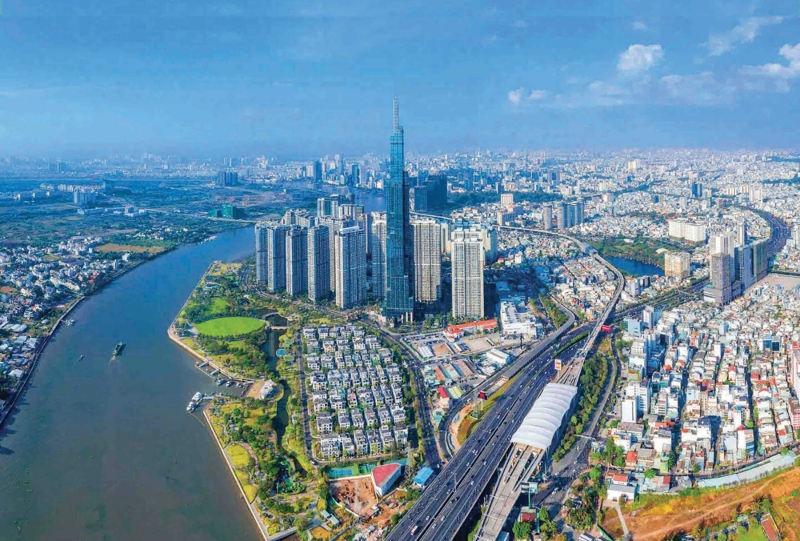
As both the global and domestic economies undergo profound structural shifts, the need to develop breakthrough financial products for Vietnam’s International Financial Center (IFC), headquartered in Ho Chi Minh City and Da Nang, has become increasingly urgent. Such products are expected to attract long-term capital, provide solutions to national-scale bottlenecks, and elevate the standing of Vietnam’s financial market.
Recent directives from the government have sent strong signals regarding a new wave of economic institutional reform. On June 2, 2026, Prime Minister Le Minh Hung chaired a meeting on IFC implementation, assigning ministries and agencies to coordinate with specialized bodies to urgently design flagship product portfolios for the IFC in Ho Chi Minh City and Da Nang.
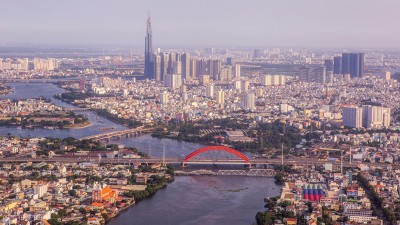
Ho Chi Minh City IFC
With contributions from a seven-member founding alliance comprising the Sovico Group, VinaCapital, Nasdaq, three major commercial banks (MB, TPBank, and SHB), and Son Kim Capital, the Ho Chi Minh City IFC (VIFC-HCMC) possesses an ideal platform for implementing sophisticated capital structures that combine financial and technological resources with underlying asset infrastructure to create transformative core products.
The first flagship product is a Digital Project and Sustainability Bond framework designed to mobilize and direct long-term capital from international institutions into strategic infrastructure megaprojects and key social housing and rental housing programs in the city, thereby easing budgetary pressures.
VIFC-HCMC could propose a Digital Bond issuance model under which issuers would include the Ho Chi Minh City Finance and Investment State-Owned Company (HFIC) or authorized State-owned corporations responsible for project implementation.
These bonds would not rely on State budget allocations for repayment. Principal and interest obligations would be secured by domestic revenue streams. For project and green infrastructure bonds, repayment sources would include future operating revenues, commercial and service exploitation rights, or land auction proceeds. For social housing and rental housing bonds, repayment would be supported by housing sales revenues or recurring rental income.
A portion of these VND-denominated revenues could be converted into USD through currency swap instruments provided by member commercial banks, thereby reducing exchange-rate risks associated with servicing USD-denominated bonds sold to international investors through the Nasdaq connectivity platform.
The Digital Bond model would operate under a two-tier structure.
Tier 1 - Private Placement and Initial Liquidity Creation: Project entities would issue VND-denominated Digital Bonds through private placements directly on the IFC’s technology platform. International investment funds and financial institutions within the IFC ecosystem would serve as anchor investors, committing to purchase 60-70 per cent of each issuance. The IFC platform, in coordination with founding commercial banks, would provide automated digital foreign-exchange conversion mechanisms, simplifying currency conversion procedures and enabling direct VND disbursement to projects without placing pressure on the State budget.
Tier 2 - International Public Distribution Through the VIFC-Nasdaq Connectivity Platform: The remaining bond volume would be listed in USD on a dedicated digital board operated by VIFC-HCMC. Through direct technological integration with Nasdaq, these Digital Bonds would be displayed simultaneously on both platforms, allowing international investors to place orders and trade in USD via Nasdaq’s infrastructure. Nasdaq’s system would automatically match orders against the underlying assets listed on VIFC-HCMC, ensuring real-time cross-border liquidity while complying with domestic monetary security requirements.
To enhance attractiveness, internationally-linked Digital Bonds issued within the IFC sandbox environment should be granted a zero-tax regime covering foreign contractor tax, dividend income tax, and capital gains tax. Foreign investors would also be guaranteed the right to freely convert currencies and repatriate capital and profits in USD. Administrative friction would be minimized through real-time RegTech (regulatory technology) monitoring systems integrating anti-money laundering (AML) controls and electronic Know-Your-Customer (eKYC) processes on blockchain-based infrastructure.
The second product is an international marketplace for fundraising and intellectual property (IP) tokenization. A major challenge in implementing the Law on Support for Small and Medium-Sized Enterprises is that technology companies and innovative startups often possess valuable IP and patents but face difficulties accessing capital due to the challenges of valuing intangible assets and the banking sector’s concerns regarding collateral.
VIFC-HCMC could address this bottleneck by tokenizing IP assets, such as patents and software copyrights, into blockchain-based IP Tokens. Legal documentation, certification histories, and projected revenue streams would be embedded into smart contracts, ensuring transparency and immutability.
Once packaged, these IP Tokens could be listed on a dedicated digital board within VIFC-HCMC, utilizing technology infrastructure linked to Nasdaq’s digital asset and cross-border trading systems. Through this direct connection, international venture capital funds would gain access to the IP assets of Vietnamese small and medium-sized enterprises (SMEs).
Fund managers would serve as anchor investors supporting market liquidity, while the alliance of the three commercial banks would act as custodians of underlying assets and provide working-capital credit lines based on real-time token valuations.
The third product is a global tokenized agricultural commodities and carbon credit exchange. Each year, tens of billions of USD worth of key Vietnamese agricultural exports, including coffee, rice, and pepper, remain dependent on pricing mechanisms determined by overseas commodity exchanges.
Through its strategic relationship with Nasdaq, VIFC-HCMC should establish a tokenized agricultural commodities and carbon credit exchange. Combining international matching-engine technology, clearing and settlement capabilities from founding commercial banks, and the logistics networks of diversified corporate members would enable Vietnam to gain greater control over pricing for its agricultural products.
Farmers and businesses would benefit from transparent pricing and direct trading through digital certificates, reducing intermediary financial costs and retaining more value within domestic agricultural supply chains.
Da Nang IFC
While Ho Chi Minh City represents the depth of the corporate capital market, the 12 official members of VIFC Da Nang possess stronger financial technology capabilities. Based on this foundation, several core products could be developed.
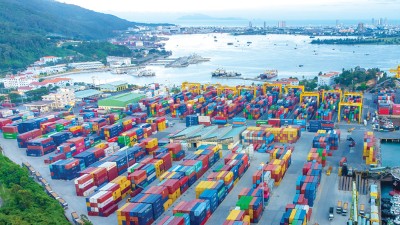
The first product would be a Digital Bond framework supporting logistics infrastructure across central Vietnam. Similar to the VIFC-HCMC model, it would adopt a two-tier structure, with institutional placements at Tier 1 and retail distribution through Da Nang IFC’s International Digital Asset Exchange at Tier 2.
Bond repayment obligations would be supported by future revenues from port services, warehousing fees, and transportation services generated by pilot logistics networks across the region.
The second product is a dedicated offshore digital banking institution. To fully leverage the special mechanisms established under Resolution No. 259/2025/QH15, Da Nang should consider developing a dedicated offshore digital banking model to strengthen its competitiveness against regional financial centers such as Singapore and Hong Kong (China).
Under this framework, non-resident offshore accounts would operate in a zero-tax environment with unrestricted capital mobility. State-owned commercial banks, in collaboration with digital financial groups, would provide real-time payment services and specialized foreign exchange hedging infrastructure.
This would create a critical financial pipeline facilitating cross-border capital flows while reducing administrative friction costs for foreign trade activities by an estimated 1.5-2 per cent for FDI enterprises operating along the East-West Economic Corridor.
A key innovation of the model lies in replacing paper-based administrative controls with digital infrastructure. Cross-border eKYC procedures, AML compliance checks, and unusual transaction monitoring would be fully automated using decentralized technologies and AI operated by the IFC’s technology and legal alliance.
This smart governance framework could reduce operating costs by up to 60 per cent compared to traditional models while creating a secure environment for attracting foreign capital without undermining domestic monetary stability.
In conclusion, by designing a portfolio of flagship products closely aligned with the strengths of founding members and fully leveraging the institutional and technological advantages of the IFC to address practical national and local challenges, Vietnam can transform the IFC into national models of innovation.
These breakthrough products represent the strategic intersection between the government’s macro-economic management objectives, local aspirations for institutional reform, and the economic interests and development ambitions of participating members. They can serve as a launchpad for Vietnam’s financial market to navigate increasingly challenging global macro-economic conditions and contribute meaningfully to the country’s goal of rapid and sustainable development in the new era.



 Google translate