


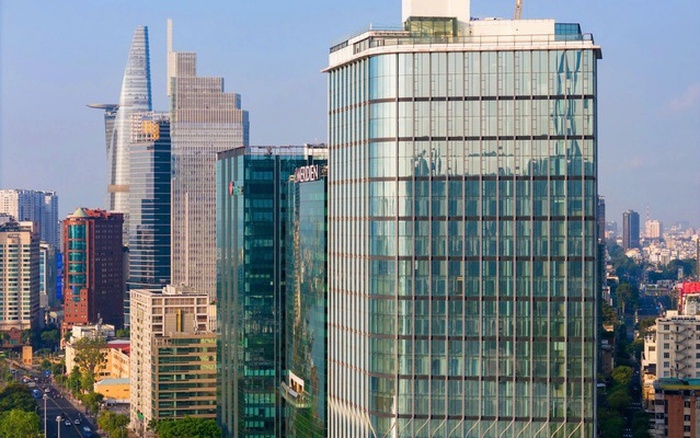
According to the proposal submitted to city authorities, the investors plan to establish a joint venture to develop, operate, and manage the project, with total investment capital estimated at $1.15 billion, of which equity will account for 20 per cent (equivalent to $230 million), and the remainder will be mobilised through loans and customer-related funding.
In terms of capital contribution, REE Group will hold the largest stake at 43 per cent (nearly $99 million), followed by VinaCapital at 24 per cent (over $55 million). HFIC is expected to contribute 33 per cent through land-use rights, which may be converted into office floor area if exceeding the committed value.
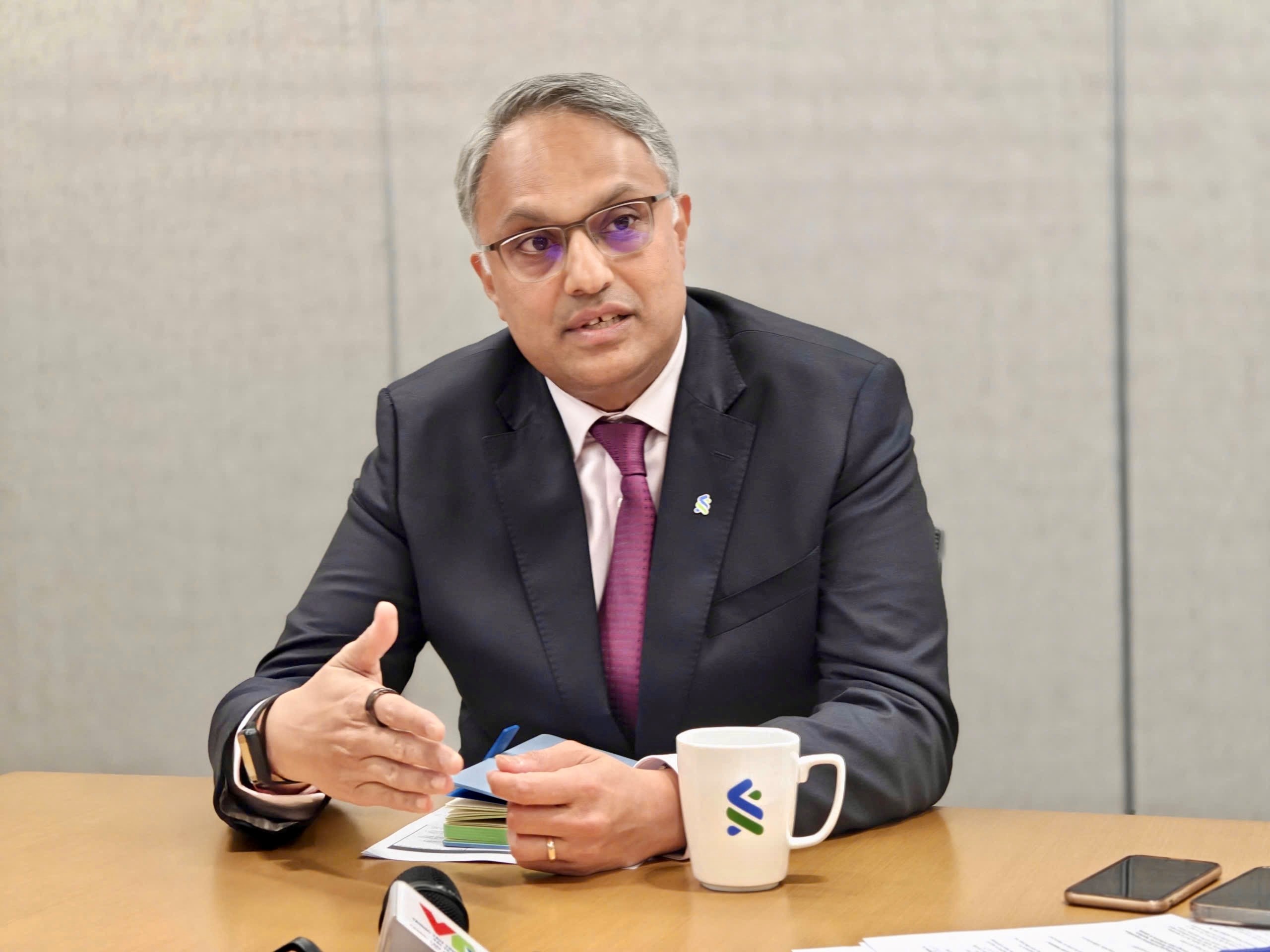
Speaking with VnEconomy/Vietnam Economic Times, Mr. Mahesh Kini, Global Head of Cash Management at Standard Chartered Bank, said positioning the financial centre in Ho Chi Minh City’s core urban area is a strategic choice that creates synergy between institutions and infrastructure.
More importantly, he emphasised the need to build an internationally aligned operating environment that enables businesses to manage liquidity and cross-border capital flows efficiently. Notably, Ho Chi Minh City’s rise by 11 places in the Global Financial Centres Index 2026 is seen as a positive signal, reflecting growing confidence among international investors.
In this context, Vietnam is approaching a critical inflection point, transitioning from a “manufacturing hub” to a “capital management hub” within the global value chain.
“As global enterprises expand their presence in Vietnam, they are not only producing and exporting but also scaling domestic consumption, generating significant liquidity. This is attracting increasing attention from regional treasury centres in Singapore and Hong Kong (China), as well as global finance teams in Europe and the US. It is also reshaping how companies approach finance, shifting from basic cash management to optimising working capital,” Mr. Kini said.
Drawing on experience from international financial centres such as Dubai, GIFT City (India), and the Shanghai Free Trade Zone, he identified four key success factors: a stable and internationally recognised legal framework; a consistent regulatory environment; strong human capital combining local expertise and international talent; and a comprehensive financial ecosystem, including banks, fintech firms, and legal and advisory services.
In the development of an international financial centre, global financial institutions play a role beyond capital provision, acting as bridges to integrate Vietnam more deeply into global financial networks.
According to Mr. Kini, international banks can support from advisory on operating models to providing solutions for liquidity management, foreign exchange, and risk hedging. Notably, linking domestic financial systems with regional and global cash pools via APIs is considered a critical factor in enhancing the competitiveness of Vietnam’s IFC.
At the same time, the growing adoption of artificial intelligence (AI) in finance and banking is fundamentally reshaping cash management. Mr. Kini noted that AI addresses three core challenges: speed, efficiency, and decision-making.
Where treasury functions previously relied on manual processes and spreadsheet-based analysis, AI-integrated systems can now aggregate and analyse data across multiple accounts and currencies in real time, generating actionable insights.
“In foreign exchange management, for example, we recently supported a client in deploying an AI solution capable of forecasting exchange rate risks with over 90 per cent accuracy in real time. This enables businesses to proactively identify risks and reduce hedging costs, particularly in volatile markets,” he said.
Vietnam’s International Financial Centre was established under a National Assembly resolution dated June 27, 2025, following a “one centre, two locations” model in Ho Chi Minh City and Da Nang.
In Ho Chi Minh City, the centre has been operational since February 11, with key pillars including aviation finance, maritime finance, a commodity exchange, and a high-tech clearing and settlement centre.
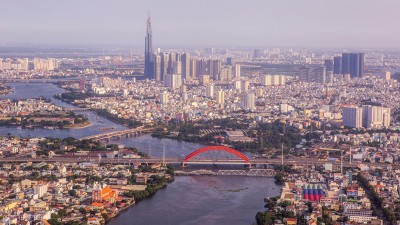
Within this broader framework, the proposed 99-storey financial tower in Thu Thiem, if realised, would serve not only as a symbolic landmark but also as a strategic anchor for a modern financial ecosystem where capital, technology, and institutions converge.
The project is planned on a 10,000-square-metre site in Thu Thiem, comprising 99 above-ground floors and five basements, with a total gross floor area of up to 400,000 square metres. It is designed as a mixed-use development combining office, commercial, and long-term leasing components of up to 70 years.
To accelerate implementation, the consortium has proposed several special mechanisms under National Assembly Resolution 222, including allowing a mixed apartment–hotel model, phased land-use fee payments over three years, a reference land price of around VND350 million per square metre, and extending land-use tenure to 70 years.

 Google translate