


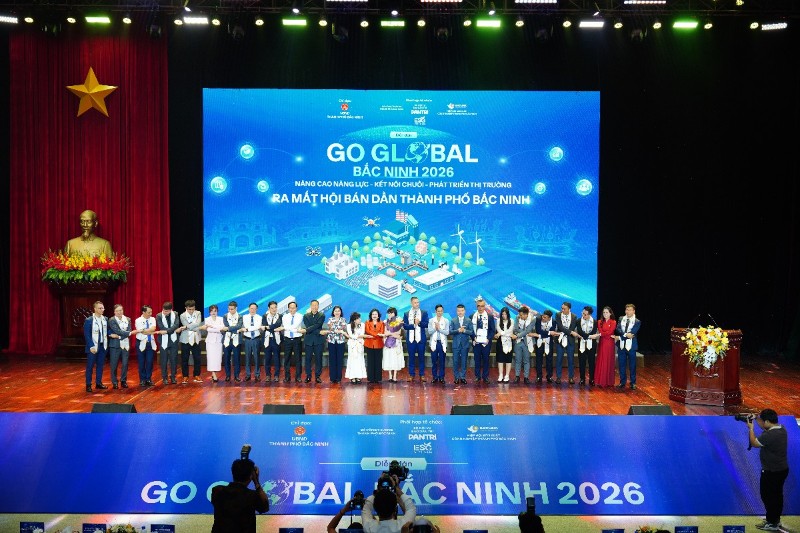
The immediate priority is no longer just attracting multinational conglomerates, but elevating the capabilities of domestic enterprises so they can plug into global supply chains.
Deputy Minister of Home Affairs Nguyen Thi Ha underscored this message at the "Go Global Bac Ninh 2026: Enhancing Capacity – Connecting Chains – Expanding Markets" forum held in northern Bac Ninh city on October 10.
According to Ms. Ha, going global can begin right inside Vietnam when domestic businesses become tier-one and tier-two vendors for multinational corporations. However, achieving this requires simultaneously meeting exacting requirements in product quality, process technology, productivity, corporate governance, human resources, and international certifications.
Vice Chairman of the Bac Ninh City People’s Committee, Mr. Pham Van Thinh, noted that integrating into global supply chains and international markets is a fundamental prerequisite for maintaining high, stable, and sustainable local growth.
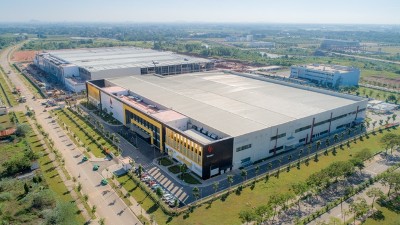
Key anchor corporations such as Foxconn are actively seeking to localize their supplier base, Mr. Thinh said, presenting a strategic window for local supporting-industry firms and small- and medium-sized enterprises (SMEs) to integrate more deeply into advanced manufacturing networks.
To facilitate corporate connectivity, Bac Ninh is rolling out targeted solutions covering industrial land, clean energy, transportation, and logistics infrastructure.
The municipal government confirmed plans to allocate dedicated land parcels within industrial parks and industrial clusters specifically for SMEs, supporting-industry suppliers, and companies participating in global supply chains.
On the energy front, Bac Ninh is targeting an additional 1,000 MW of rooftop solar capacity in the coming period. The city estimated the capital requirement for this rooftop solar expansion at approximately VND10 trillion (around $400 million). The city government is working to connect local commercial banks, trade associations, and relevant departments to craft tailored credit packages, including interest rate support mechanisms.
In logistics, Bac Ninh currently operates an international rail freight link running two container trains daily to Chongqing, China, supplemented by an inland waterway system and the Tan Cang Que Vo dry port. In addition, the Gia Binh International Airport project is slated for commissioning in 2027 and full commercial operations in 2028.
Mr. Thinh emphasized that the next five years will be pivotal for the city. The local government is soliciting policy recommendations from businesses, industry associations, and economic experts on credit access, capital mobilization, and key sector prioritization to accelerate capital deployment and facilitate global market entry for local enterprises.
Tapping the semiconductor value chain
Addressing the semiconductor sector, Dr. Nguyen Thi Bich Yen, Chairwoman of VSAP Lab and an IEEE Fellow, argued that Vietnamese enterprises do not necessarily have to design or fabricate silicon chips directly to capture value.
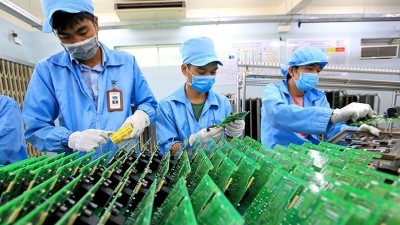
Substantial commercial opportunities exist across input materials, supporting components, precision mechanics, equipment fabrication, industrial automation, engineering services, and back-end assembly, packaging, and testing (OSAT).
Citing data from the World Semiconductor Trade Statistics (WSTS), Dr. Yen noted that global semiconductor revenue reached $795.6 billion in 2025, surging 26.2% year-on-year. The rapid proliferation of artificial intelligence, autonomous vehicles, and emerging tech platforms continues to expand demand across the industry.
However, to win contracts from global chipmakers, suppliers must consistently demonstrate defect-free quality, comprehensive material traceability, strict compliance with technical specifications, on-time delivery, and competitive pricing.
Vietnamese enterprises must pivot from low labor costs toward engineering excellence, rigorous shop-floor management, and specialized technical talent, Dr. Yen said. Customer requirements must be satisfied reliably across high-volume production runs and recurring shipments, rather than stopping at successful prototypes.
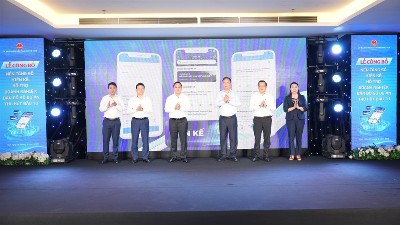
During the forum, the Bac Ninh Semiconductor Association was officially inaugurated. The association is expected to serve as an institutional bridge connecting state regulators, enterprises, universities, research institutes, and technical specialists—accelerating the formation of a synchronized semiconductor ecosystem and elevating local participation in global value chains.
The VSAP Lab Chairwoman proposed that Bac Ninh map out the specific procurement needs of FDI giants alongside domestic vendor capabilities, establish a dedicated supplier development program, upgrade testing and inspection labs, train engineers, and guide local companies through multinational auditing protocols.
A proposed five-year roadmap (2027–2031) presented for discussion outlines auditing 30 domestic firms, deploying 10 pilot supplier programs, and ultimately securing multinational vendor approval and recurring purchase orders for five local enterprises. The figures serve as consultative targets pending official adoption.




 Google translate