


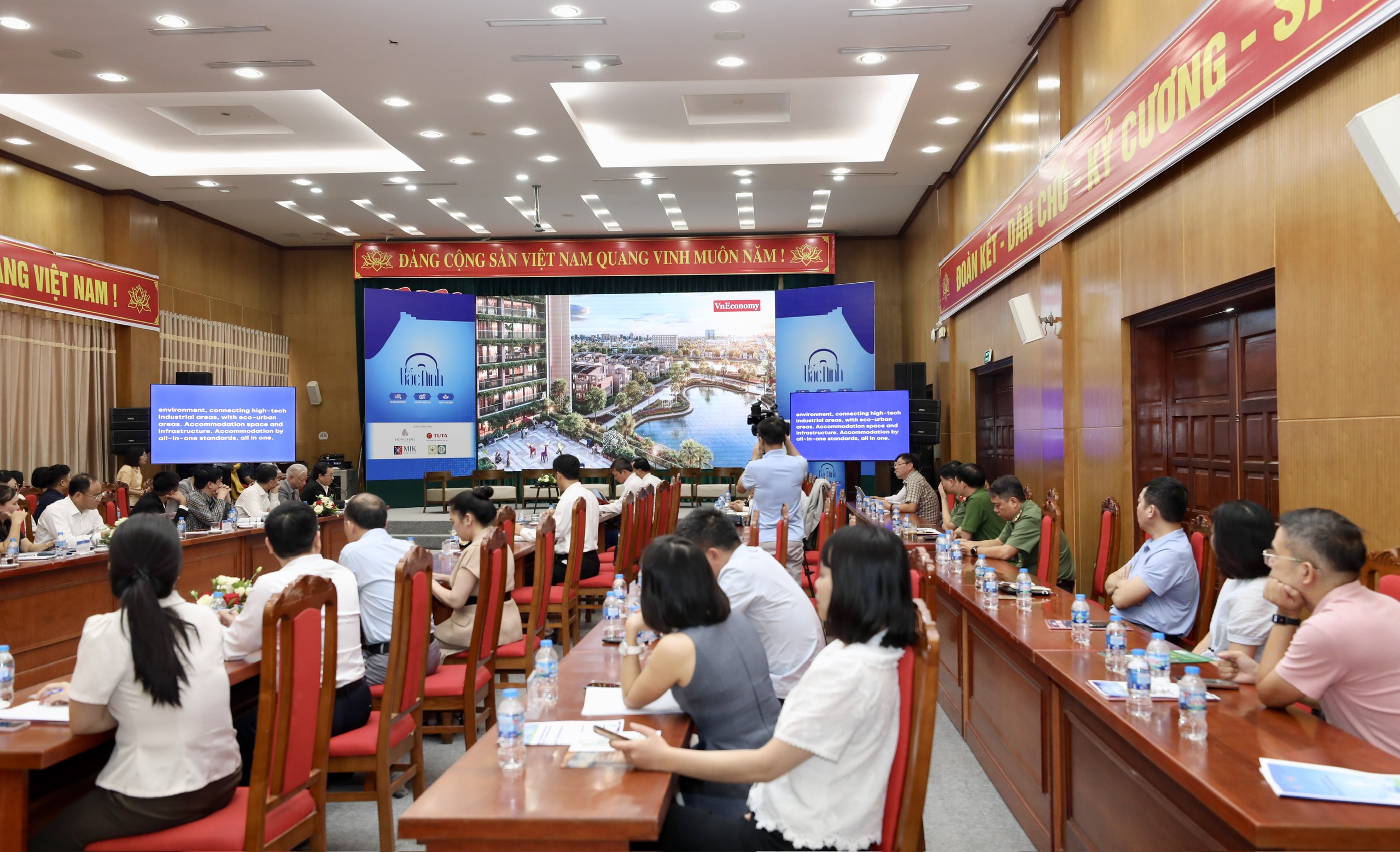
Bac Ninh needs a more transparent and professional housing market to accommodate its growing international workforce and strengthen its competitiveness in attracting high-quality foreign direct investment (FDI), speakers said at a conference held in the city on October 12.
The conference, “Housing for Foreigners Living and Working in Bac Ninh City,” was organized by Tap chi Kinh te Viet Nam / Vietnam Economic Times / VnEconomy in coordination with the People’s Committee of Bac Ninh City at the Bac Ninh City Convention Center in Bac Giang Ward.
The event brought together local government representatives, real estate associations, foreign investors, FDI enterprises, residential developers, property consultants and legal experts to discuss housing demand among international professionals and ways to improve the local market’s capacity to meet their needs.
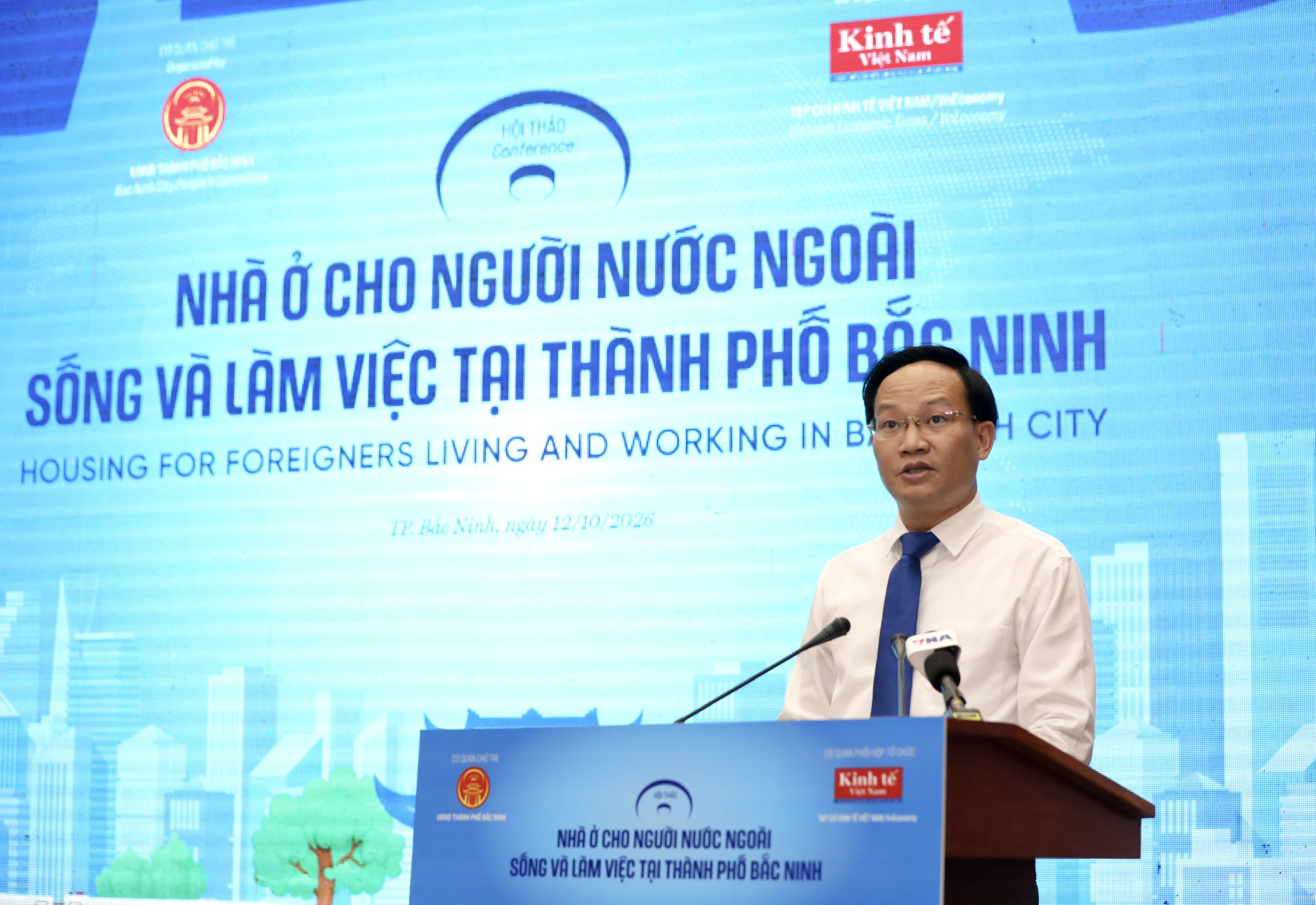
Opening the conference, Mr. Pham Van Thinh, Vice Chairman of the People’s Committee of Bac Ninh City, emphasized that housing for foreign nationals should be viewed as part of the infrastructure supporting economic development and investment attraction, rather than simply as a niche segment of the property market.
“A factory may be decided based on investment indicators. But for a specialist to choose to bring their family to live here long-term, they also care about housing, schools, healthcare, transportation, commerce, green spaces, management services, community and the ability to access information transparently and conveniently,” he said.
Growing demand amid industrial expansion
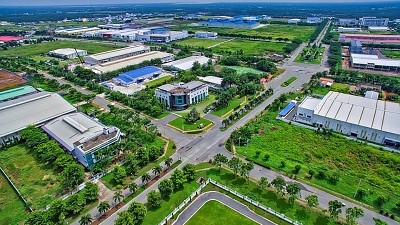
Bac Ninh’s housing requirements have become increasingly important as its industrial parks expand and international investment continues to drive demand for skilled personnel.
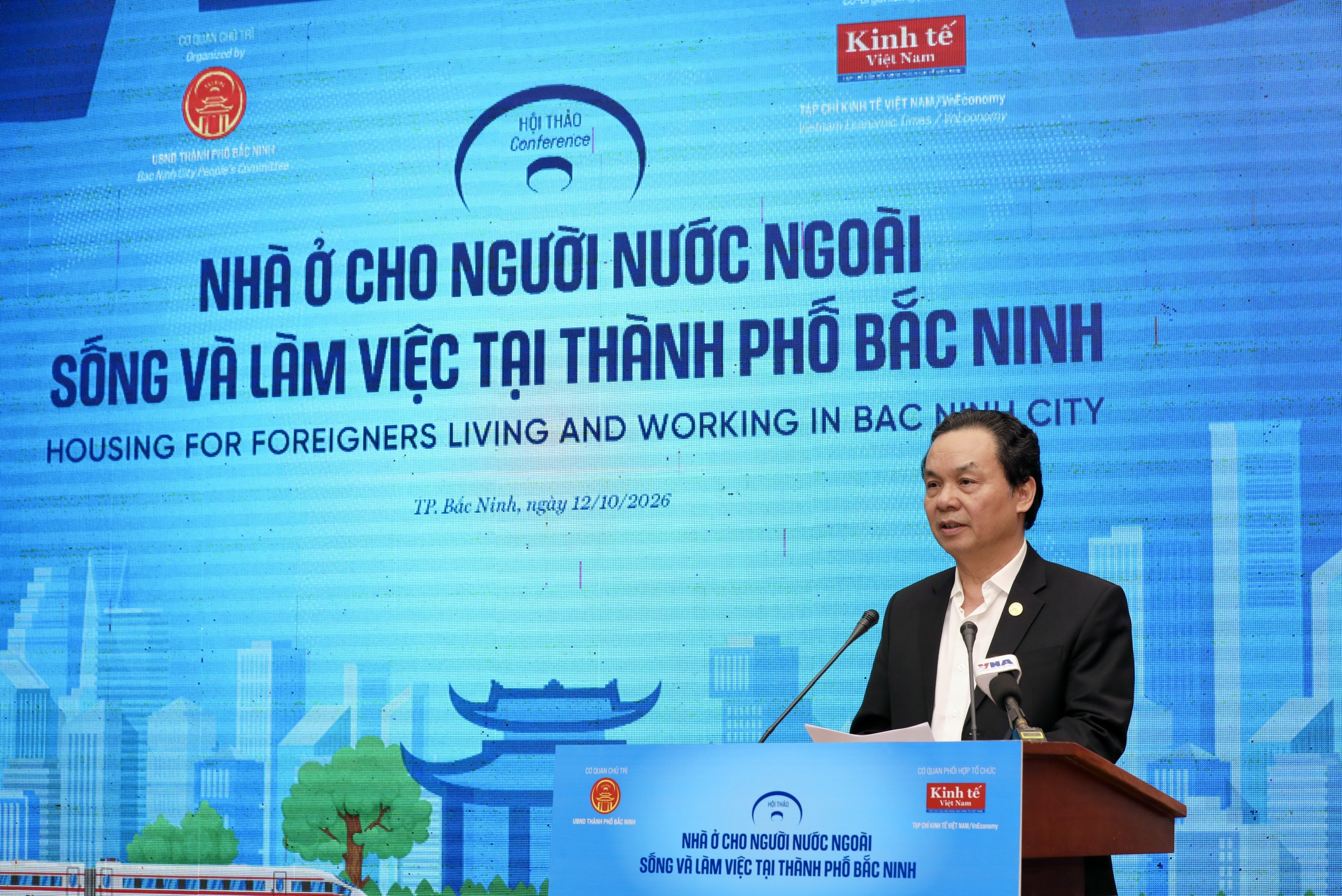
According to figures cited by Professor Dr. Hoang Van Cuong, Vice President of the Vietnam Economic Association, 41,416 foreign nationals had registered for temporary residence across the city as of October 1, 2026, representing 63 countries and territories. Approximately 85 per cent had entered Vietnam primarily for work.
Meanwhile, the Bac Ninh Industrial Zones Management Board reported that nearly 25,000 foreign experts, managers, engineers and highly skilled workers were employed in local industrial parks as of the end of September this year.
The two figures cover different populations and should not be combined, Professor Cuong noted. More importantly, the number of foreign residents does not directly translate into demand for homes for purchase.
An engineer assigned to Vietnam for 18 months may prefer a rented apartment, while a manager relocating with a family for several years may prioritize access to schools, healthcare, transportation and other essential services. Only a proportion of international residents will seek to purchase property.
This distinction has important implications for developers and policymakers. Rather than focusing solely on the number of apartments available for sale, Bac Ninh needs a clearer understanding of demand for rental housing, serviced apartments and homes suitable for longer-term family residence.
Under the city’s master zoning plan and industrial park expansion strategy through 2030 and beyond, the city’s international community of specialists and technical personnel is projected to grow by 10 to 15 per cent annually over the next three to five years, supported by industrial park expansion and the local development strategy through 2030 and beyond. The resulting demand could provide a positive impetus for the local real estate market, provided housing products are developed in line with actual requirements.
Housing as a competitive advantage
In his opening remarks, Mr. Thinh linked the housing issue to Bac Ninh’s new administrative status and its ambitions to improve urban quality, governance and the living environment.
Bac Ninh became a centrally governed city following the entry into force of National Assembly Resolution No. 39/2026/QH16 on September 20, 2026. By mid-2026, the city had approximately 3,631 FDI projects with total registered capital exceeding $50.6 billion, the opening remarks noted.
As competition for investment increasingly shifts from attracting capital to attracting higher-quality projects and talent, residential conditions are becoming an important part of the local business environment.
Mr. Thinh argued that the ability to attract and retain highly skilled personnel is itself a component of a locality’s competitiveness. Beyond industrial infrastructure and investment incentives, international specialists need a suitable living environment if they are to work in Bac Ninh over the longer term and bring their families with them.
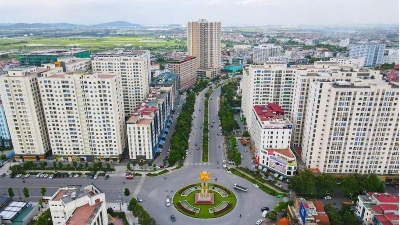
Although the city has residential projects with integrated amenities that meet the conditions for foreign ownership, it still faces a shortage of systematically planned residential ecosystems capable of meeting the expectations of international executives and specialists.
The challenge is therefore not simply to increase the number of available homes, but to ensure that their locations, quality, management standards and surrounding services match the needs of different groups of foreign residents.
Improving transparency and access to housing
One of the key issues identified during the seminar was the need to make the process of finding and purchasing eligible housing more accessible to foreign nationals.
According to Mr. Thinh, land registration authorities had issued 498 housing ownership certificates to foreign organizations and individuals across the city. He noted that all complete applications eligible for processing at the registration stage had been handled within the stipulated administrative timeframe of eight working days.
The figures suggest that the issuance of housing ownership certificates is not necessarily the principal bottleneck. Instead, difficulties may arise earlier, when prospective buyers try to identify eligible projects, check remaining foreign ownership quotas, understand legal requirements and prepare transaction documents.
Professor Cuong emphasized the importance of distinguishing between properties legally available for foreign ownership, those already purchased and those for which ownership certificates have been issued.
Under the current legal framework, the Law on Housing 2023 regulates the eligibility, forms, limits and duration of foreign ownership. Eligible foreign individuals and organizations may own apartments and certain landed houses in qualifying projects and areas, subject to applicable conditions and quotas. Foreign ownership in an apartment building is generally capped at 30 per cent of its total units.
Decree No. 95/2024/ND-CP also requires relevant information on eligible properties and ownership quotas to be made public. However, publishing project lists alone may not provide prospective buyers with all the information they need to make informed decisions.
To address this gap, Professor Cuong proposed developing an accessible online housing information platform, initially through a Vietnamese-English page on an existing government website rather than a costly standalone system.
The platform could provide standardized information on eligible residential projects, available units, remaining ownership quotas, transaction conditions, required documentation and relevant contact points. Information would need to be regularly updated, with clearly assigned responsibilities for verification.
A multilingual housing portal could also help foreign residents compare rental and purchase options while enabling FDI enterprises to identify suitable accommodation for incoming employees.
Five priorities for a more responsive market
Professor Cuong outlined five areas for further action to help Bac Ninh build a housing market aligned with its economic development objectives.
First, quantify actual housing demand. The city should conduct annual surveys of FDI enterprises to identify the residential requirements of foreign employees, distinguishing between short-term assignments, long-term employment and families relocating with children. Information on preferred locations, rental or purchase needs, budgets and service expectations would provide a stronger basis for planning and investment. Such assessments should draw on aggregated data from industrial park authorities, residence management agencies and housing departments while protecting personal information.
Second, develop a professional rental market. Given that many foreign specialists work in Vietnam on fixed-term assignments, demand for rental housing may be more frequent than demand for homeownership. The city could pilot serviced apartments and professionally managed long-term rental housing near industrial parks with high concentrations of international personnel. These developments should offer convenient transport connections, reliable property management and multilingual support. FDI enterprises could contribute demand forecasts or enter into group rental agreements, while public authorities focus on planning, transportation and social infrastructure.
Third, turn public information into practical market data. Beyond publishing lists of eligible projects, authorities should provide information that prospective residents can use directly when evaluating properties and preparing transactions. Accurate data, clear update schedules and designated agencies responsible for verification would help reduce uncertainty for buyers, developers and property intermediaries.
Fourth, standardize the transaction process. Foreign buyers need clear, multilingual guidance covering eligibility checks, deposits, payments, contract signing, handover, ownership registration and subsequent property rights. A standardized legal information sheet supplied by developers before transactions could identify official information sources, applicable conditions and the date on which the details were verified.
Fifth, address regulatory issues with specific evidence. Authorities should distinguish between problems that can be resolved through better coordination, administrative procedures and information sharing, and those requiring amendments or additional guidance from central government.
Professor Cuong stressed that policy recommendations should be based on specific cases rather than general observations. The seminar should produce practical outputs, including a map of housing demand across industrial clusters, an assessment of rental and ownership supply, standardized transaction guidance and a prioritized list of policy recommendations. He also proposed establishing clear responsibilities and reviewing progress after 30 and 90 days to ensure that the discussions produced measurable results.
Ultimately, the success of Bac Ninh’s housing strategy will depend not only on the number of properties developed or sold, but also on the accessibility of reliable information, the efficiency of administrative procedures, the performance of the rental market and residents’ overall experience.
As the structure of investment evolves, the city’s ability to provide an attractive living environment for international professionals will become increasingly relevant to its competitiveness.
For Bac Ninh, developing a transparent, professional and demand-driven housing market could become an important step toward attracting international talent and sustaining high-quality FDI in the years ahead.



 Google translate