


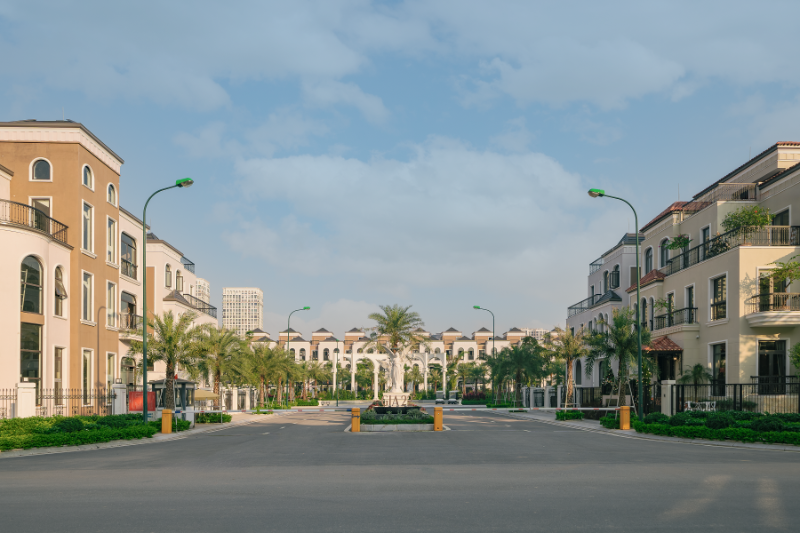
Vietnam’s branded real estate market is entering one of its most consequential stages yet, as soaring prices, surging demand, and a new wave of large-scale developments push the industry towards a more sophisticated, globally-aligned future. At Meet the Experts Hanoi 2025, leading developers and operators gathered to discuss a common message: the country’s next era of branded luxury residences will not be defined by how fast projects sell, but by how well they endure.
Developers bet big
As the market moves into one of its most bullish phases in years, major developers racing to bring large-scale supply to meet demand shows little sign of cooling. For Mr. Minh Nguyen, Deputy CEO of the MIK Group Vietnam, the past two years have been defined by a clear imbalance. “It’s basically been a seller’s market,” he said. “Everything we’ve launched has been very successful - selling out within a couple of weeks.”
The MIK Group delivered around 10,000 residential units last year, all absorbed by the market, and is planning a pipeline five to seven-times that level this year, reflecting confidence not only in demand but also in the purchasing power of local buyers.
Prices have surged. New apartment launches in Hanoi, once averaging around $3,000 per sq m, now start from no less than VND100 million ($3,845) after jumping nearly 30 per cent in just the last 12 months. This momentum is encouraging even more aggressive expansion from major players. “Other big developers like Vingroup, Sungroup, and Masterise are even more bullish,” Mr. Minh noted, pointing to a broader consolidation in which large developers are acquiring expansive land banks to prepare large-scale townships.
But not all players are relying on volume. Kusto Home is taking a more selective approach by focusing on quality instead of quantity. It will launch its next boutique project in Hanoi in December, a move Mr. Sergey Nam, CEO of Kusto Home (Vietnam), described as well-timed amid strong sentiment returning to the market.
Optimism is just as strong in the high-end rental and branded residence segment. Vietnam’s hospitality market is in a boom year, according to Ms. Venessa Koo, Vice President of Business Development at The Ascott Limited, who highlighted surging visitor numbers and a growing global spotlight: “For the first time, Vietnam is really in the spotlight globally, and doing very well,” she said.
For operators like Ascott, branded residences have become an increasingly powerful model. “It’s an excellent product to give confidence to buyers,” she continued. Strong developers are able not only to finish projects reliably, but to reinvest more into final stages thanks to robust pre-sales. Ms. Koo noted that relaxing visa rules and easing the 50-year land tenure limit for foreigners could unlock an even larger wave of international demand, particularly from second-home buyers.
The luxury beachfront market, however, is recovering more cautiously. According to Mr. Michael Piro, Co-CEO of Indochina Capital and Co-Founder and CEO of Wink Hotels, the segment is preparing for a comeback driven by economic growth and rebounding tourism. But he expects a more mature cycle than the condotel boom of 2016-2018, when developers “sold second homes like financial products.”
Still, land tenure remains a challenge. If Vietnam allowed freehold coastal ownership, Mr. Piro argues, “homes we sell for $5 million would be going for $20 million.” Even so, he believes Vietnam remains globally competitive, offering multi-million-dollar villas at a fraction of international benchmarks, and attention to detail will bring success to developers.
Beyond opulence
As Vietnam’s property market accelerates, developers and designers are now asking a deeper question: what does luxury really mean in 2025 and beyond? The answer, according to industry leaders, is shifting rapidly - from flashy finishes towards legacy, scarcity, quiet design, and a new generation of shared amenities.
According to Mr. Nam, the shift is driven by increasingly discerning buyers. “Luxury isn’t just about showing beautiful pictures or high-end materials anymore,” he said. “It’s about legacy. You don’t buy a luxury property every day, so we want to build something that lasts generations.” Scarcity is also becoming part of the value proposition. That is why, he added, Kusto is spending more time crafting every detail to ensure strong secondary-market value decades after launch.
On the design front, tastes are evolving towards understated luxury. “The next level of luxury is quiet,” said Mr. Thien Duong of GroupGSA. Designers are now exploring materials that age beautifully, creating the real estate equivalent of a vintage watch: timeless, valuable, and full of character.
The shift is also transforming the amenity landscape. “We are in an amenity race,” said Mr. Piro, noting that a pool and a gym are no longer enough, and wellness is going to be central. Today’s buyers track their sleep, stress and calories; tomorrow’s developments must support that lifestyle through holistic wellness ecosystems rather than ornamental facilities.
This evolution comes with operational challenges. Mr. Piro recalled the backlash when Hyatt Regency Da Nang introduced management fees far above the norm. “People said, ‘You’re crazy’,” he continued. “But once they experienced the facilities, no one complained again. Buyers will pay more if you deliver what you promise.”
For Ascott, the definition of “right amenities” varies by project type. “A resort needs one set of facilities; a city branded residence needs another,” said Ms. Koo. Vietnam’s prevalence of sale-and-leaseback models complicates this further, as some amenities shift to hotel operations while others remain the owners’ responsibility.
Across the board, industry leaders agree: Vietnam’s next phase of luxury will be defined by quiet confidence, timeless design, thoughtful amenities, and a stronger focus on wellness and longevity - a significant step beyond the flashier developments of the past decade.
Facing the next test
Vietnam’s real estate boom has created an environment where nearly every launch sells out, but industry insiders warn that this window will eventually close, forcing a new era of genuine competition and innovation.
For Mr. Nam, the market’s success has bred complacency. “Developers in Vietnam have become a little spoiled,” he said. “Everything you launch sells. But we should be thinking about legacy, about products judged by their resale value, not just by how quickly they sell on day one.” He also noted that Vietnam is uniquely positioned to learn from success and failure in other markets, from the heritage constraints of Europe to the rapid, flashy builds of Dubai.
Mr. Piro added that the current momentum won’t last forever, and a tougher market may be exactly what Vietnam needs. “The music will eventually stop,” he said. “That’s when we’ll see real innovation. I’ll be trying to take your buyer, you’ll be trying to take mine - and that pushes all of us to raise our game.”
Looking ahead, supply gaps could shape the next stage. In Hanoi, especially, the shortage of high-end homes is acute. “There’s not enough supply in the luxury segment,” said Mr. Minh. With landed homes now reaching $20,000 to $30,000 per sq m, in some cases surpassing Bangkok, developers are preparing to introduce more sophisticated products, from luxury homes to branded residences, to match both the price point and rising expectations.
There’s no doubt that Vietnam’s next stage will be driven not by the ease of selling but by the pressure to differentiate. As the market matures, the winners will be those who build for longevity, refine their design philosophies, and innovate beyond the hype cycle.




 Google translate