


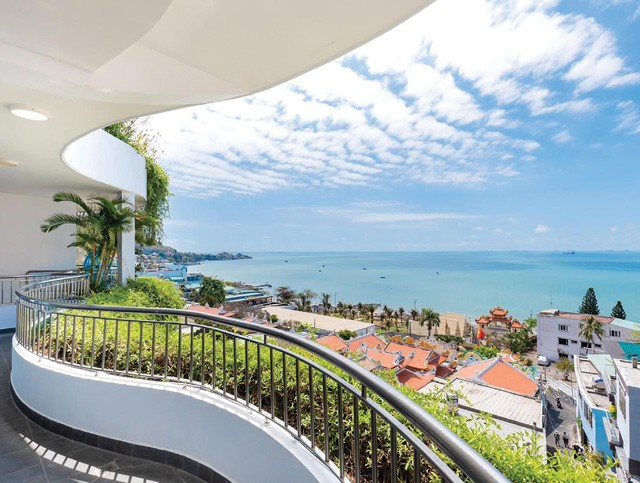

Vietnam has many beautiful and relatively well-developed destinations, including Phu Quoc, Da Nang, and Nha Trang. At the same time, destinations such as Phu Yen, Quy Nhon, and Quang Tri have retained their distinctive natural character while offering a strong sense of local identity and significant potential for investment and development. Meanwhile, destinations such as Ho Chi Minh City and Hanoi also need more hotels and greater attention to the development of new products.
Rather than focusing primarily on coastal resort projects, new supply is increasingly shifting toward major urban centers. Markets such as Hanoi are attracting more international hotel brands, including Fairmont and Regent, enriching the capital’s high-end hospitality ecosystem. Meanwhile, destinations such as Nha Trang have absorbed significant amounts of new supply in recent years, creating conditions for the market to enter a more selective phase of development.
Another notable shift is the role of hotel operators. Around 85 per cent of future hotel supply is expected to be managed by brands rather than operated directly by owners. Notably, more lifestyle brands are entering the market, reflecting changing guest preferences, with demand extending beyond service standards to encompass experiences, lifestyles, and distinctive identities.
In the branded residential segment, Vietnam is emerging as an important market in Asia. Development is shifting from ultra-luxury products toward “accessible luxury,” broadening the potential customer base. At the same time, demand for living spaces that integrate healthcare, resort and wellness elements is becoming increasingly evident.
Product design, in particular, is also adapting to Vietnam’s demographic and cultural characteristics. Projects targeting multigenerational living are receiving greater attention, with larger spaces and amenities designed to accommodate families with multiple generations living together. These changes show that Vietnam’s hospitality market is not only recovering in terms of visitor numbers but also entering a new development cycle, in which competitiveness will increasingly depend on the ability to differentiate through products, brands, experiences and operational quality.
* * *

For decades, we have designed buildings around growth, efficiency, and value. But another question is becoming increasingly important: how does a place make people feel, and how can a property help us live better? From this perspective, we see holistic wellness infrastructure becoming increasingly essential to hotels and resorts. The question is no longer simply, “Where should we place wellness amenities?” but rather, “What do we need to do to allow wellness to shape the entire development?”
Initially, wellness amenities were typically represented by gyms, spas, pools, and some landscaping. But in the longevity era, resort developments are increasingly being designed around holistic wellness and the quality of life of both their users and the communities at the destination. Through this journey, we have identified five shifts reshaping resort real estate: from amenities to ecosystems; from building performance to human performance; from indoor spaces to nature; from individuals to communities; and finally, from cost to value.
The first two shifts take us from attracting visitors to enhancing the experience. Buildings today have been optimized for energy, carbon emissions, efficiency, and operations. But the next layer needs to focus on people. The latter three shifts mean resort infrastructure must be designed as an integral part of the journey, allowing guests to enhance their experience even while sleeping or simply relaxing in nature. Ultimately, human wellness is both personal and social, and that is what we need to bring into projects, from architecture and spaces to the broader service ecosystem.
* * *

Branded residences are no longer a niche trend confined to one region - the momentum behind them is global, driven by a handful of forces converging at once.
The clearest is the blurring of lines between hospitality and residential products. What used to be a sharp distinction - a hotel for short stays, a serviced apartment for longer ones, a home for everything else - has broken down, with Airbnb as the clearest early example of a private home functioning as a place to stay. That same logic is now visible in development itself: a recent Accor project in Vietnam could pass for a hotel, complete with a full suite of hotel-style amenities. Buyers, increasingly, are the ones driving this shift. Many own multiple homes, want differentiation between them, and want a brand they already trust - which is why hotel-style services and amenities attached to an owned unit have become such a natural fit between the two product categories.
The commercial case is borne out in practice. Fusion Hotel Group’s predecessor, Lodgis, completed four large-scale branded residence projects over roughly eight years, totaling close to half a billion dollars in actual - not prospective - sales, with more than 400 units delivered and more still in the pipeline.
The underlying logic for developers comes down to price and pace: faster sales reduce carrying and interest costs, while stronger pricing power improves margin on each unit. A standalone brand name, invented without a track record or real differentiation, tends to do little for either. Drafting off the halo effect of an established hotel brand, while still delivering a genuinely residential product, proved different - commanding 20-30 per cent more in price, which in turn helped accelerate the pace of sales. That combination - pairing brand trust with residential ownership - is what made the model work.
* * *

Vietnam is a booming market compared to others across Southeast Asia, as travel demand has not only recovered but is also growing rapidly. Notably, the source market mix is changing, with international visitors increasing rather than the market relying primarily on domestic travelers.
We are seeing international arrivals increase, and this depends heavily on air connectivity. Having more airlines and greater capacity for travelers to fly into the country is critically important not only for Vietnam but for Southeast Asia as a whole. This is supporting every segment, from cities to resort destinations across the region. The market is growing very quickly.
In my view, it is important for Vietnam to develop the full spectrum of segments, from mass market to ultra-luxury. Over the next five to ten years, how can Vietnam preserve its cultural values while ensuring that visitors can truly experience its local identity? In terms of key performance indicators (KPIs), actual business performance has also grown rapidly over the past three years. Looking at revenue and operating metrics, as of 2026, occupancy nationwide has increased 7 per cent while room rates have increased 12 per cent. That translates into nearly 20 per cent growth in revenue per available room.
However, what investors and brands care about is the bottom line: how much actual profit is being generated. We have seen operating profit margins increase, particularly in southern Vietnam. Other markets are also catching up from lower levels. Hanoi, in particular, has surpassed its 2019 level this year. This is a long-term process, and the pace of recovery and growth varies by location.
While property profit margins are rising and are likely to continue increasing in 2027, the key question will be whether infrastructure can keep pace when new supply enters the market, including many large hotels and condotels. Will the supporting infrastructure continue to develop sufficiently to ensure that owners can achieve the returns they expect in the coming years? This will be an important issue to watch.
* * *

Wellness is one of the biggest opportunities in hospitality and real estate today, and also one of the hardest categories to brand. The word itself is part of the problem - mental, physical, spiritual, traditional - it can attach to almost anything, which makes it difficult for any single brand to define its own proposition in one clear sentence.
The scale of the opportunity isn’t really in question. The wellness economy is worth $6.8 trillion today and is growing 8 per cent a year through to the end of the decade. Consumer demand is just as strong: 84 per cent of people say wellness is a top priority in their lives. But only 13 per cent say they’re actually achieving their wellness goals - a real gap between intent and outcome. A recent review of 300 wellness videos on TikTok and Instagram found nearly 70 per cent made false or unrealistic claims, which has pushed trust in this space to a premium.
The financial picture adds another layer of caution. A US study found that hotels with a heavier wellness footprint were actually making less profit per room than those with a moderate one - a sign that more investment doesn’t automatically translate into stronger returns. For brands integrating wellness into an existing product rather than building one from scratch, that raises the bar for credibility rather than lowering it.
Three things tend to separate the brands that get this right: positioning, point of view, and integration.
Positioning is about locating a brand clearly on a spectrum between the clinical end - doctors, equipment, liability - and the traditional spa, which functions more as a transactional amenity than an experience. Most brands sit somewhere in between, but an undefined middle tends to be the weakest position of all.
Point of view is the underlying philosophy - what a brand actually believes about wellness, as opposed to a category label like “longevity,” which describes a segment rather than a perspective. A new brand can build this from a blank slate; an established one can use its existing identity as the lens through which it interprets wellness.
Integration is what turns that philosophy into something real rather than a marketing line - embedding it across food, sleep, movement, and the broader guest or resident experience, rather than treating it as an added amenity. On a recent project with a luxury hotel brand built around sociability and connection, this translated into a framework of recovery, reactivation, and reconnection applied across the entire guest journey.
The same logic extends into residential real estate, where wellness-oriented developments are growing around 20 per cent a year and can command a 10-25 per cent price premium. The opportunity there lies less in adding a spa or gym after the fact, and more in designing around residents’ daily lives from the start.
Ultimately, the wellness sector’s size and growth are no longer the interesting part of the story - the harder, more defining question is which brands can turn a word so broad into something specific enough to be believed. Positioning, point of view, and integration are less a marketing checklist than a test of whether a brand’s wellness claim can survive contact with a skeptical customer. The ones that pass that test won’t just capture a share of a trillion VND market; they’ll be the ones that actually close the gap between what people say they want from wellness and what they’re currently getting.


 Google translate